
Last updated November 16, 2026
 Wrought iron
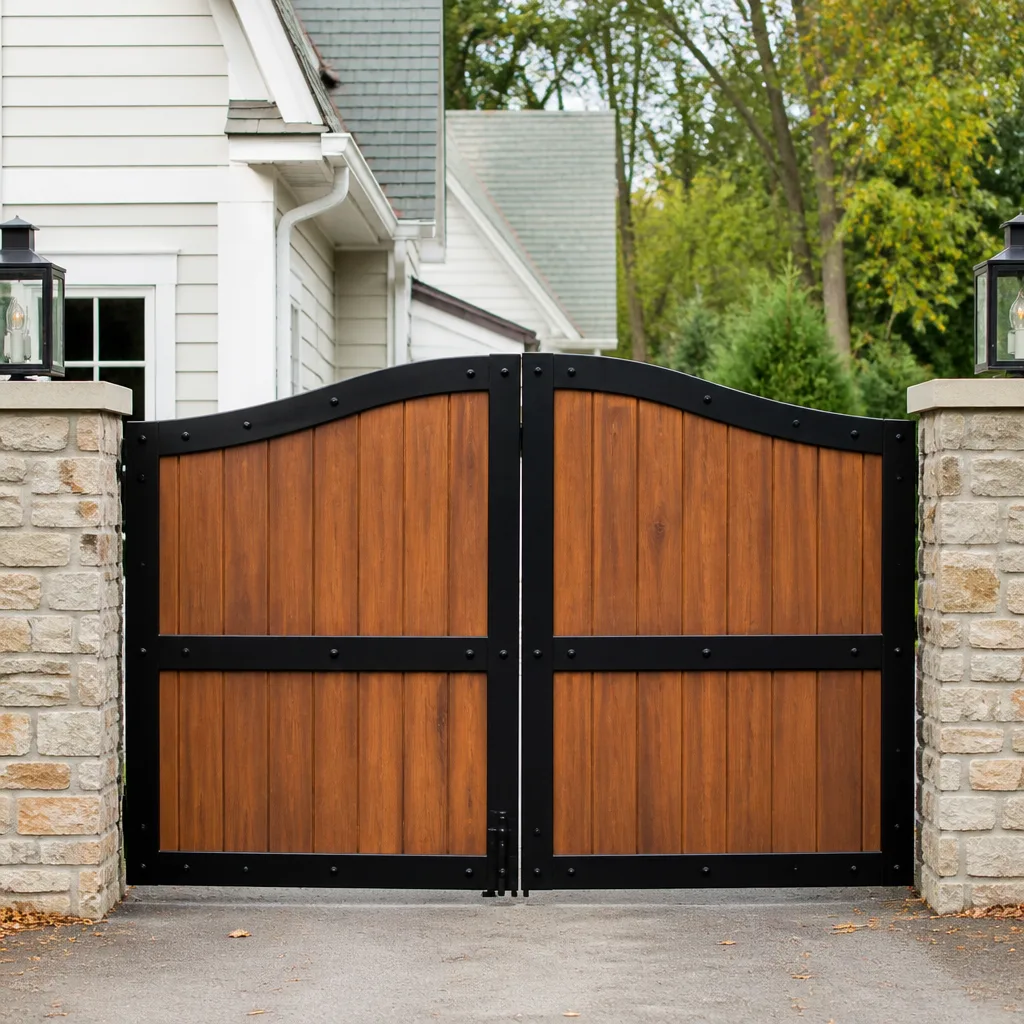 Wood & steel frame
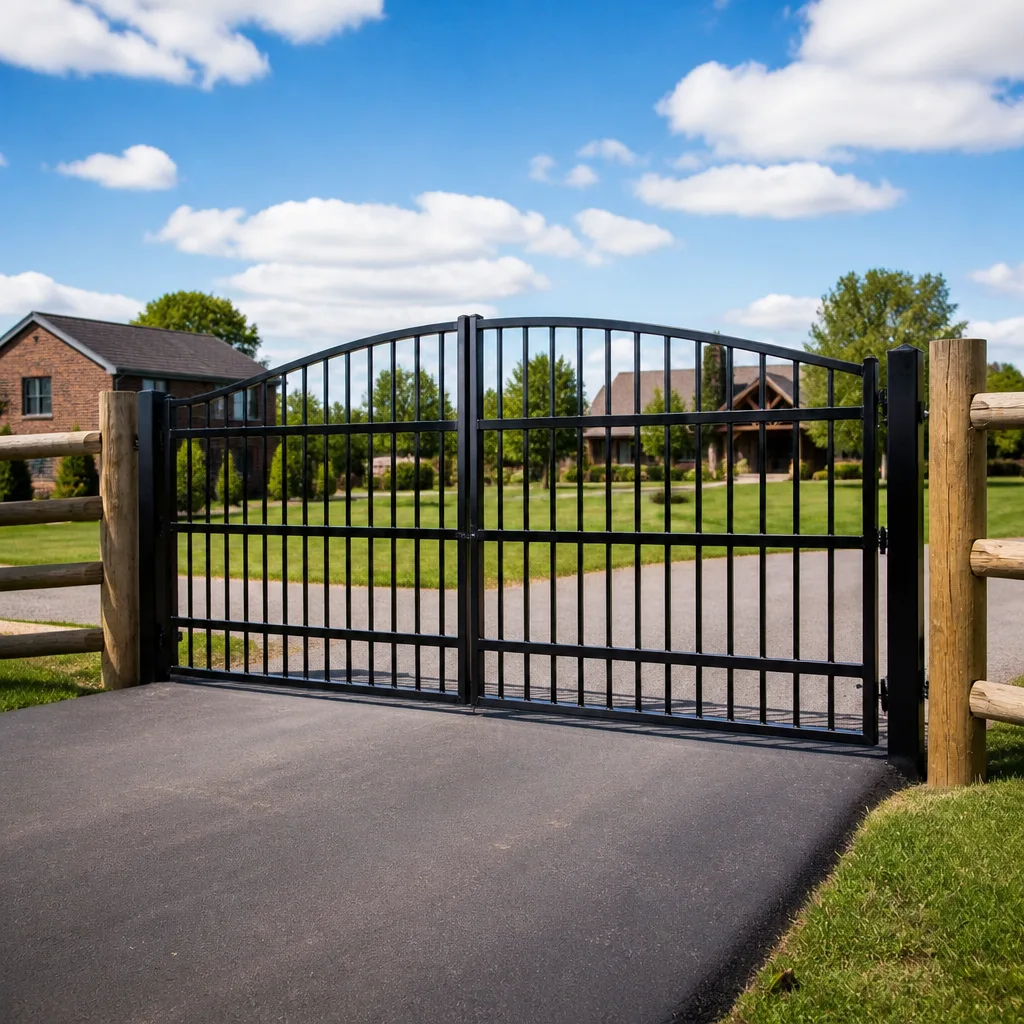 Farm & ranch
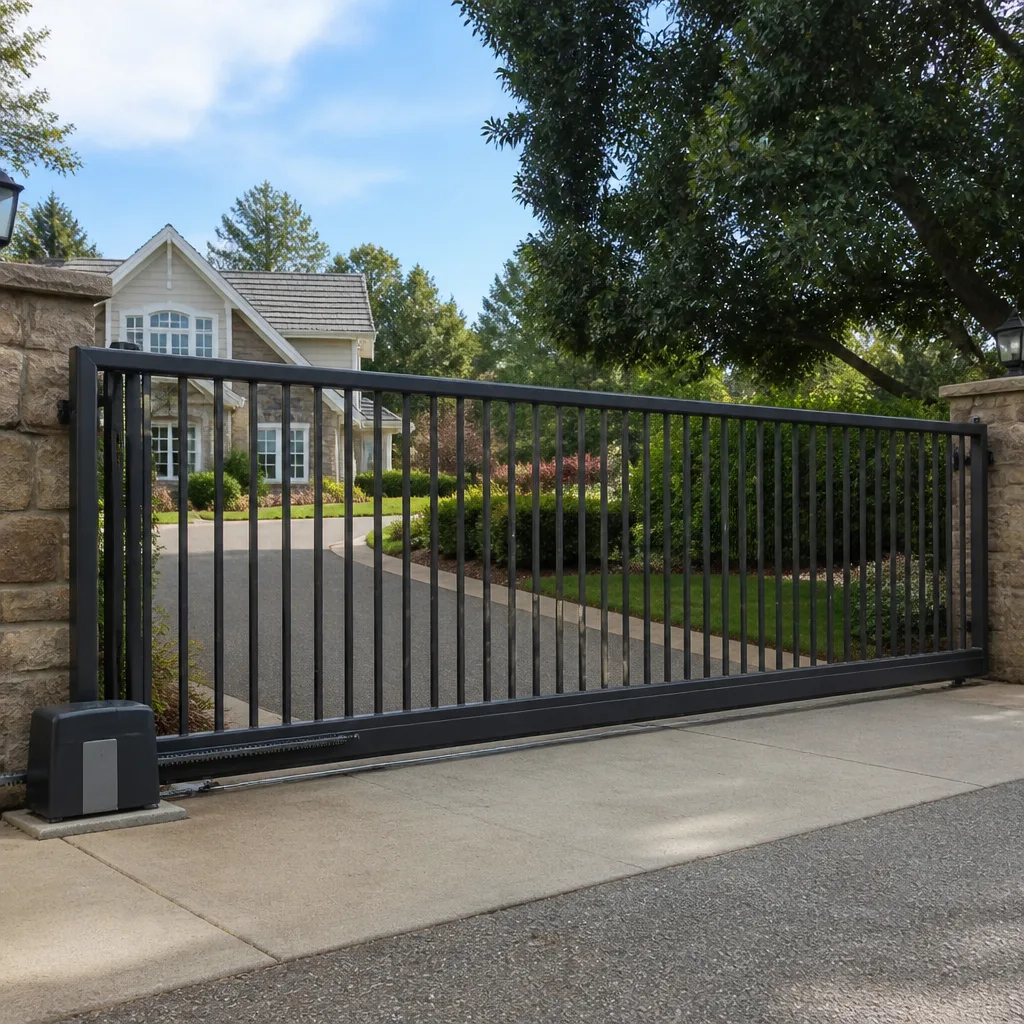 Sliding driveway gates
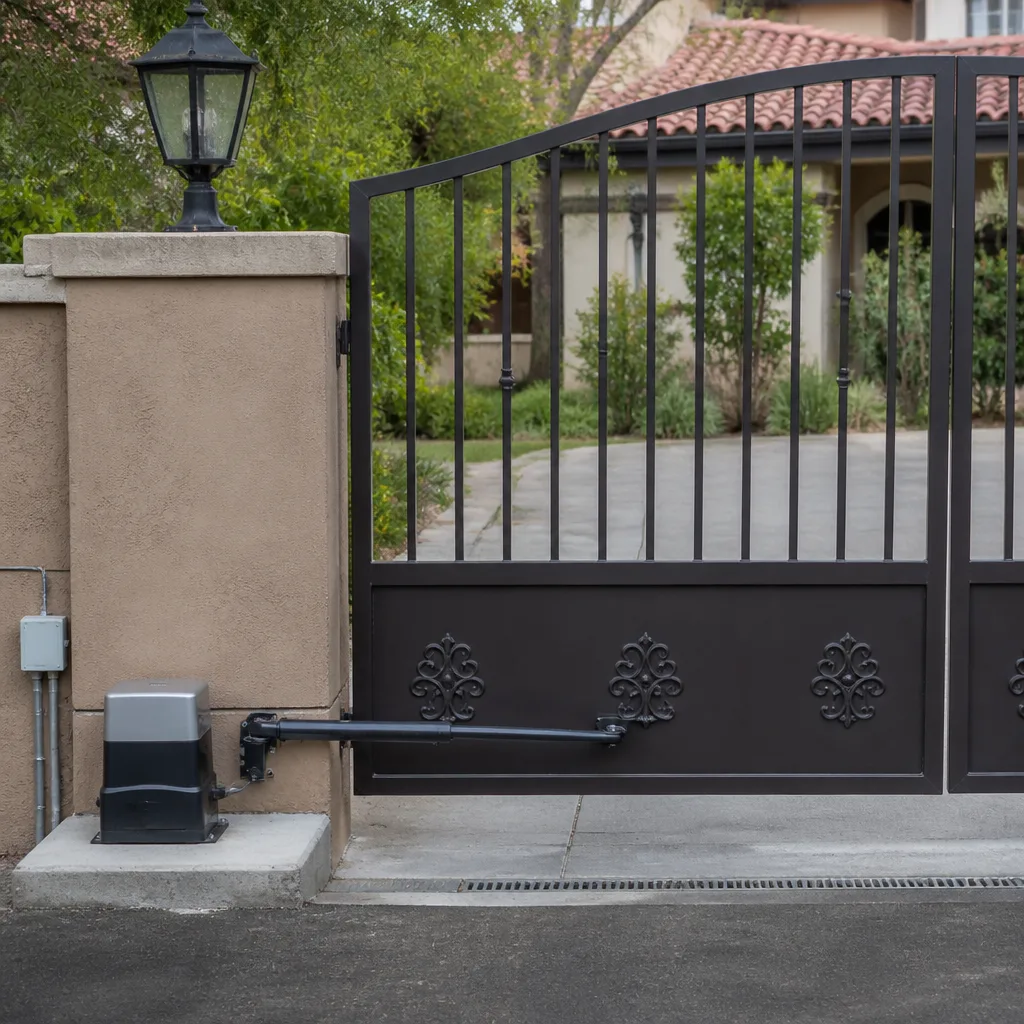 LiftMaster operators
Free on-site gate assessment - hinges, posts, and your LiftMaster or Nice gate operator checked before anything is quoted
The assessment is free and the quote is the invoice.
Get your free estimateSeasonal Gate Repair Care for Paradise: Year-Round Homeowner’s Guide
If your gate care plan has a “winter weatherproofing” section, it was written for someone in Denver. Paradise doesn’t run on four equal seasons. It runs on a long, brutal summer stress period, two mild shoulder stretches, and a short winter that most of the country would call spring. Your gate feels that pattern in its metal, its wiring, and its hydraulic fluid. This guide reorganizes seasonal gate care around the climate arc Paradise actually has, so you’re inspecting and treating the right parts at the right time of year, not following a template built for snow and freeze.
Quick Answer
In Paradise, gate care follows three real phases: pre-summer prep in April before temperatures pass 100°F, active monitoring through June, July, and August, and a post-summer inspection in September that catches heat damage before mild weather hides it. Winter, from November through February, is your best window for major repairs, re-lubrication, and hardware replacement. Dust storm season adds a separate maintenance trigger that has nothing to do with the calendar of seasons.
Styles & brands we work with
- Wrought iron
- Wood & steel frame
- Farm & ranch
- Sliding driveway gates
- LiftMaster operators
Table of Contents
- Why Paradise Gate Care Doesn’t Follow the Four-Season Template
- April: The Pre-Summer Inspection That Saves You in July
- June Through August: Monitoring Heat Stress on Operators and Power
- Dust Storm Season: The Maintenance Trigger No Calendar Shows
- September: Post-Summer Damage Assessment
- November Through February: The Repair Window Most Owners Waste
- The Full Paradise Gate Care Calendar at a Glance
- Common Mistakes to Avoid
Why Paradise Gate Care Doesn’t Follow the Four-Season Template
Most seasonal maintenance guides assume a spring thaw, a hot summer, a wet fall, and a freezing winter. Paradise gets two of those and skips the rest. Summer here is the hard season, not winter. It’s the stretch that does the most damage to gate hardware over the longest period, and it’s the one that most generic guides give the least attention.
Metal expands in heat. Gate frames, hinges, tracks, and the arms that connect an operator to a gate all move slightly as the day heats up and cool back down at night. That cycle repeats hundreds of times between May and October. Every bolt that’s a little loose works itself looser. Every bushing that’s a little dry wears a little faster. Every weld that’s under stress gets one more cycle of push and pull. In Paradise, thermal expansion is a maintenance factor for most of the year, not a footnote.
Winter runs the other direction but stays mild. You won’t see the freeze cracking and ground heave that break gates in colder states. What you get instead is a comfortable working window when repairs are easier to schedule and easier to do well. That’s a gift most Paradise gate owners don’t use.
Our technicians have up to experience working gates in this valley, and the pattern is consistent: the gates that fail in July are the ones nobody looked at in April. The gates that need emergency gate repair in the fall are the ones that ran all summer without a single inspection. Seasonal care in Paradise isn’t about protecting from cold. It’s about getting ahead of heat.
April: The Pre-Summer Inspection That Saves You in July
April is the most valuable maintenance month on the Paradise calendar. Temperatures are still manageable, the long stress period hasn’t started, and anything you find now can be fixed without urgency. By June the same problem is a repair in 105-degree heat with the gate stuck open.
Here’s what a proper pre-summer inspection covers:
- Walk the full swing or slide path. Open and close the gate by hand and listen. Grinding, clicking, or a change in effort tells you the hardware is already stressed before the heat adds to it.
- Check every hinge, roller, and track bolt. Loose fasteners are the single most common thing we find on gates that haven’t been serviced. Torque them to spec now, not after they’ve wallowed out the mounting hole.
- Lubricate moving parts with a heat-stable product. A light oil that works in a mild climate can cook off or gum up in Paradise summer heat. Use a lubricant rated for high temperatures and apply it before the stress period, not during it.
- Inspect the operator’s housing and ventilation. Control boards and motors generate their own heat. If the enclosure is full of dust or the vents are blocked, the summer sun adds to a problem that’s already there.
- Test the safety devices. Photo eyes, safety edges, and loop detectors should all stop and reverse the gate on command. Test them now while the gate is working well, so you know the baseline.
- Look at the power and wiring. Sun-degraded cable jackets and loose connections at the operator are common in Paradise. A licensed technician should check anything involving line voltage.
If your gate runs on a battery backup or solar-charged system, April is also the time to check the batteries. Heat is hard on batteries, and a battery that’s marginal in spring will fail in August. Our electric gate repair work covers operator motors, control boards, safety loops, and remote systems, and most of the pre-summer issues on that list are cheaper to fix in April than in July.
June Through August: Monitoring Heat Stress on Operators and Power
Once Paradise passes 100°F, gate equipment starts behaving differently. This is the stretch where monitoring matters more than maintenance. You’re watching for the signs that the heat is winning.
Hydraulic operators
Hydraulic gate operators use fluid and seals, and both are sensitive to temperature. Hot fluid thins out, seals work harder, and a unit that’s low on fluid or has a worn seal can start to slow down, hesitate, or leak at the base. If your swing gate operator is hydraulic, watch for sluggish movement in the afternoon heat and any fluid residue under the housing. Don’t top off a hydraulic system with the wrong fluid just to get through the summer. Have it checked.
Battery backup systems
Heat shortens battery life. A backup battery that would last years in a mild climate may need attention much sooner in Paradise. A solar-charged system is also a battery system, and the same rule applies. Signs of a failing battery in summer: the gate runs slower than usual, the operator beeps or faults after a power interruption, or the gate won’t complete a cycle when the sun goes down and the panel stops contributing. Test backup function before you need it.
Control boards and motors
Every operator brand has its own thermal behavior. A LiftMaster board that faults in extreme heat is telling you something, and it’s not always “replace the board.” Sometimes it’s airflow, sometimes it’s a failing component nearby, and sometimes it’s a power supply issue. Diagnostic work on the control board is where a gate specialist earns their keep. A generalist handyman will guess at the board. We diagnose the actual fault.
Watch for these summer warning signs across every brand we work on, including FAAC and Elite:
- The gate stops partway through a cycle and restarts after cooling
- The operator housing feels hot to the touch when the gate hasn’t run recently
- Remotes lose range or work inconsistently during the hottest part of the day
- The gate reverses without an obstruction
- Loop detectors trigger when no vehicle is present
Any of those in June, July, or August is worth a call. Heat-related faults don’t usually fix themselves when the weather cools. They just fail later, when you least want them to.
Dust Storm Season: The Maintenance Trigger No Calendar Shows
Paradise doesn’t need a season on the calendar for dust storms. They arrive when they arrive, and they leave a specific kind of mess behind. A haboob pushes fine desert dust into every gap, joint, and enclosure on your property. Your gate is a magnet for it.
Dust gets into places rain and wind alone wouldn’t reach. It settles in the operator housing, coats the control board, packs into the gearbox vents, and films the photo eyes. On a slide gate, it works into the track and the roller assemblies. On a swing gate, it collects in the hinge points and the operator arm joints. A single dust event can undo a month of clean operation.
After a significant dust storm, do these checks:
- Wipe down or blow out the operator housing. Only if the unit is de-energized and you’re comfortable doing it safely. If the housing has been packed with dust, have a technician open it and clean the board properly.
- Clear the photo eyes and safety sensors. Dust on the lens is the most common cause of a gate that “randomly” reverses after a storm.
- Sweep the slide track. A slide gate running over a dust-filled track grinds its rollers and stresses the operator.
- Re-lubricate after cleaning, not before. Lubricant applied over dust makes a paste that accelerates wear. Clean first, then lubricate.
- Check the loop detector area. Dust and debris over a buried loop can cause false triggers.
Treat every dust storm as a small maintenance event and you’ll avoid the cumulative damage that catches owners off guard in September. If a storm leaves your gate behaving strangely and the checks above don’t resolve it, that’s a good moment to have a specialist look at it. You can reach us through Gate Repair Paradise and we’ll diagnose it properly.
September: Post-Summer Damage Assessment
September is the most important inspection month for Paradise gate owners who missed April. The worst stress period is over, temperatures are dropping, and the damage is still visible if you know where to look. Once mild weather sets in, some of it gets hidden.
A post-summer assessment is different from a pre-summer inspection. In April you’re looking for problems before they start. In September you’re looking for problems that already happened. Focus on:
- Wear on moving parts. Hinges, rollers, and operator arms that saw months of thermal cycling. Look for elongation in mounting holes, flat spots on rollers, and play in the joints.
- Lubricant condition. Summer heat breaks down lubricant faster than you’d expect. If it’s dried, gummy, or missing, that tells you the wear underneath is worse.
- Operator performance. Run the gate and time the cycle. If it’s slower than it was in spring, something changed, and the cause is probably heat-related.
- Battery health. Re-test backup batteries and solar systems now, before they fail in winter.
- Wiring and connections. Heat, sun, and dust all stress wiring. Look for cracked insulation, corrosion at terminal blocks, and loose connections.
- Gate alignment. Heat expansion can leave a gate that no longer sits square. Check the gap at the latch and the clearance at the ground.
This is also when we see the most hidden failures. A control board that ran hot all summer may still work but be weeks from failing. A safety edge that got less responsive over the summer may not reverse properly now. Finding those issues in September means fixing them on your schedule. Finding them in December means fixing them when you need the gate to work.
November Through February: The Repair Window Most Owners Waste
Here’s the part of the Paradise calendar most seasonal guides get wrong. Winter isn’t a season to protect your gate from. It’s the best window all year to fix it properly.
Temperatures from November through February are comfortable. Repairs don’t compete with the summer stress cycle. Technicians can work without rushing through extreme heat. Parts that need replacing can be ordered and installed without urgency. If your gate needs a new operator, new hardware, a re-lubrication service, or a full diagnostic, this is the time to do it.
Bundle these jobs into a single winter visit:
- Re-lubricate every moving part after a full cleaning
- Replace worn hinges, rollers, and hardware identified in the September assessment
- Service or replace backup batteries before the next summer
- Repair or replace sun-damaged wiring
- Have the control board inspected and any failing components replaced
- Realign the gate after a season of thermal expansion
A user who gets their gate fixed in winter walks into April with a system that’s ready for the stress period. A user who waits until July is making the same repair under pressure. We work on gates across Paradise and we’ve seen both outcomes. The winter repair is almost always the cheaper one to live with.
What winter care here does not need
In Paradise, you don’t need to winterize a gate the way you would in a colder state. There’s no freeze protection, no anti-ice treatment, no snow load concern. What does need attention in winter is battery chemistry, seal condition on hydraulic operators, and dust debris that accumulated since the last storm. Focus on those and skip the cold-weather steps entirely.
When to call a technician for winter work
If your operator brand is LiftMaster, Linear, Viking, DoorKing, Ghost Controls, or Mighty Mule, winter is the ideal time for a full diagnostic before the next stress period. Every brand we service has its own wear patterns, and a technician who works on the brand you already have can spot what a generalist won’t.
The Full Paradise Gate Care Calendar at a Glance
Here’s the whole year in one view:
- April (pre-summer prep): Full inspection, torque all fasteners, high-temperature lubricant, safety device testing, battery check, operator housing cleaning.
- May (final prep): Last chance to address anything April found before the stress period. Schedule any parts on order.
- June – August (monitoring): Watch hydraulic operators for heat-related sluggishness and leaks, test battery backup, note control board faults, keep photo eyes clean.
- After every dust storm: Clean operator housing, clear sensors, sweep slide track, re-lubricate after cleaning.
- September (post-summer assessment): Inspect wear on moving parts, test operator performance, re-test batteries, check wiring, check gate alignment.
- October (planning): Decide which repairs to schedule for winter. Order any brand-specific parts.
- November – February (repair window): Re-lubricate, replace hardware, service batteries, repair or replace sun-damaged wiring, inspect control board, realign gate.
- March (prep reset): Re-check everything done in winter, confirm readiness for April.
Notice that the calendar has two inspection points (April and September), one repair window (winter), and one continuous monitoring phase (summer). That’s the shape of gate care in this climate. It’s not four seasons. It’s a stress cycle with recovery periods around it.
Common Mistakes to Avoid
- Skipping the April inspection because “it worked all last year.” A gate that worked through one stress period and sat unattended through the next is running on borrowed time. The wear is cumulative, and April is when you can still fix it cheaply.
- Applying the wrong lubricant for Paradise heat. A light oil that’s fine in a mild climate can cook off or turn gummy at 110°F. Use a high-temperature product and reapply on the schedule, not when something starts squeaking.
- Cleaning the gate after a dust storm without checking the operator housing. Dust packed into the control board is a bigger problem than dust on the outside of the gate. If the housing is full, have it opened and cleaned properly.
- Assuming winter means “do nothing.” Winter is your repair window, not your rest period. It’s the best time all year for hardware replacement, re-lubrication, and control board diagnostics in Paradise.
- Watching for summer problems but not testing safety devices. A gate that opens and closes doesn’t mean the photo eyes and safety edges work. Test them in April and again in September, and never operate a gate with faulty safety sensors.
- Treating a battery backup as a “set it and forget it” component. Heat accelerates battery failure. In this climate, backup batteries and solar cells need checking twice a year, not every few years.
- Letting a generalist diagnose an electric gate fault. Control boards, loop detectors, and safety sensors have their own diagnostics, and a handyman guessing at them costs more than a specialist diagnosis. We handle the brands we carry parts for, and we diagnose before we replace.
See the difference
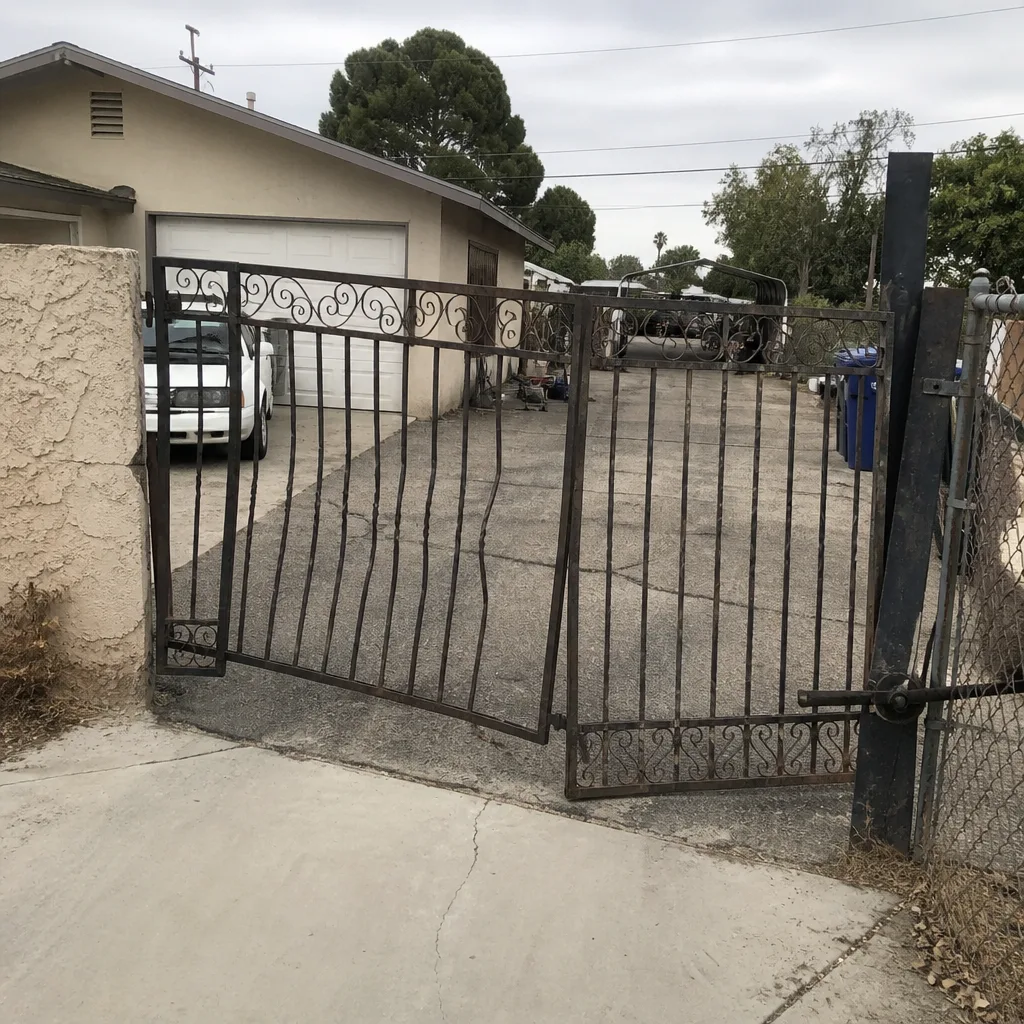 Before
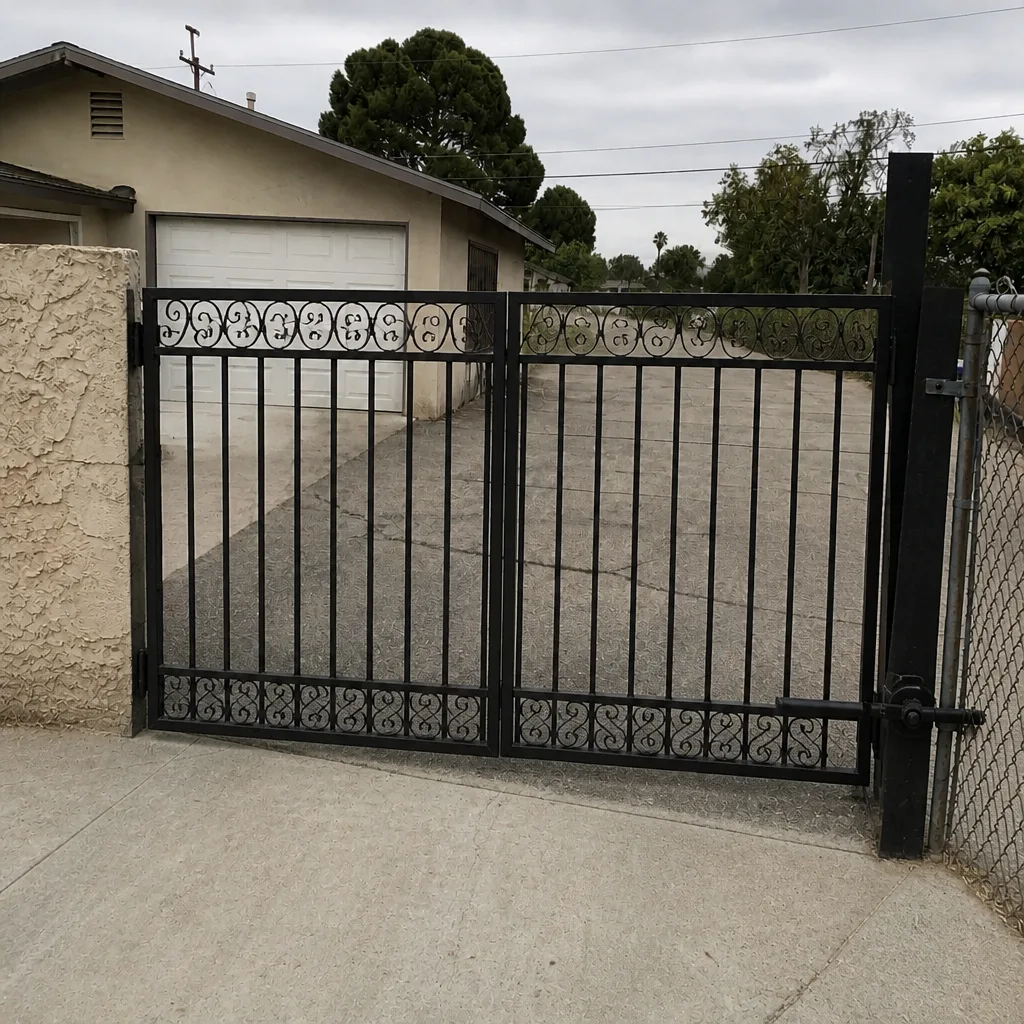 After
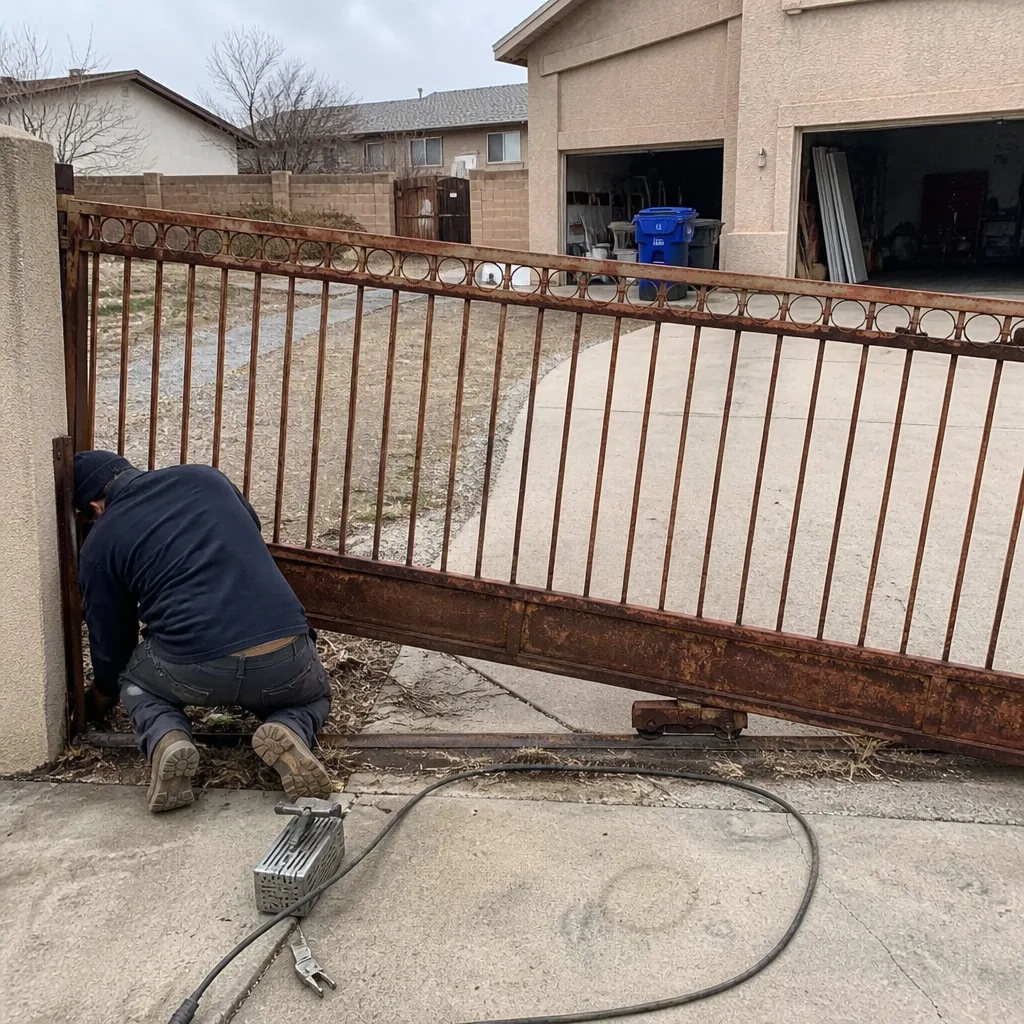 Before
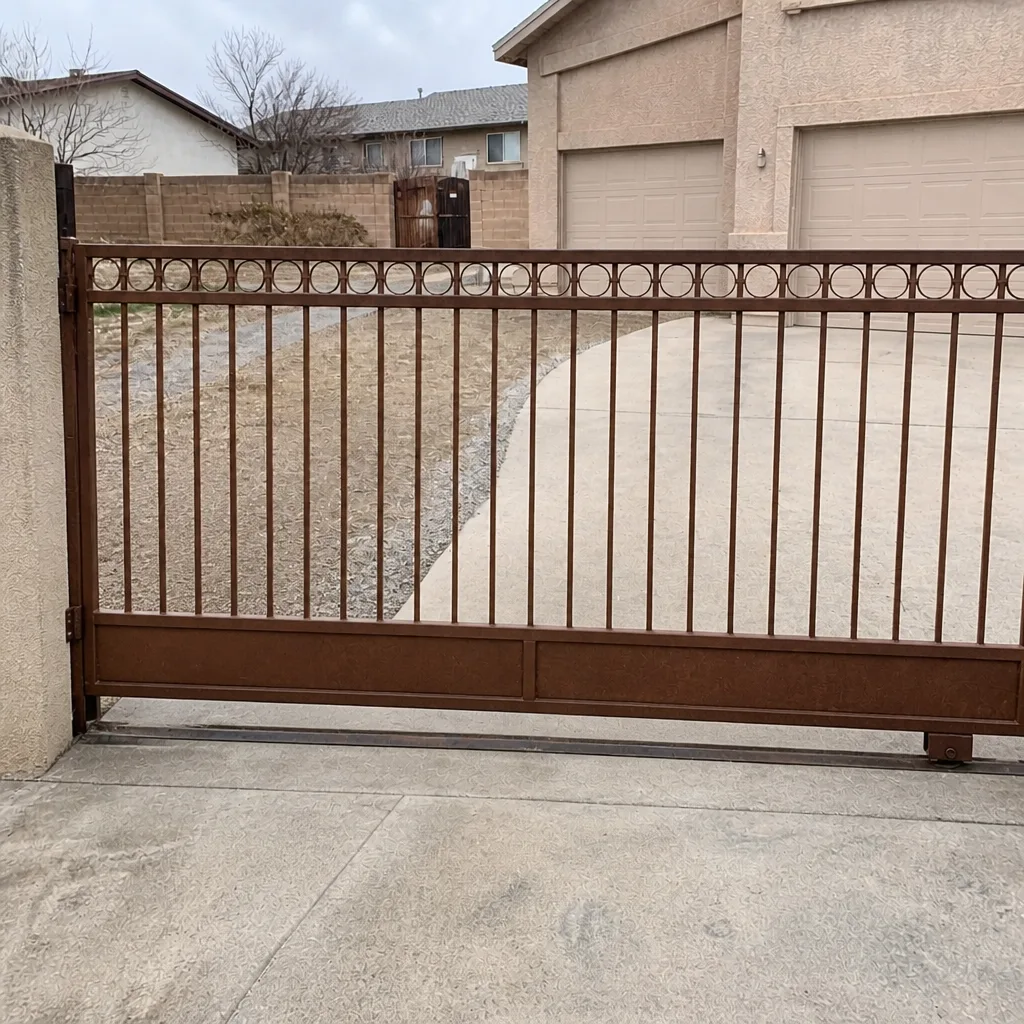 After
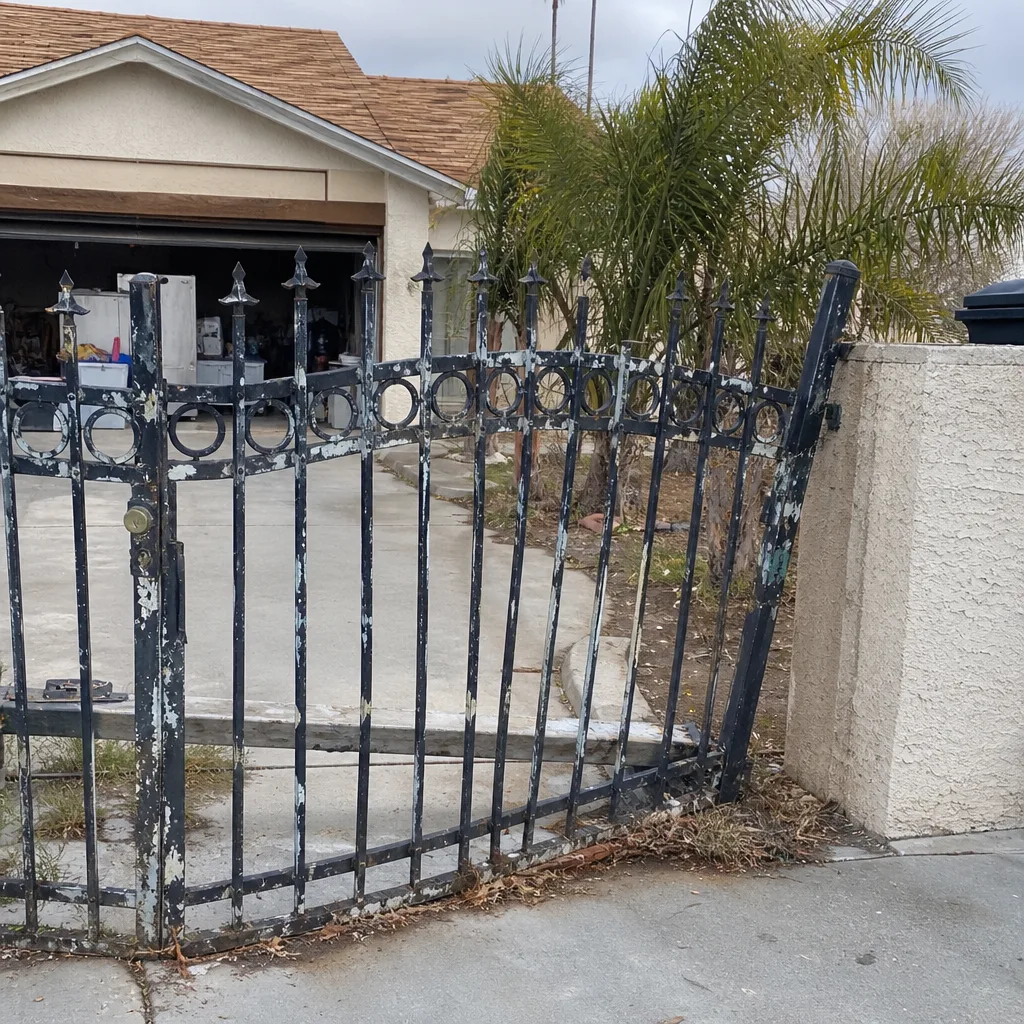 Before
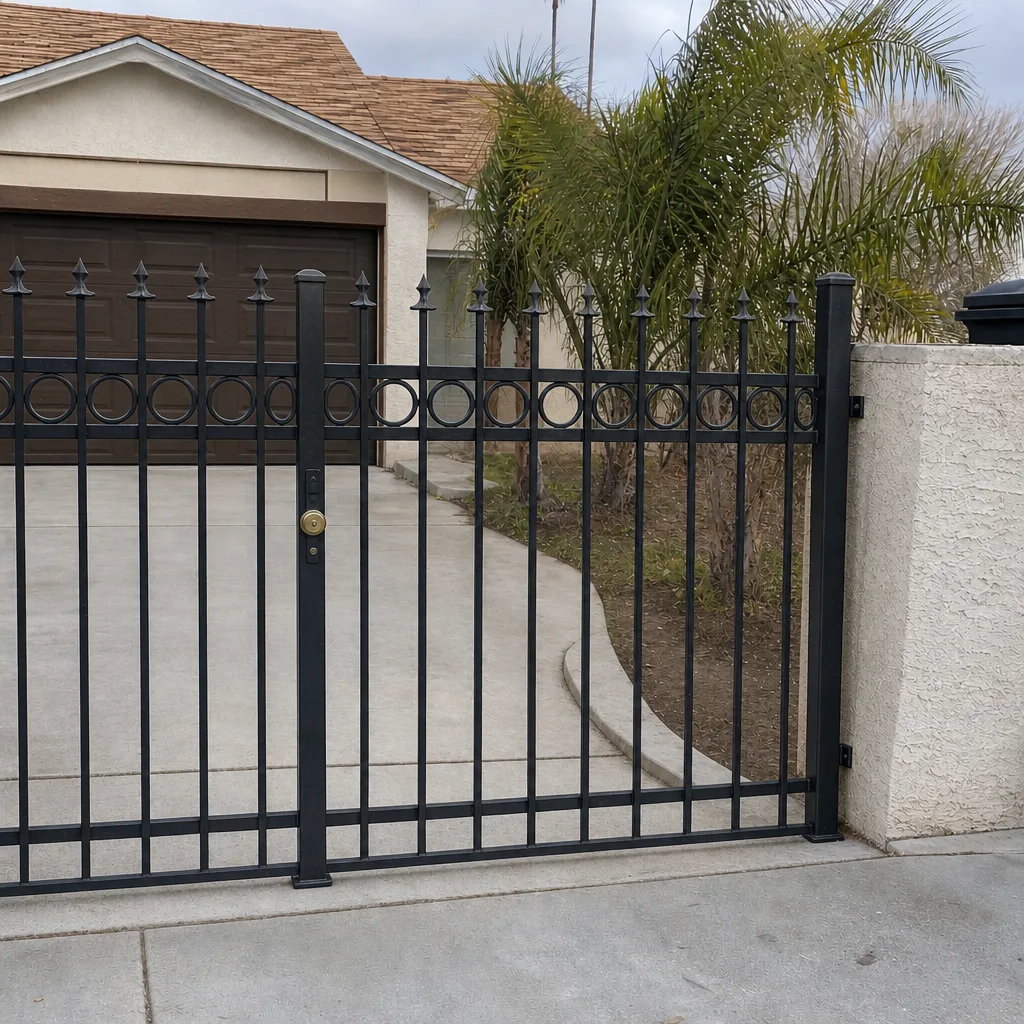 After
When to Call a Professional
Some seasonal gate work is within reach for a careful homeowner: cleaning, visual inspection, lubricant application. The moment the job touches line voltage, control boards, hydraulic fluid, or any part of the operator that involves opening an energized enclosure, stop and call a technician. Electrical work on gate operators can cause serious injury, and photovoltaic and battery systems carry their own risks even when the main power is off.
Also call when your gate shows heat-related faults that don’t clear after cooling, when a dust storm leaves the gate behaving strangely after a basic clean, or when the September assessment turns up wear you’re not sure how to address. Gate Repair Paradise offers free estimates in Paradise. Call (844) 834-1647. We answer 24/7. Fast dispatch from 7am to 7pm, Sunday through Friday.
Frequently Asked Questions
April is the best month for a preventive inspection and September is the best month for damage assessment, but the single most useful window for actual repairs is November through February. That winter stretch is when major work can be done without the summer heat stress working against you.
No. Paradise doesn’t have a freeze problem, so you won’t see the cracking and heave that colder states deal with. The damages here are heat-related: thermal expansion on metal parts, degraded lubricant, shortened battery life, and stress on control boards and hydraulic seals. Different cause, same result if ignored.
Dust storms push fine desert grit into operator housings, photo eyes, slide tracks, and loop detector areas. That grit accelerates wear, blocks sensors, and can cause false triggers or a gate that reverses without an obstruction. Clean the housing, clear the sensors, and sweep the track after every significant dust event.
You can, but in Paradise the wait usually pushes the fix into the worst possible month. A gate that’s ready to fail in June is a repair in 105-degree heat with the gate stuck. The April inspection exists to catch problems while they’re still cheap and easy to schedule.
We work on LiftMaster, FAAC, BFT, Linear, Viking, Ghost Controls, DoorKing, Elite, and Mighty Mule systems. We’re brand-agnostic: the right fix for the system you already have is the goal, not the brand we happen to prefer. Call (844) 834-1647 for a free estimate on seasonal service or a diagnostic.
Twice a year at minimum: once in April before the stress period and once in September when it’s over. Solar panels and batteries both degrade faster in heat, and a solar gate that’s healthy in spring can fail in August without warning.
The Bottom Line
Seasonal gate care in Paradise isn’t the four-season template. It’s an annual stress cycle: prep in April, monitor through the summer, assess in September, and repair in winter. Add a post-dust-storm check whenever the desert sends one through. Do those four things and you’ll catch problems while they’re small, keep your gate working when it matters most, and avoid the July emergency that nobody schedules. If you’d rather have a specialist handle it, we’re here. Call (844) 834-1647 for a free estimate.
Written by the team at Gate Repair Paradise.