
Last updated November 16, 2026
 Wrought iron
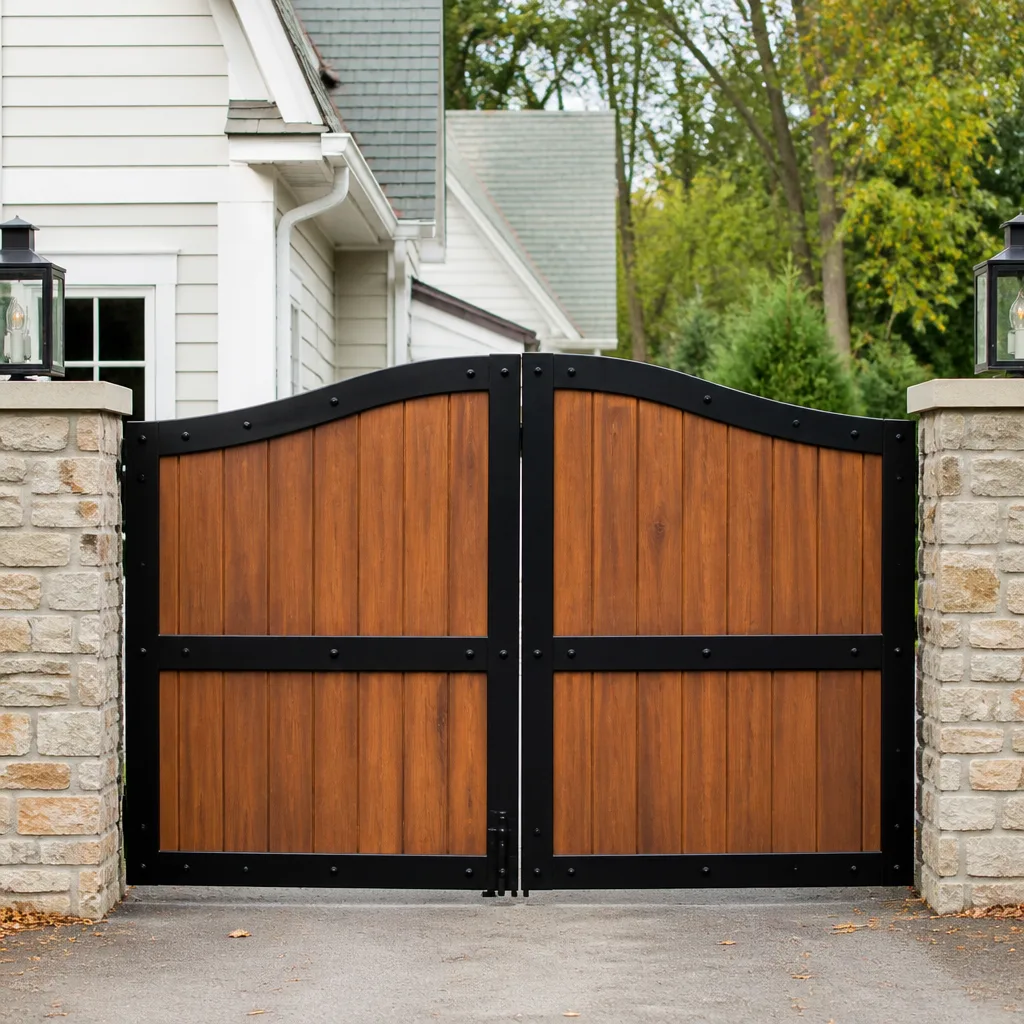 Wood & steel frame
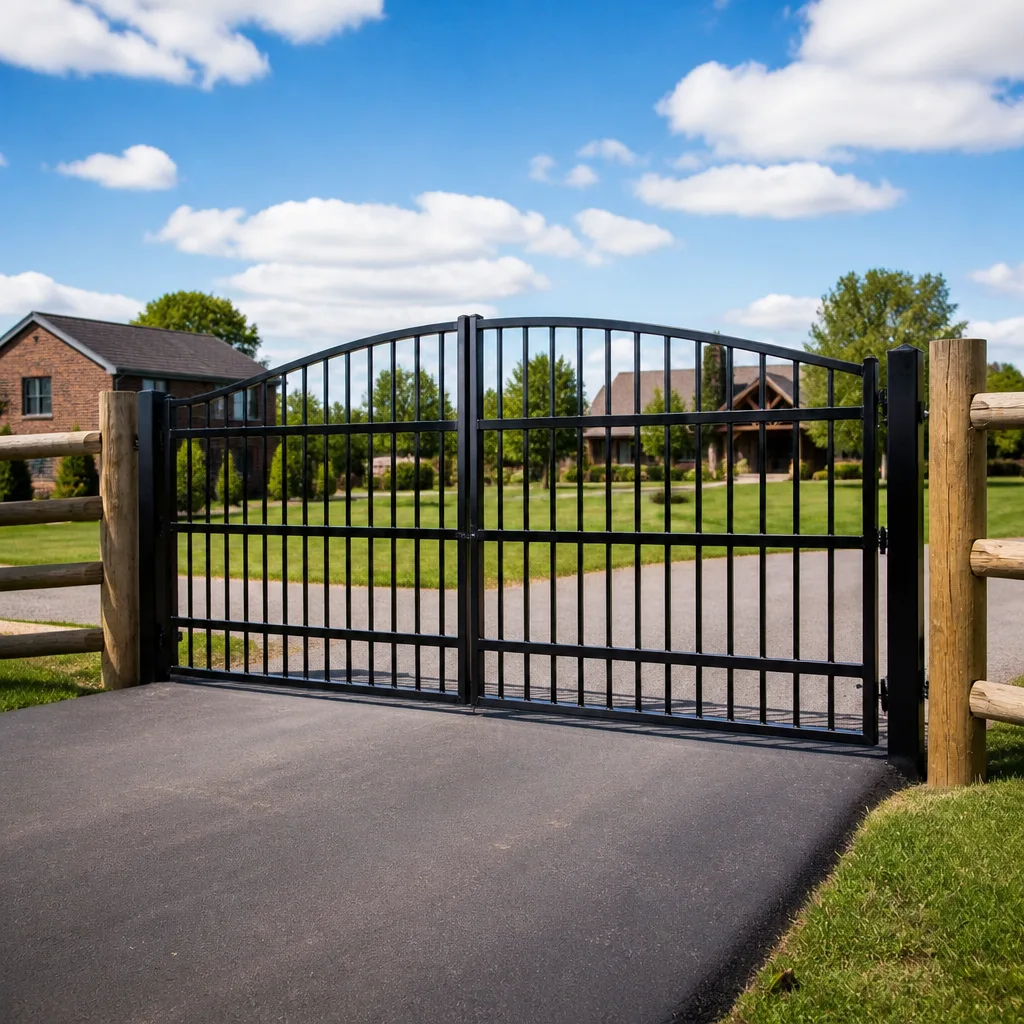 Farm & ranch
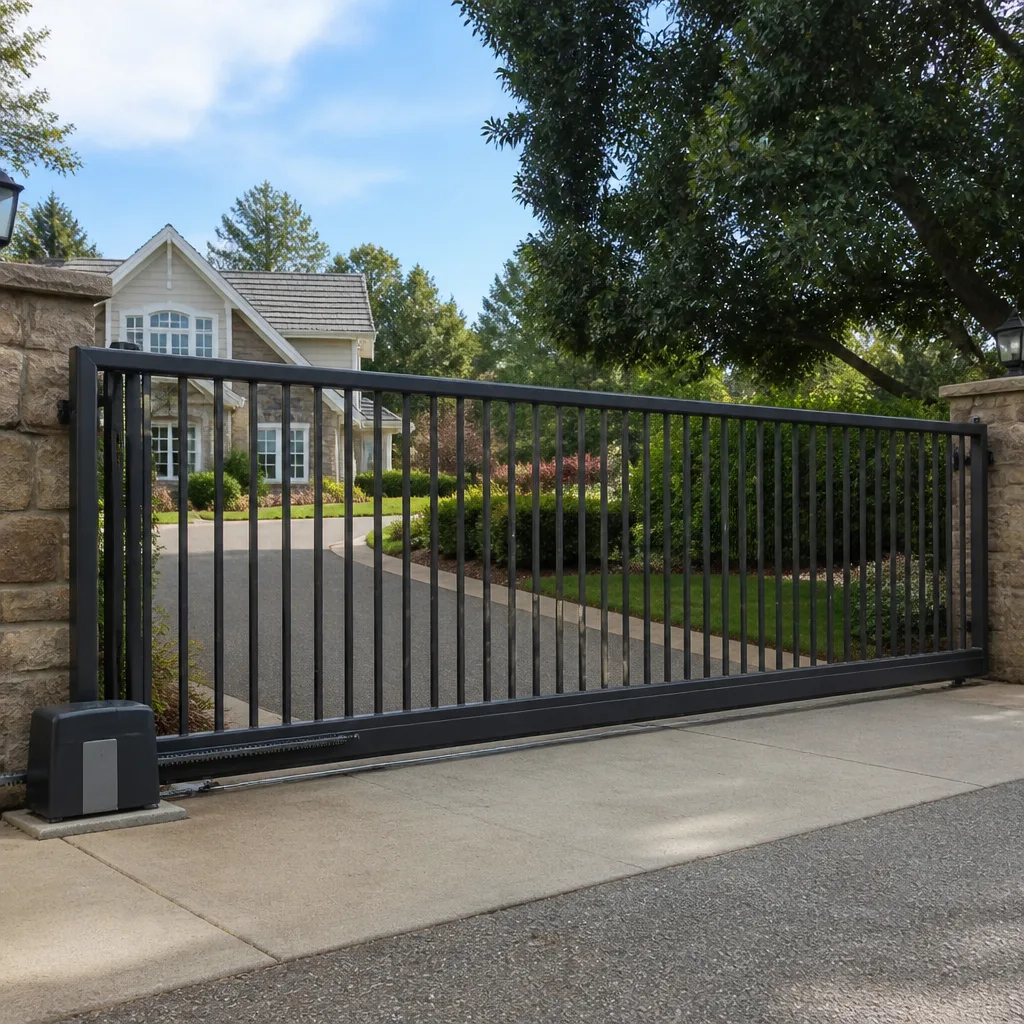 Sliding driveway gates
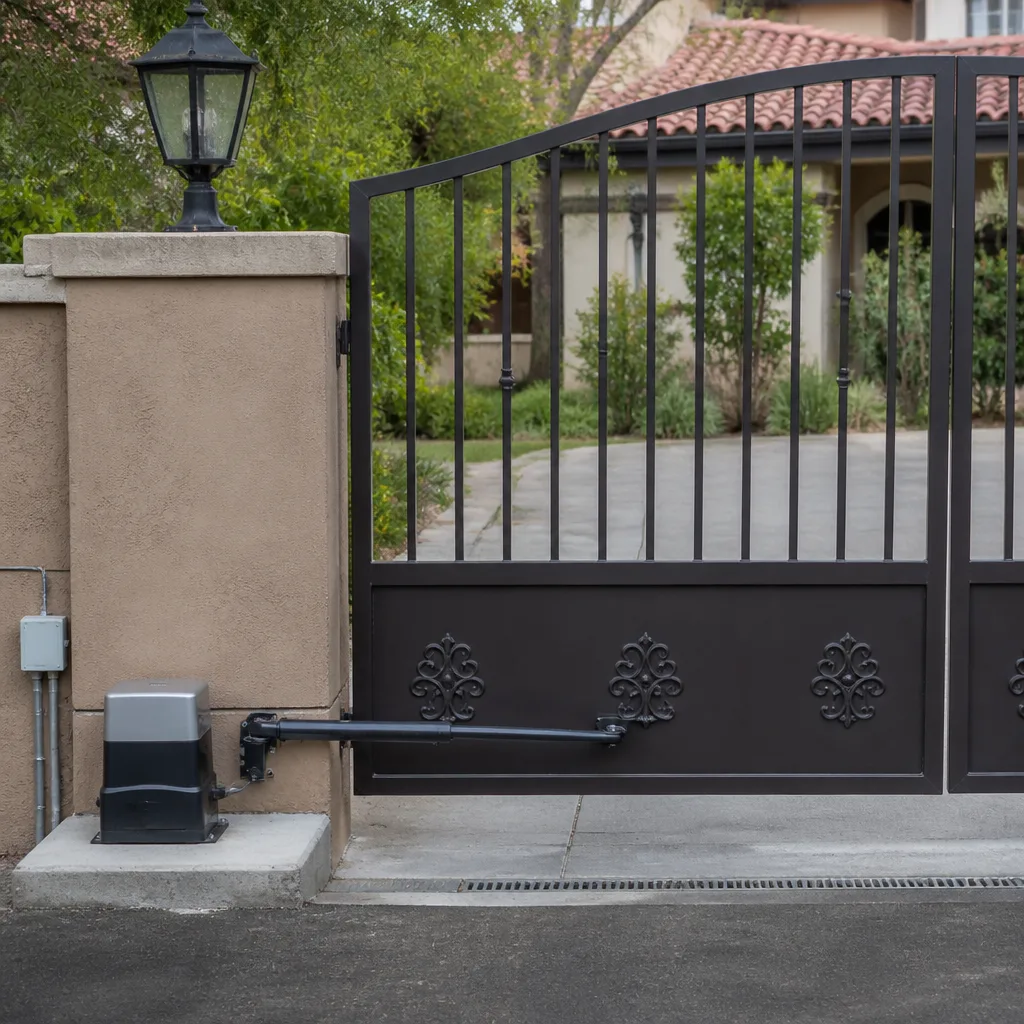 LiftMaster operators
Free on-site gate assessment - hinges, posts, and your LiftMaster or Nice gate operator checked before anything is quoted
The assessment is free and the quote is the invoice.
Get your free estimateDIY vs Professional Gate Repair: The Paradise Homeowner’s Decision Guide
Replacing a gate latch is an afternoon project. Chasing down why your operator keeps triggering with nothing near it is not, and confusing the two is how a small hardware fix turns into a diagnostic bill for a control board that was never the problem. The line between these two kinds of work is not about confidence or YouTube tutorials; it’s about which part of the gate you’re touching and what happens if you get it wrong.
This guide draws that line for Paradise homeowners, property managers, and anyone staring at a gate that won’t close, won’t open, or opens at random. You’ll get a clear list of what’s genuinely safe to handle yourself, what to leave to us, what Nevada requires for automated gates, and how to do a basic check before you call so the conversation starts somewhere useful. Every task on both sides of the line gets explained in plain terms, with no either-or slogans.
Quick Answer
If your gate problem is cosmetic or mechanical hardware – a latch that won’t catch, a lock that’s stiff, a small weld that’s cracking, a dusty safety sensor that keeps tripping, a manual swing on a rusty hinge – it is genuinely reasonable to handle it yourself. If the problem involves the operator motor, the control board, the loop detector, the safety sensors’ electrical wiring, a post that has shifted and needs resetting in concrete, or a gate that has become a hazard when it moves, involve a trained technician. And in Paradise, automated gate work falls under entrapment-protection requirements that most homeowners can’t verify themselves, which tilts the decision further toward professional involvement the moment a motor is connected.
Styles & brands we work with
- Wrought iron
- Wood & steel frame
- Farm & ranch
- Sliding driveway gates
- LiftMaster operators
Table of Contents
- Where the DIY Line Actually Falls
- Tasks That Are Genuinely Safe to DIY
- Tasks That Look Simple but Need a Professional
- Nevada Liability and UL 325 Entrapment Protection
- How to Diagnose Your Gate Before You Call
- The Cost Math: When DIY Saves Money and When It Costs More
- How Paradise Climate and Housing Affect Your Gate
- When to Call a Professional
- Frequently Asked Questions
Where the DIY Line Actually Falls
Most gate problems fall into one of two buckets, and the bucket depends on whether the problem is in the gate itself or in the system that moves it. The gate is a hinge, a frame, an infill, a latch, a lock, and a post. The system is a motor, a control board, a power run, a loop detector, safety sensors, and a remote or keypad. Hardware on the gate is usually manageable. The system is where money is made and safety is lost.
There’s a second test that matters just as much: what happens if the fix fails while the gate is moving? A latch that doesn’t fully catch means the gate swings freely – annoying but not dangerous. A safety edge that’s bypassed or a loop detector that’s misadjusted means a gate can close on a person or a vehicle. That second category is where a homeowner should stop and call someone.
In our experience across Paradise, the most expensive repair bills come from homeowners who crossed the line in the harder direction on a Sunday afternoon, then had a technician arrive to find a half-disassembled control box and no way to tell what the original fault even was. Diagnostics are cheap when the system is untouched. They get expensive when you’re diagnosing two problems at once, and one of them was introduced today.
If you’re unsure which side of the line a job falls on, the phrasing to use is simple: “can this be repaired without opening the operator or touching the power?” If the answer is yes, you’re probably fine. If it’s no, it’s time for the gate repair conversation.
Tasks That Are Genuinely Safe to DIY
These are the tasks that make the DIY half of the decision real. They’re cosmetic, mechanical, and reversible. If you get one wrong, you try again or you call us with the gate in roughly the same condition you started in. None of them involve opening a control box, disconnecting power, or loosening anything structural.
Latch replacement. A gate latch is a bolt-on piece of hardware with a striker plate. When the latch stops catching it’s often because the striker has shifted, the bolt is worn, or the alignment has drifted an eighth of an inch. Replacing it is a screwdriver-and-drill job, and the alignment is adjustable in the same way. Do not try to substitute a latch with something that isn’t rated for a gate; a cabinet latch will fail within weeks.
Lock lubrication. A gate lock that takes two hands and a wiggle is a lubrication problem more often than it’s a broken lock. A dry lubricant (silicone or graphite) works better than oil in Paradise’s dry heat because oil attracts dust and turns into a paste. Once a season is enough.
Minor weld touch-up. Small cosmetic welds – a hinge bracket that has hairline cracks at the surface, a decorative element that has come loose from its frame, a hinge pin boss that has started wearing – can be addressed with a small welder if you know what you’re doing. The line here is that if the weld is on a structural member (the main frame, the hinge post connection, the vertical stile that carries the gate panel), that’s not a touch-up. That’s structural repair and it needs to be evaluated.
Sensor cleaning. Safety sensors on automatic gates are the ones near the bottom of the gate path or mounted on the posts facing each other. When dust, spider webs, or leaf buildup covers the lens, the gate behaves as if something is in the way. A soft cloth and a few minutes usually fixes it. Never adjust or point a sensor once it’s clean; cleaning is fair territory, aiming is not.
Hinge lubrication and bolt tightening. A squeaking hinge or a slightly loose bolt on a manual gate is the same kind of maintenance as on a house door. Lubricate the hinge pin, check the bolts with a wrench, and move on.
Tasks That Look Simple but Need a Professional
These are the ones that look like the DIY tasks above and aren’t. Each of them has a risk profile that doesn’t show up until something goes wrong.
Loop detector adjustment. A loop detector is a wire loop embedded in the driveway, tuned by a sensitivity setting on the control board. If the gate triggers with no vehicle present, a homeowner sees a “sensitivity knob” and turns it. The problem is that turning sensitivity down too far is how a gate stops detecting an actual car, which is how a car gets hit. A technician carries the loop tester, knows what the board expects, and can tell a failed loop from a nuisance-triggering one without guessing.
Control board replacement. The board is the brain of the operator. Boards are matched to motor types and safety inputs, and a board from a different model or a different generation within the same brand will often fit the screw holes and fail to run the motor correctly. We see this most on the popular residential brands: a Ghost Controls board looks a lot like another Ghost Controls board until the safety reverse behavior is tested, and a DoorKing board in a commercial unit has to match the access hardware as well as the motor. This is not a task to learn on your own operator.
Post realignment with concrete reset. A gate post doesn’t move because it got bored; it moves because the concrete base has shifted, the soil has settled, or a hinge has shown the post to a load it wasn’t expecting. The fix is to dig out around the base, re-set the post plumb, and re-pour the footing. It’s dusty, heavy work, and getting the post back to true is a measurement problem more than a strength problem. If you don’t reset the post correctly, the gate will drag again in a season.
Anything involving the power run. Mains power to an operator, a low-voltage power supply that’s fed from the house, or an access control box that’s been spliced into an existing circuit – all of that is electrical work. In Paradise, that work falls under rules most homeowners aren’t in a position to check. The safe call here is a technician who does this kind of work regularly.
Safety devices that have been bypassed or removed. If a previous owner removed a safety edge, disconnected a sensor, or jumped out an input on the control board to “make the gate work,” that bypass has to be undone and the system brought back to standard. This is not a repair, it’s a restoration, and it’s the kind of thing a professional sees several times a year and knows how to do without breaking something else.
Nevada Liability and UL 325 Entrapment Protection
Automated gates in the United States are covered by a safety standard called UL 325, which requires that a gate operator include entrapment protection – typically a means of detecting an obstruction (a safety edge on the gate, photoelectric sensors across the opening, or a loop detector that senses a vehicle) so that the gate stops and reverses rather than continuing to close on a person, a pet, or a vehicle.
UL 325 matters for a homeowner thinking about DIY in two ways. First, it defines what “correct” looks like for your system: the operator must have at least one functioning entrapment protection device appropriate to the installation, and the control board has to be configured to honor it. Second, it shifts liability. If your gate closes on someone and the entrapment protection wasn’t working, the question that follows is who removed it, who bypassed it, or who failed to notice it had stopped working. A gate that’s been worked on by a homeowner is a gate whose safety history is harder to document.
In Paradise, that liability question is the reason we treat safety devices as non-negotiable. We don’t bypass them, we don’t leave a system without them, and we document what’s on the operator so a property manager can show the file later. If you’ve bought a home with an automatic gate and you don’t know whether the entrapment protection is functioning, that alone is a reason to have it looked at once and then get on with your life.
One more note on liability: the person who signs the check is not always the person who owns the risk. Property managers overseeing gated communities in Paradise are responsible for the safety of the site, which means a homeowner-grade DIY repair on a shared gate is not a reasonable answer. On shared infrastructure, especially, the professional call is the right call.
How to Diagnose Your Gate Before You Call
You can shorten the conversation and often shorten the bill by writing down what you saw. A technician who arrives with a clear description of the symptom is diagnosing, not investigating. Here’s the sequence we’d walk a homeowner through before they call:
- Note the exact symptom. Won’t open, won’t close, opens halfway and stops, opens and immediately reverses, opens all the way and never closes, opens on its own with nothing near it. Each of these points to a different part of the system.
- Check the obvious blockers. Is something in the path – a fallen leaf, a branch, a garden hose, a kid’s scooter, a bin that blew over in the wind? Is the gate physically binding against the post or dragging on the ground?
- Test the remote and any wall-mounted control separately. If the remote doesn’t work and the wall control does, the problem is the receiver or the remote, not the motor. If neither works, you’re dealing with the control board or the power.
- Watch the safety sensors. Most operators have an indicator light on the sensor or the control board that changes state when the beam is broken. If the light is stuck in the broken state with nothing in the way, the sensor needs cleaning or the alignment has moved.
- Check the operator’s power. Is the breaker tripped? Is the operator’s own on/off switch flipped? Is there a separate low-voltage supply that has an indicator light? Don’t open a panel to look; just verify the outside indicators.
- Try the manual release if the operator has one. Most residential operators have a manual release key or lever that disengages the gate from the motor. If the gate moves freely by hand when released, the mechanical part of the gate is fine and the problem is in the operator. If it binds, the problem is mechanical.
- Write down the brand and model if they’re visible. This lets the technician tell you whether parts are on hand. Our shop keeps components for LiftMaster, FAAC, BFT, Linear, Viking, Ghost Controls, DoorKing, Elite, and Mighty Mule, so a brand and model at the start of the call is genuinely useful.
Don’t disconnect the operator, don’t open the control box, and don’t bypass a safety sensor to “test” whether the gate will move without it. That last one is the most common dangerous shortcut a homeowner takes, and it’s the reason we can usually tell within a minute whether a gate has been worked on before.
See the difference
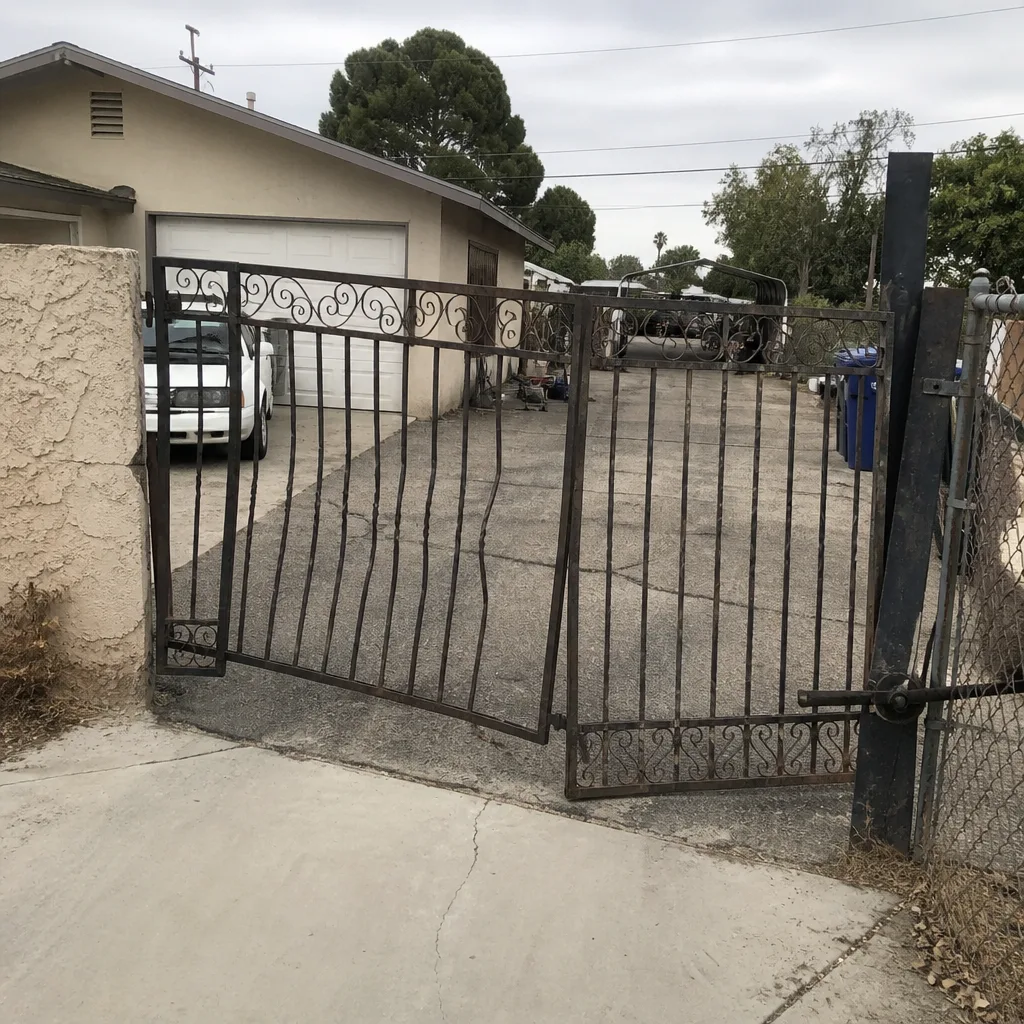 Before
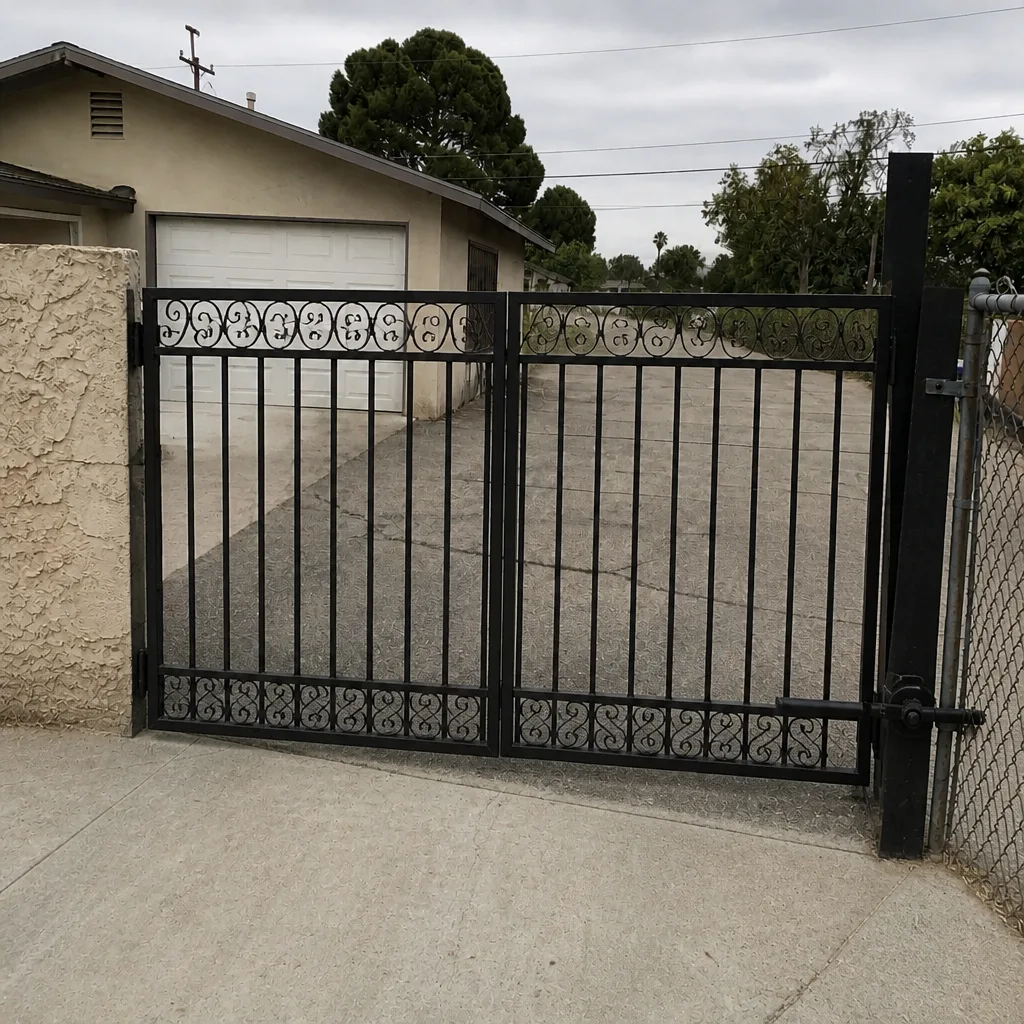 After
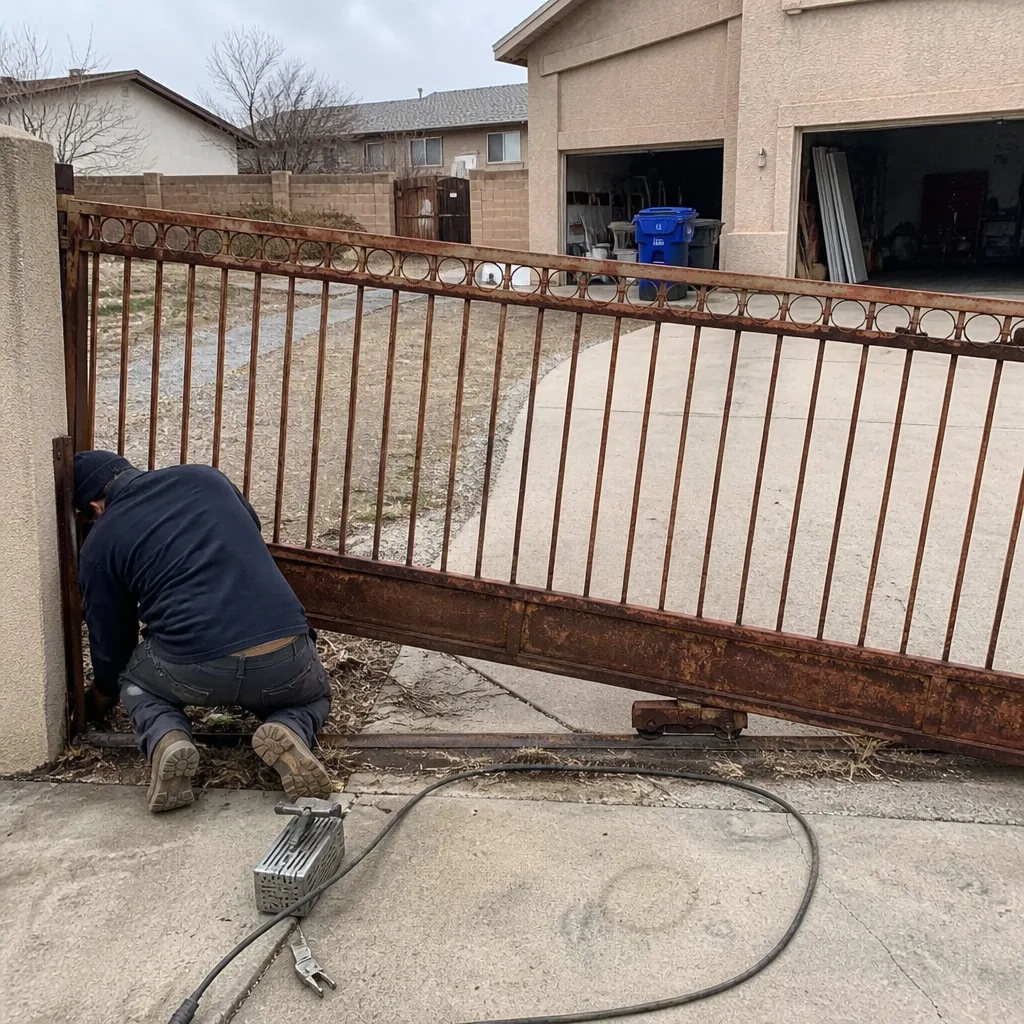 Before
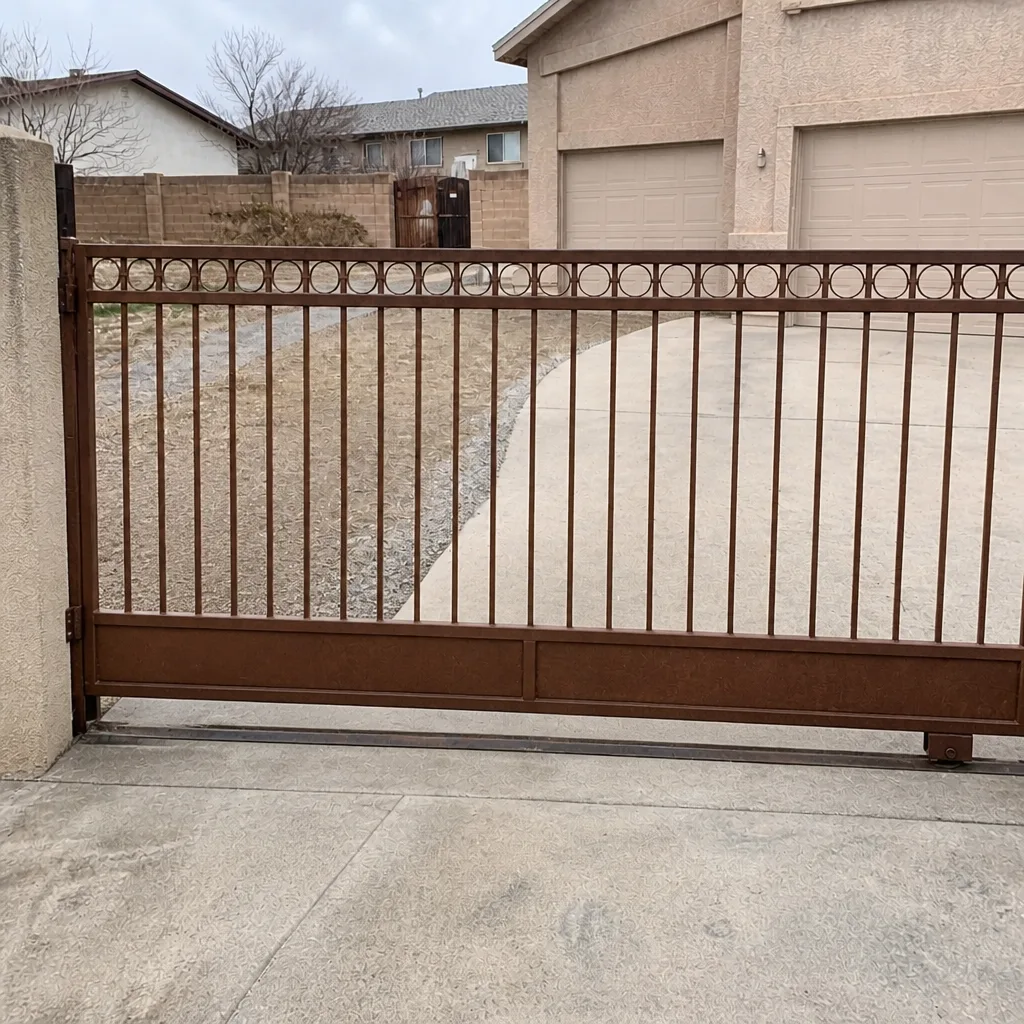 After
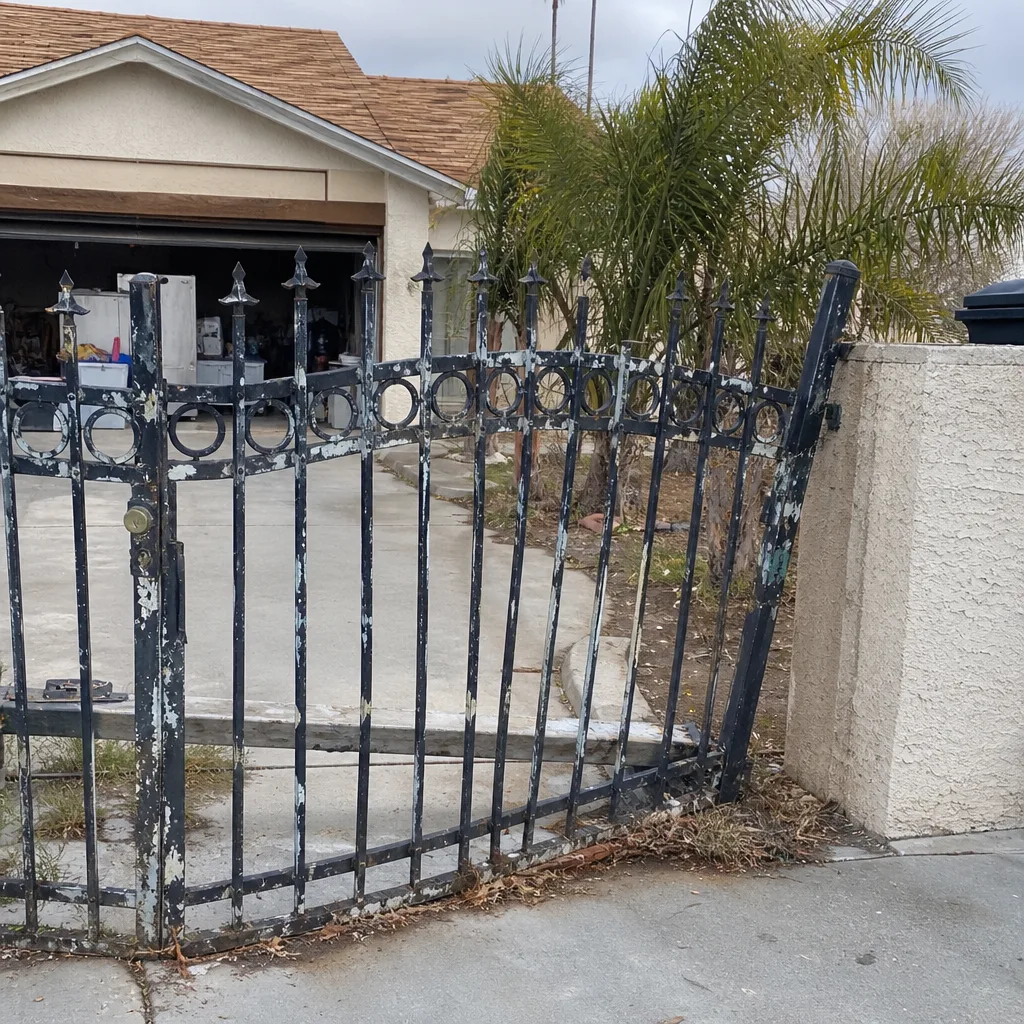 Before
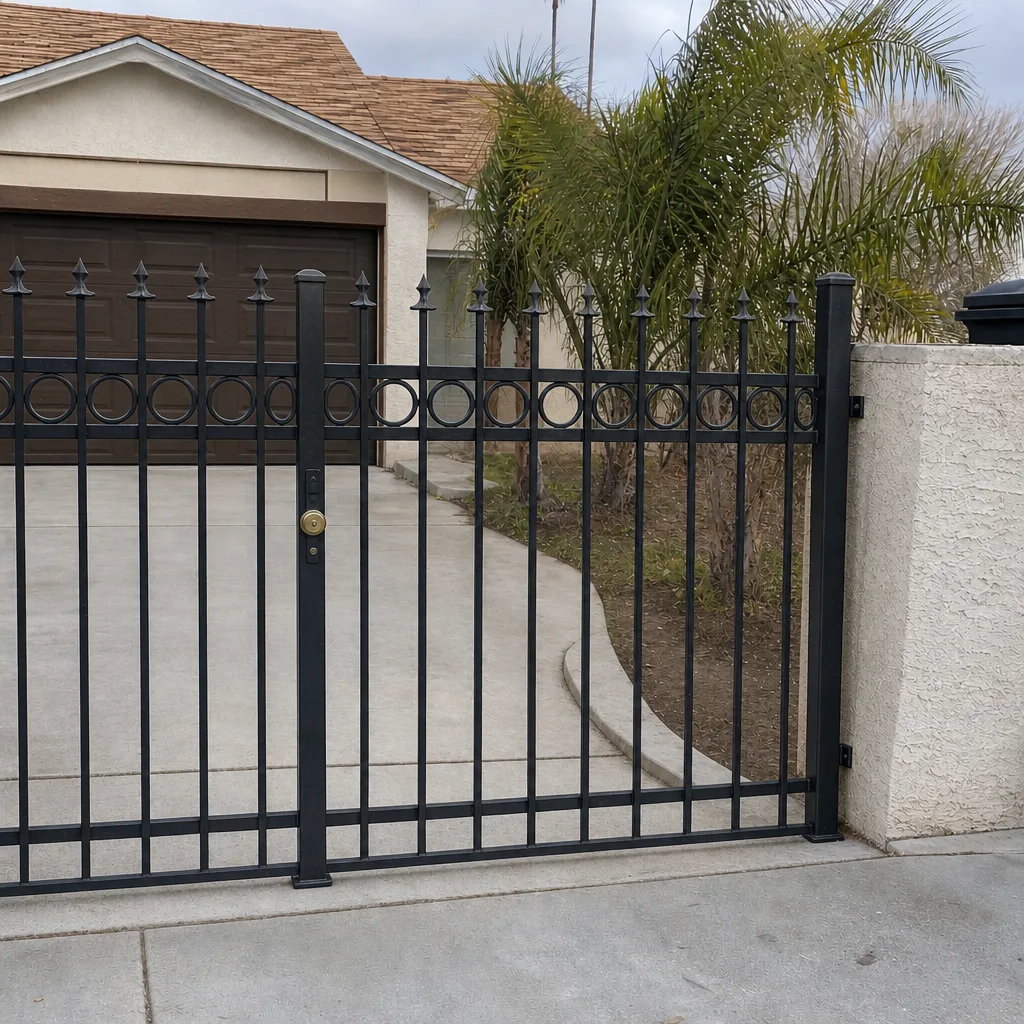 After
The Cost Math: When DIY Saves Money and When It Costs More
There are two ways DIY goes well and two ways it goes badly, and the pattern is consistent enough to plan around.
DIY saves money when the task is small and independent. A $15 latch and an hour is cheaper than a service visit for the same latch, and if the latch is the only problem, calling a technician would have been unnecessary. Lubrication and cleaning are on this list too – they’re work a technician does for you, but they don’t require a technician.
DIY saves money, more surprisingly, when it produces a better description of the problem. If you spend 20 minutes running the checks above and call with “operator opens on its own, triggers at random, nothing in the path, remote and wall switch both do it,” you’ve helped the technician skip the first 20 minutes of diagnosis. That’s a real saving.
DIY costs more when it delays diagnosis. A gate that’s slightly off for a week becomes a gate that’s off for a month, and what was a hinge adjustment becomes a bent hinge, a warped stile, and a gate that needs rebuilding. The delay itself is the cost.
DIY costs more when it introduces a second problem on top of the first. The most expensive version is a homeowner who opens the control box, swaps a wire, and creates a fault the technician now has to unwind before diagnosing the original issue. Electric gates are the one area where the estimate is real money and the DIY attempt can double it.
- Call immediately: the gate moves when it shouldn’t, the safety sensors have stopped working, the operator hums but doesn’t move the gate, or the gate is on shared property.
- DIY then call if it doesn’t resolve: hardware, lubricants, sensor cleaning, cosmetic welding.
- Call and don’t touch: control box, power run, loop detector, structural post work.
Here’s the pricing change to expect. When you call us for electric gate repair, the price is set per job by the written estimate, agreed before any work starts. It’s not hourly, and it’s not affected by the time of day. A technician arrives, diagnoses, and gives you a written estimate. If the gate has been worked on already and the diagnosis is complicated by that, the estimate reflects the real job, not the imagined one. Which is the whole argument for not opening the box first.
How Paradise Climate and Housing Affect Your Gate
Paradise is a desert-edge community, and the gate work here reflects it. The heat and the dry air do different things to a gate than coastal weather or a wet climate would, and the housing stock puts the specific stress on a specific set of parts.
Heat and sun exposure. Metal expands when it’s hot, and a gate that’s set up snug in the morning can bind against the post in the afternoon. Hinge pins dry out faster, weld stress at hinge brackets shows up sooner, and paints fade and crack. If your gate is dragging in the heat of the day and fine in the cool of the morning, that’s the climate talking, and the fix is usually a hinge adjustment or a post check, not a new gate.
Dust. Desert dust gets into everything. It clogs safety sensor lenses, it packs into loop detector wiring trenches, and it finds its way into the operator’s ventilation. Sensor cleaning as routine maintenance – not a repair – is a Paradise habit that pays for itself. So does a visual check of the sensor housing for cracks after a wind event.
Summer wind and blowing debris. A monsoon-season gust doesn’t just knock over the neighbor’s patio furniture; it drives branches and palm fronds against gate hardware and into the gate path. After a wind event, look at the latch alignment and clear the sensor path. Hail here is uncommon, but impact damage from debris is not.
Housing stock. Paradise has a mix of older residential properties where the gate hardware has been in place for a long time and newer construction where gates are more recent but the operator may have been the builder’s choice rather than the best one for the site. Older gates more often need structural work; newer gates more often need operator tuning. Both are gate work; the DIY/professional line lands differently depending on which you have.
Slope and soil. Post bases in Paradise shift because of the dry-then-wet soil cycle, not because of flooding. A gate post that was plumb last spring and is off-plumb now is a sign the concrete base has moved. That’s a professional job, and it’s the one that most often gets delayed until the gate won’t swing.
Common Mistakes to Avoid
- Bypassing a safety sensor to “test” the gate. Every month we see a bypass that was left in place for weeks. If a gate closes on a person because a sensor was jumped, the story that matters later is who left it that way.
- Turning the loop detector sensitivity to “fix” a phantom trigger. Turning it down hides the symptom and makes the gate miss real vehicles. In Paradise driveways where a car often parks close to the loop, a poorly tuned detector is a hit waiting to happen.
- Oiling a lock or hinge in the dry season. Oil in Paradise’s dust becomes a grinding paste. Use a dry lubricant instead, once a season.
- Trying to realign a post with a sledgehammer and a friend. A post that has shifted in the concrete has to be re-set, not encouraged. A hammered post creates a hinge problem on top of a footing problem.
- Buying a control board based on brand name alone. Boards look interchangeable across generations on a lot of Gate Repair Paradise brands. They aren’t, and the wrong board can run the motor while ignoring the safety input.
- Ignoring a slow-opening gate because it “still works.” A gate that takes longer every month is telling you the operator is straining. Delaying the repair is what turns a bearing and a tune-up into a motor replacement.
- Assuming the local handyman is a substitute. A general handyman who installs fences is not automatically a gate technician. Gates have their own control boards, loop detectors, and safety sensors, and a generalist who misdiagnoses the board will often sell you a board you didn’t need.
When to Call a Professional
Call us when the gate moves when it shouldn’t, when the safety sensors have stopped working, when the operator hums without moving the gate, when the post has shifted and the gate drags, or when the manual release tells you the problem is in the system rather than the gate. Call us, too, on any shared or commercial gate, where the DIY decision isn’t only yours to make. And call us on the small jobs when the timing matters – a gate that fails on a Friday afternoon and gets “fixed” over the weekend is a repair that costs more by Sunday night.
Gate Repair Paradise provides free estimates in Paradise. We work on the brand you already have, not the brand we prefer to sell, and our technicians have up to experience on systems from LiftMaster, FAAC, BFT, Linear, Viking, Ghost Controls, DoorKing, Elite, and Mighty Mule. We answer 24/7. Fast dispatch from 7am to 7pm, Sunday through Friday. Call (844) 834-1647.
Frequently Asked Questions
Yes. A gate latch is bolt-on hardware, and replacing it is a reasonable DIY job if the alignment is adjustable and the new latch is rated for a gate. If the striker has to move more than an eighth of an inch to line up, stop and call us – that shift usually means the hinge or the post has moved, not the latch.
The most common causes are a misadjusted loop detector, a stuck safety sensor, a corroded push-button, or a receiver that’s picking up a neighboring remote’s signal. Each of those is diagnosed differently and a technician with a loop tester and a meter will find it in minutes. In Paradise, dust on the sensor lens is a frequent cause, so start by cleaning the sensor before you assume the worst.
Repairing hardware on a gate you own is generally within a homeowner’s rights, but automated gate systems fall under UL 325 entrapment-protection requirements, and a homeowner who disables or fails to maintain those protections creates a liability problem. For anything involving the operator, the safety devices, or the power run, the answer we give is that it’s not worth the risk. Call (844) 834-1647 for a free estimate instead.
Most operators have a status light on the sensor or the control board that changes state when the beam is broken. With nothing in the gate path, the light should indicate “clear.” If it’s stuck in “blocked,” clean the lens first, then call us if the light stays that way. Never bypass the sensor to keep the gate moving.
The price is set per job by a written estimate, agreed before any work starts. A hardware repair and a control board replacement are different jobs and are priced differently; the estimate is what sets the final number. The estimate is free. Call (844) 834-1647 and describe what the gate is doing, and we’ll tell you what the visit will cover.
Testing a board in isolation only tells you whether the board itself is dead; it doesn’t tell you whether the board matches the motor, the safety devices, or the model of operator on the gate. The diagnosis has to happen at the gate. We work with nine brands, including Ghost Controls, DoorKing, Elite, and Mighty Mule, and the right answer is what we’re after – not a part swap.
The Bottom Line
The DIY decision on a gate comes down to one question: is the problem in the gate or in the system that moves it? Hardware on the gate – latches, locks, hinges, cosmetic welds, sensor cleaning – is fair territory for a careful homeowner. The operator, the control board, the loop detector, the power run, and any structural post work are not, and neither is anything on a shared or commercial gate. The gate specialists in Paradise who handle the second list do it every day and know what a misdiagnosed board costs. When you’re not sure which side a problem falls on, call and describe it: (844) 834-1647 for a free estimate. We answer 24/7. Fast dispatch from 7am to 7pm, Sunday through Friday.
Written by the team at Gate Repair Paradise.