
Last updated November 16, 2026
 Wrought iron
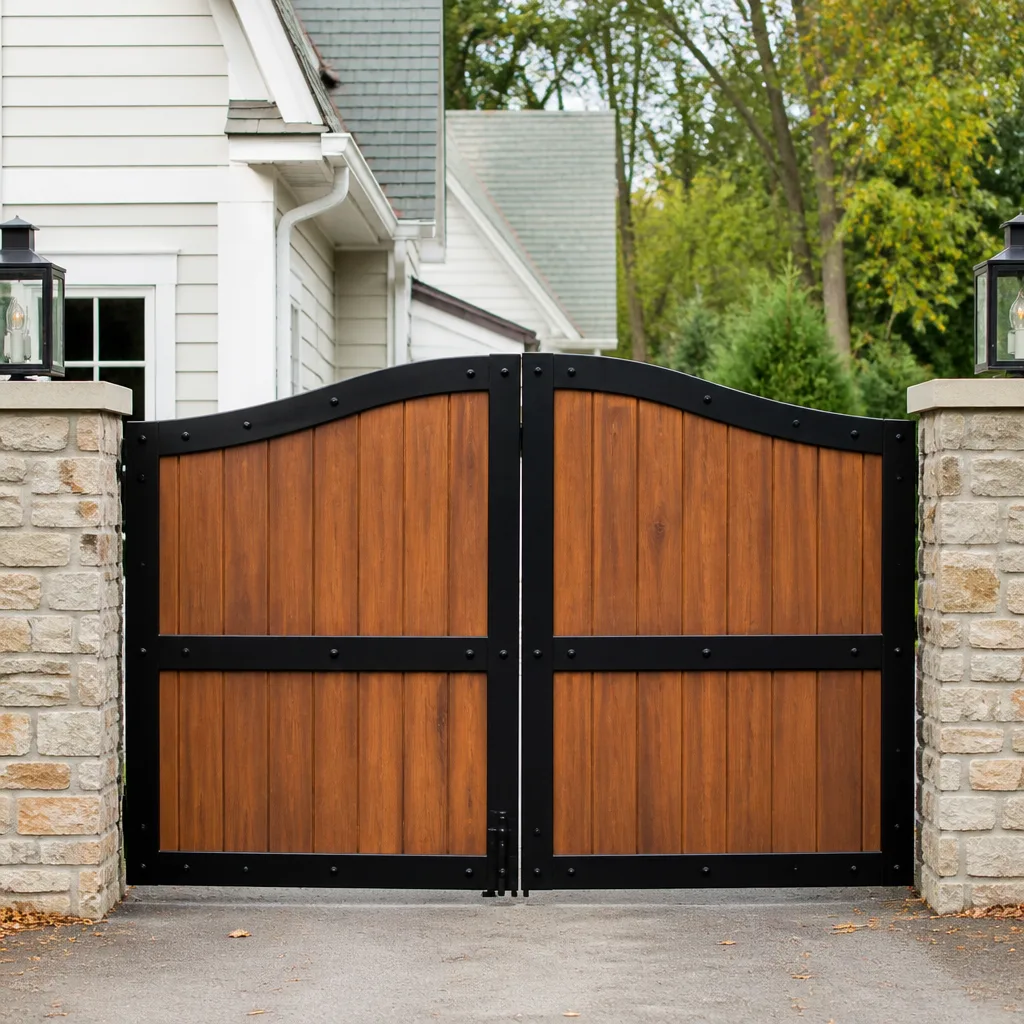 Wood & steel frame
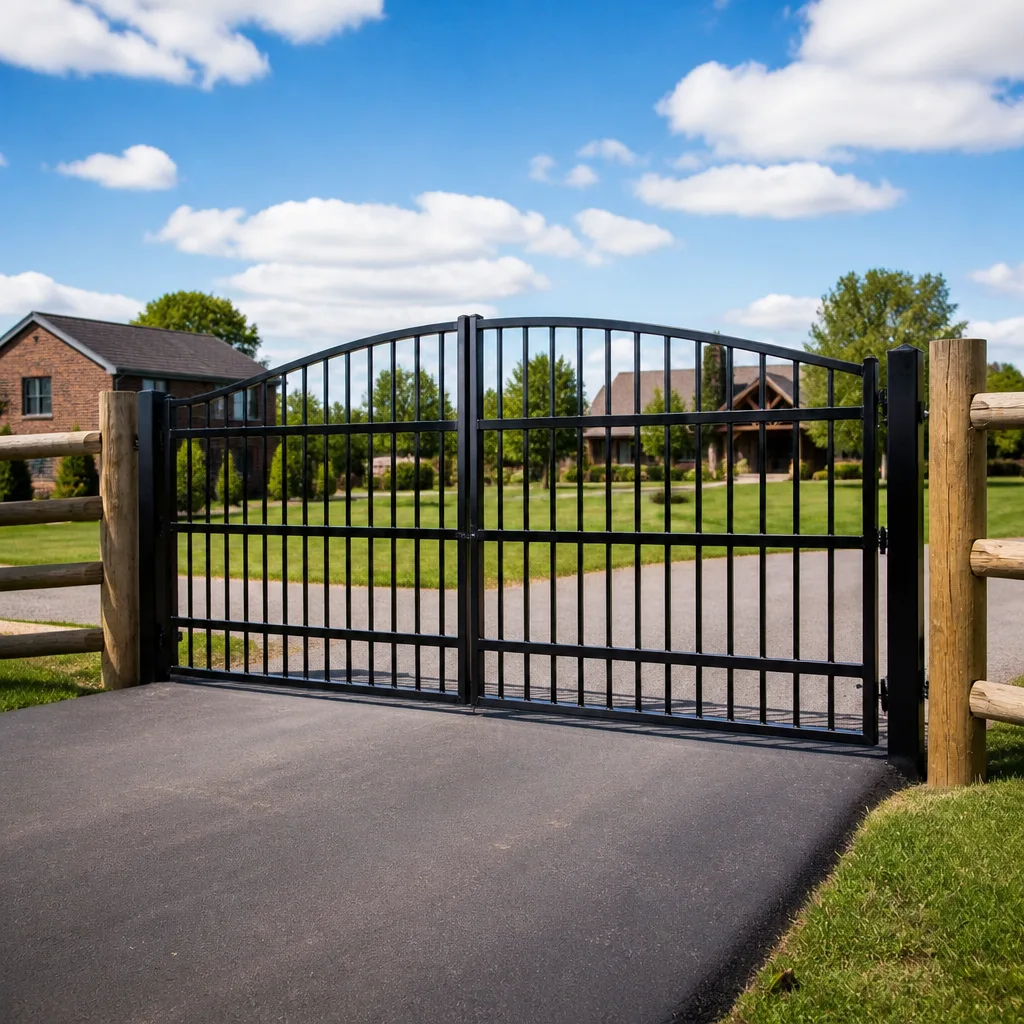 Farm & ranch
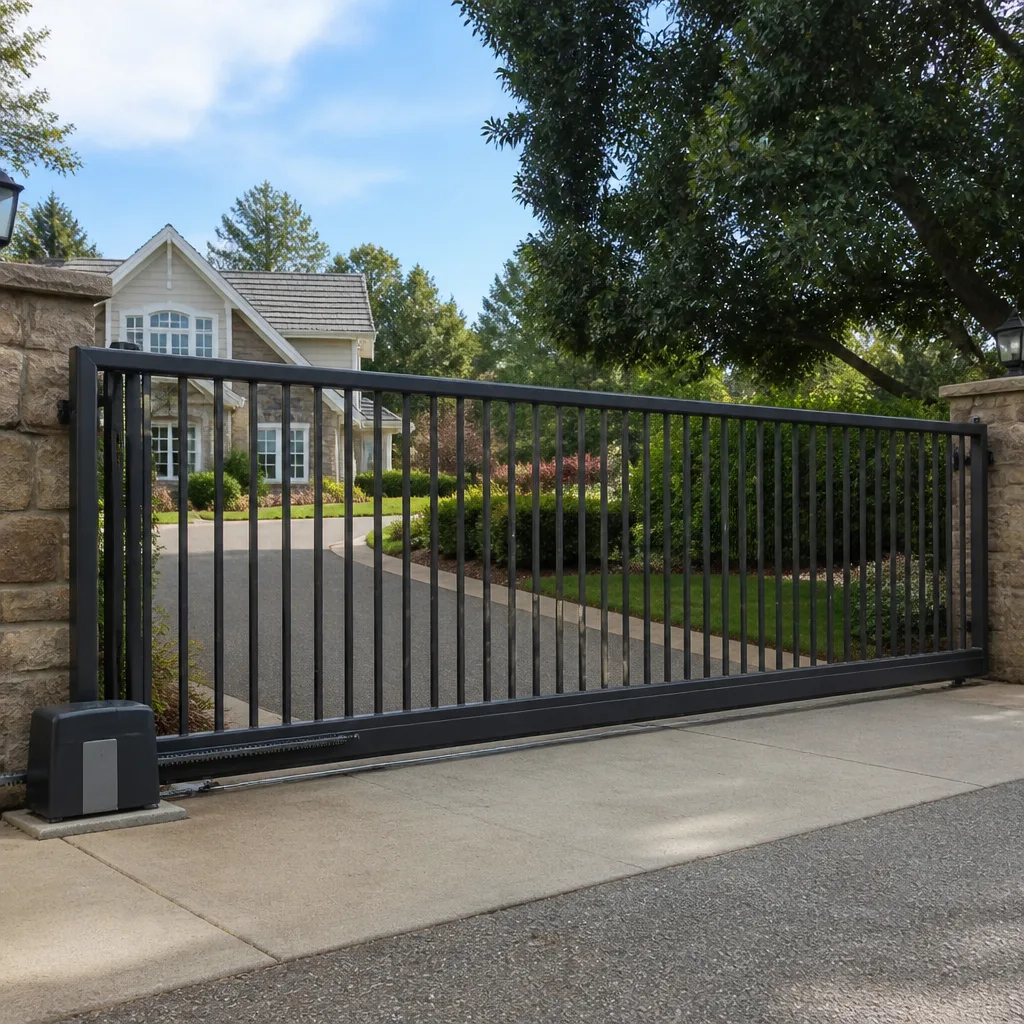 Sliding driveway gates
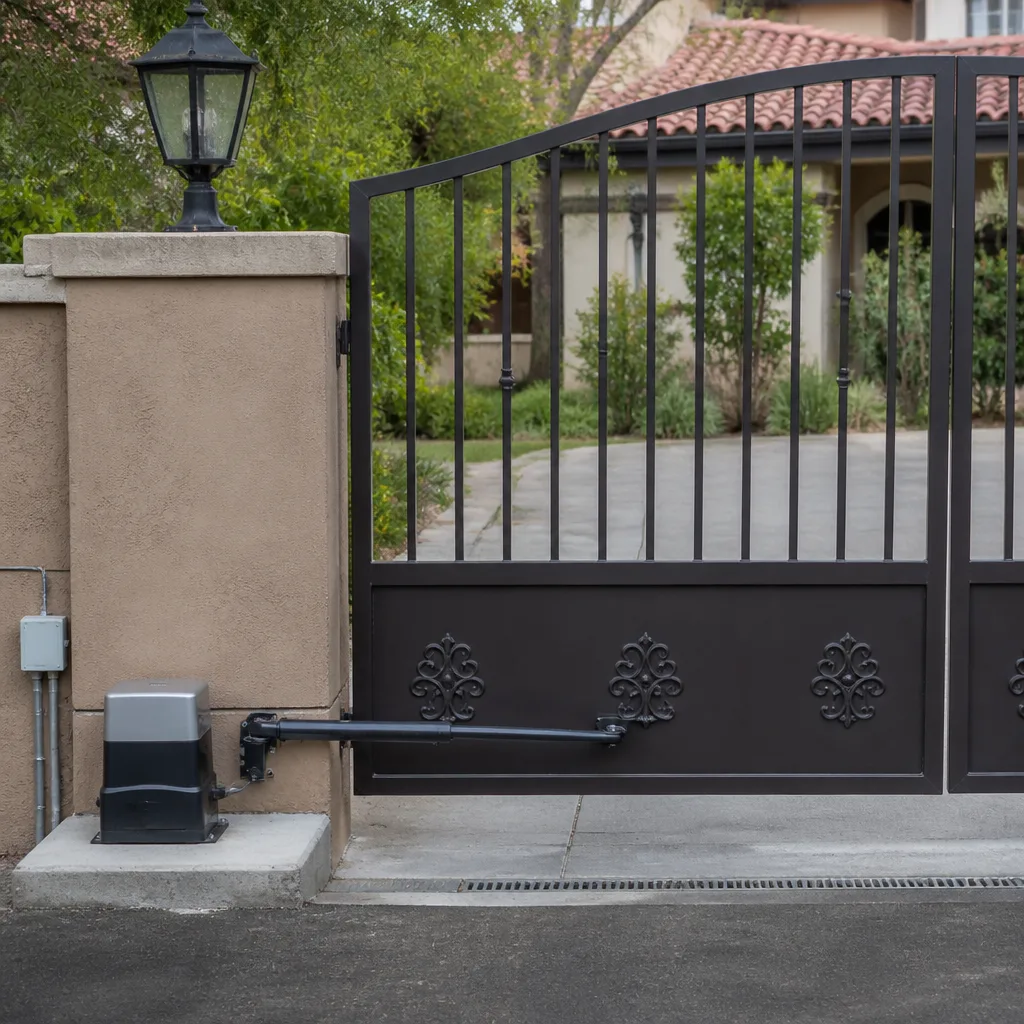 LiftMaster operators
Free on-site gate assessment - hinges, posts, and your LiftMaster or Nice gate operator checked before anything is quoted
The assessment is free and the quote is the invoice.
Get your free estimateGate Repair Emergency Preparedness Guide for Paradise Homes
Most gate emergencies aren’t really about the gate. They’re about the twenty minutes after it fails. Your gate locks itself closed with the car inside, or swings open and stays there while you stand in the driveway deciding what to do. The gate has already done the damage it’s going to do. What happens next depends entirely on whether you know where your manual release is.
Here’s the part that catches people: the operators that fail most dramatically are usually the ones nobody has touched since installation. Not because they’re bad machines, but because a gate that opens and closes every day gets no attention until the day it doesn’t. Paradise homeowners deal with heat, dust, and long dry stretches that wear on motors, batteries, and moving parts in ways that are easy to ignore. This guide walks you through what to do in the first twenty minutes of a gate failure, how to secure a gate that’s stuck open, what to have ready before you call, and how to prepare so the next failure is a ten-minute inconvenience instead of a real problem.
Quick Answer
If your gate is stuck closed with a vehicle inside, use the manual release on your operator first – most swing and slide operators have a keyed release lever or chain that disengages the motor from the gate. If your gate is stuck open, secure the opening with a physical barrier and keep the operator in manual mode until a technician can diagnose it. Then call (844) 834-1647. We answer 24/7, with fast dispatch from 7am to 7pm, Sunday through Friday.
Styles & brands we work with
- Wrought iron
- Wood & steel frame
- Farm & ranch
- Sliding driveway gates
- LiftMaster operators
Table of Contents
- The First 20 Minutes: Stuck Open vs. Stuck Closed
- How to Use the Manual Release on Your Operator Type
- How to Secure a Gate That’s Stuck Open
- Electrical or Mechanical? Why the Distinction Matters
- The Information That Speeds Up Every Repair Call
- Building a Gate Emergency Kit for a Paradise Home
- Testing Your Battery Backup Before It Fails
- When a Gate Problem Is Beyond DIY
The First 20 Minutes: Stuck Open vs. Stuck Closed
Gate failures in Paradise almost always land in one of two categories, and they demand opposite responses. A gate stuck open is a security problem. A gate stuck closed is an access problem. Treating them the same way is the most common error we see.
A gate stuck open means your property is now effectively ungated. If it’s late or you’re not home, the priority shifts from “get the gate working” to “prevent anything from entering.” That usually means getting the operator into manual mode so it stays put, then barricading the opening with something visible – a vehicle, a portable barrier, even a properly weighted traffic cone with a reflective band if that’s what you have. The goal is deterrent and visibility, not a permanent fix.
A gate stuck closed is different. If your car is inside and the gate won’t move, you have a real access problem, not just an inconvenience. The priority there is the manual release, which we’ll walk through in the next section. If your car is outside and the gate won’t open, you have a security problem again – but a different kind, because now you’re deciding whether to leave the property ungated or stay put.
One more distinction worth making early: whether the gate failed in a “safe” position or mid-travel. If it stopped halfway and won’t budge, don’t force it. A gate partially blocking a driveway – especially a heavy slide gate – is the most dangerous version of this problem. Leave it, secure the area around it, and call.
Both situations are manageable in the first twenty minutes if you stay calm and follow the correct protocol for your specific failure. That’s the whole point of thinking this through before it happens.
How to Use the Manual Release on Your Operator Type
The manual release is the single most important thing to locate on your gate system before you need it. It disengages the motor from the gate so the gate can be moved by hand. On almost every residential operator, this is either a keyed lever, a keyed chain pull, or a keyed knob on the side or top of the operator housing.
The catch is that manual release procedures vary by operator type. Here’s how the three most common configurations work:
- Swing arm operators – These are mounted to the gate post and a single gate leaf. Release is usually a keyed lever on top of the arm housing. Insert the key, turn, and lift or pull the lever to disengage the drive. Once disengaged, you can swing the gate leaf open by hand. Re-engage by pushing the gate back to the fully closed position and reseating the lever.
- Slide gate operators – These sit at the base of the gate on a concrete pad, driving the gate along a track. Release is typically a keyed chain mechanism: you pull the chain to lift the drive gear off the track, then slide the gate by hand. On some operators the chain is inside a release box accessed with the key. Re-engage by sliding the gate to fully open or fully closed and releasing the chain to reseat the gear.
- Overhead and barrier arm operators – These lift a vertical arm rather than swing or slide. Release is usually a keyed knob or lever on the operator housing that disengages the arm drive. Once released, the arm can be raised by hand to the vertical position and locked there with the mechanical hold or a physical brace.
If you can’t identify your release mechanism, don’t force anything. Call us and describe what you see – a photo of the operator housing will usually let us tell you which type you have in under a minute. Gate Repair Paradise works with operators from LiftMaster, FAAC, BFT, Mighty Mule, and five other major brands, so we’re familiar with the release designs on nearly every residential and light commercial system in Paradise.
One safety note before you touch anything: if your gate has a torsion spring or tension cable visible, do not attempt to work on it. Those components are under extreme tension and can cause serious injury. Leave that work to a trained technician. Manual release never requires touching a spring.
How to Secure a Gate That’s Stuck Open
A gate stuck open is a security problem during business hours and a liability overnight. The good news is that you can secure an open gate safely and without damaging the hardware – you just need to be deliberate about it. Here’s the protocol we recommend for Paradise homeowners.
First, get the operator into manual mode. If the gate is stuck open but the motor is still trying to close it, that motor is the main risk. Disengaging the drive stops the cycling and lets you work safely near the gate. Once it’s in manual, move the gate to the position that best protects the opening.
Then, secure the opening with one of these options, in order of preference:
- Park a vehicle across the opening – the simplest and most visible option. It won’t stop a determined intruder, but it deters casual entry and prevents the opening from being read as “ungated property.”
- Set a portable barrier – a weighted barrier bar, a chain-and-post kit, or a heavy traffic barricade. Weight it down. Wind is real in the valley and a light barricade will move.
- Use a temporary strap or chain across the posts – only between existing hard points that won’t be damaged, and always with a visible sign or reflective marker so nobody drives into it. Never strap across a gate that could still move – if the motor unexpectedly re-engages, you now have a dangerous situation.
What not to do: don’t wedge anything into the gate track, don’t disconnect safety edges or sensors to force the gate closed, and don’t block the gate in a way that makes it dangerous to open manually later. If your gate is stuck open and you can’t safely secure it, call us. We’d rather help you think it through than have you improvise something that causes a bigger repair.
The longer-term question is why it stuck open. In most cases, it’s a safety sensor or loop detector reading a false obstacle, an operator limit out of adjustment, or a battery or power issue. All three are diagnostic work a gate specialist handles quickly. If you need the underlying problem fixed, our gate repair page walks through what a repair visit actually covers.
Electrical or Mechanical? Why the Distinction Matters
One of the first questions we ask on any emergency call is whether the gate problem is electrical or mechanical, because that distinction shapes everything about the response – whether the gate can be manually operated safely, what the likely cause is, and how urgently a technician needs to be on-site.
An electrical failure means the gate hardware itself is fine but the operator can’t drive it. Signs of an electrical problem:
- Gate doesn’t respond to remote, keypad, or any input
- Operator motor is silent when triggered (no hum, no movement)
- Control board shows no lights, or a fault LED pattern
- Gate cycles a few inches then stops and reverses
- Safety loops or photo-eye sensors are misbehaving
- Battery backup is failing or the operator has lost battery capability
A mechanical failure means the operator is trying to work but something physical is stopping it. Signs of a mechanical problem:
- Motor hums but gate doesn’t move
- Gate drags, grinds, or squeals as it travels
- Gate sags or is visibly off its track or hinges
- Rollers, wheels, or track are visibly damaged
- Gate binds at one specific point in its travel
Why does this matter for urgency? A purely electrical failure is usually safest to handle by disengaging the operator and leaving the gate in manual mode until a technician arrives. A mechanical failure – especially a sagging or off-track gate – is more dangerous, because attempting to force the gate can cause further damage or injury. A gate that’s off its track needs to be left alone and secured until a professional arrives.
When you call, tell us which category you think it’s in and why. That one detail can shave real time off the diagnostic visit. Our electric gate repair technicians are trained specifically on control boards, loop detectors, and safety sensors – the parts of the system generalists routinely misdiagnose.
The Information That Speeds Up Every Repair Call
The difference between a fast gate repair and a slow one often comes down to what the caller knows before the technician arrives. Having the right information ready cuts diagnostic time and helps us choose the right parts before we leave for the job. Here’s the checklist we recommend keeping on your phone or in a file at home.
- The operator make and model – this is on a label on the operator housing, usually on the side or inside the control box cover. Snap a photo of it now. An operator model tells us the control board, the manual release type, and which parts are likely to be involved.
- The gate type – swing, slide, or overhead arm. The gate type plus the operator model narrows the problem dramatically.
- The symptom – “stuck open,” “stuck closed,” “won’t respond to the remote,” “motor hums but doesn’t move,” “opens a few inches and reverses.” Describe what actually happens, not what you think the cause is.
- Last known normal operation – when did the gate last work correctly? Was there a power event, storm, or temperature swing before the failure? Was anything changed on the property recently?
- What you’ve already tried – did you use the manual release, cycle the breaker, or replace the remote battery? Tell us what you did and what happened.
- Access notes – gate code, lockbox, driveway layout, pets, anything a technician needs to know to reach the gate safely.
A photo of the operator label plus a clear symptom description is worth more than any other single piece of information. Most diagnostic calls start with those two items, and having them ready means the technician shows up already knowing what to check.
Keep this information current. If your operator is replaced, update your saved notes. If you inherit a home with an existing gate, that label photo becomes your baseline. In Paradise, where gate operators often sit in direct sun for years, the label can fade – photograph it the day you move in, while it’s still readable.
Building a Gate Emergency Kit for a Paradise Home
A small kit, stored in an accessible spot, turns most gate emergencies into a ten-minute inconvenience instead of a service call. The idea is that everything you need to secure the gate, disengage the operator, and communicate with a technician is in one place. Here’s what belongs in it.
- Manual release keys – for the operator housing and, if you have a lockbox or gate lock, for that too. Attach them to a bright tag and store them somewhere you can find in the dark.
- A spare remote and batteries – the most common false-alarm emergency is a dead remote battery. Keep a spare charged remote and the correct batteries on hand.
- A photo of the operator label – printed and kept with the kit, plus a copy on your phone. This is the single most useful item for a repair call.
- A printed copy of this guide – specifically the manual release and step protocols, so you’re not reading from a phone in the rain or dark.
- A portable barrier or weighted straps – for securing an open gate. A lightweight folding barricade or a set of heavy straps and reflective markers works well.
- A flashlight – gate emergencies happen when they happen.
- Our phone number written down – (844) 834-1647. Under stress, paper beats phone search.
A few practical notes for Paradise. Keep the kit somewhere that isn’t baking in direct summer sun – batteries and printed materials degrade in a hot shed. If your gate is on a property with multiple operators (a street gate plus a garage gate, for example), label each kit clearly so you’re not grabbing the wrong release key. And if you’re a property manager overseeing more than one Paradise property, build one kit per gate, not one shared kit. The extra few dollars is nothing compared to a resident stuck inside at 11 PM digging through the wrong box.
If your gate operator is a Mighty Mule, LiftMaster, or FAAC model, the manual release key type is different across each – which is another reason to label your kits and keep the right key with the right gate.
Testing Your Battery Backup Before It Fails
Battery backup is the most overlooked part of a residential gate system. It’s meant to keep the gate operating during a power loss, but a dead backup battery is invisible until the day the power goes out – and then the gate fails at the worst possible moment. Here’s how to test yours before that happens.
The simplest test most homeowners can do: with the gate in normal operation and the motor connected, kill power at the dedicated breaker that feeds the gate operator. Watch what the gate does. On a healthy system, the operator should run on battery alone for at least a full open-and-close cycle. On a failing system, the gate may move slowly, stop partway, or not move at all.
Once you’ve confirmed the behavior, restore power at the breaker and let the battery recharge. If the gate failed to run on battery, note the symptom and call us – the diagnosis is usually a battery at end of life or a charging circuit that isn’t working. Both are straightforward repairs.
How often should you test? Once a season is reasonable. In Paradise, where summers are long and hot and operators sit in direct sun, we recommend testing more frequently than in a cooler climate – batteries degrade faster in sustained heat, and dust buildup on the terminals is common. If you’re testing more than twice a year and the battery keeps failing, that points to a deeper charging issue worth a technician visit.
One more note: never test the backup by unplugging the operator from the wall while touching the gate. Use the breaker, keep your hands clear of the travel path, and don’t stand in the gate’s swing or slide path during the test. A gate on failing backup can behave unpredictably for a few seconds.
When a Gate Problem Is Beyond DIY
Most gate problems that feel like emergencies are within reach of a homeowner with the manual release, the right information, and a little patience. But some cases are past that point, and knowing which is which is part of preparedness too.
Call a professional if: the gate is visibly off its track or hinges; the operator is humming but the gate won’t move; the gate has failed after an electrical event or storm; the manual release won’t disengage; the gate is stuck partially open and blocking a driveway; or the failure is intermittent and you can’t reproduce it. Each of these involves either a safety risk, a mechanical fault, or a diagnostic problem that a generalist handyman shouldn’t be guessing at.
Gate Repair Paradise offers free estimates in Paradise – call (844) 834-1647. We answer 24/7. A call outside dispatch hours is booked into the next opening, Sunday through Friday, 7am to 7pm. Every price is quoted and agreed before any work starts, and the written estimate sets the final number.
We’re gate specialists, not generalists. From a dragging swing gate to a failed electric operator, we diagnose it right the first time. When we arrive, we start with the operator and control board – the parts a generalist usually skips – and we work on the brand you already have, not the brand we prefer to sell. If you want the full picture of what our work covers, Gate Repair Paradise is where to start.
See the difference
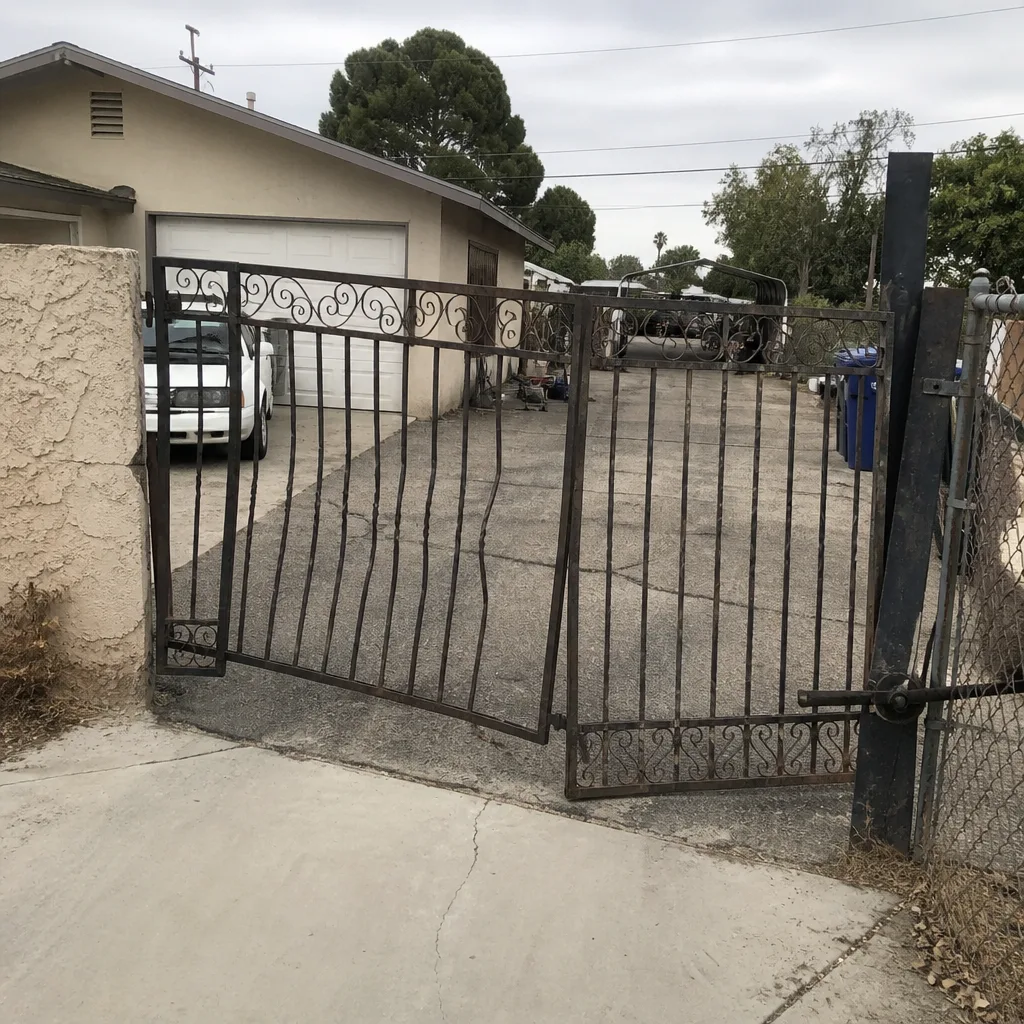 Before
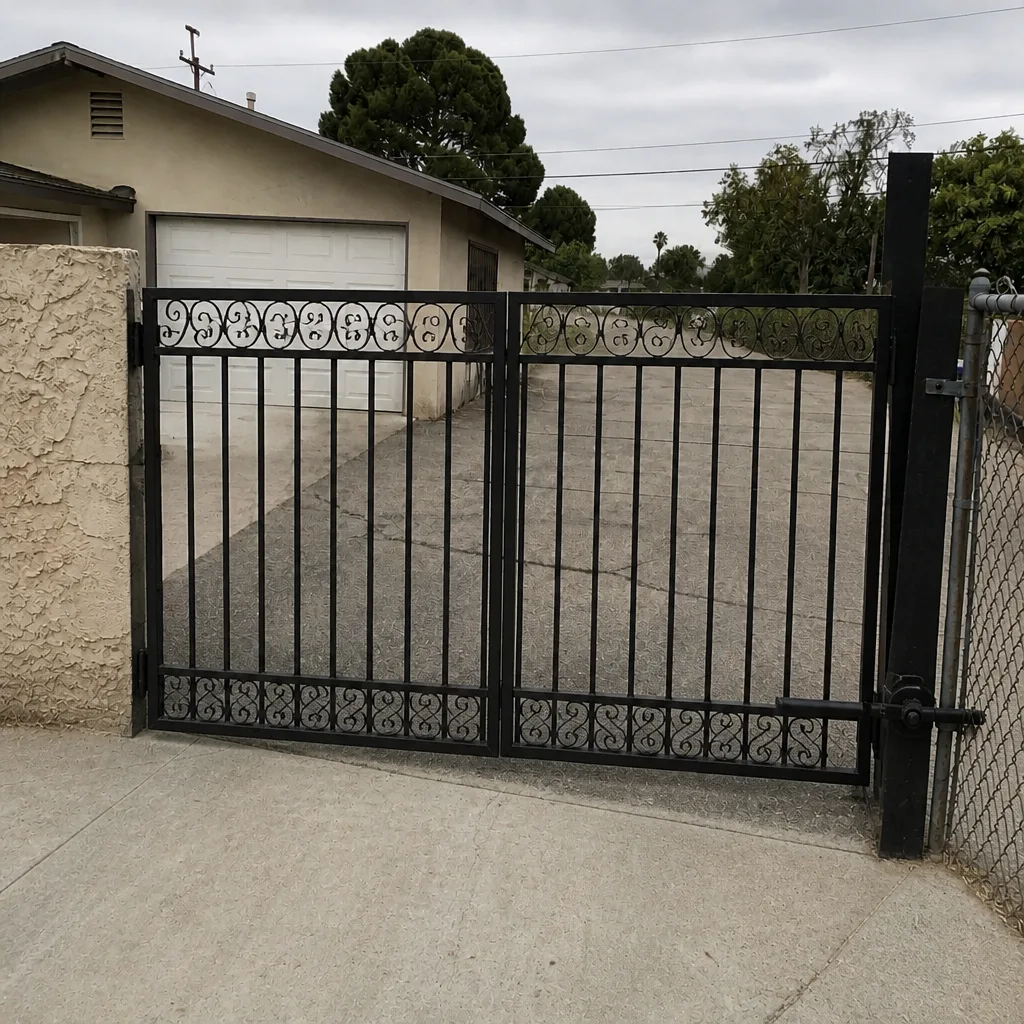 After
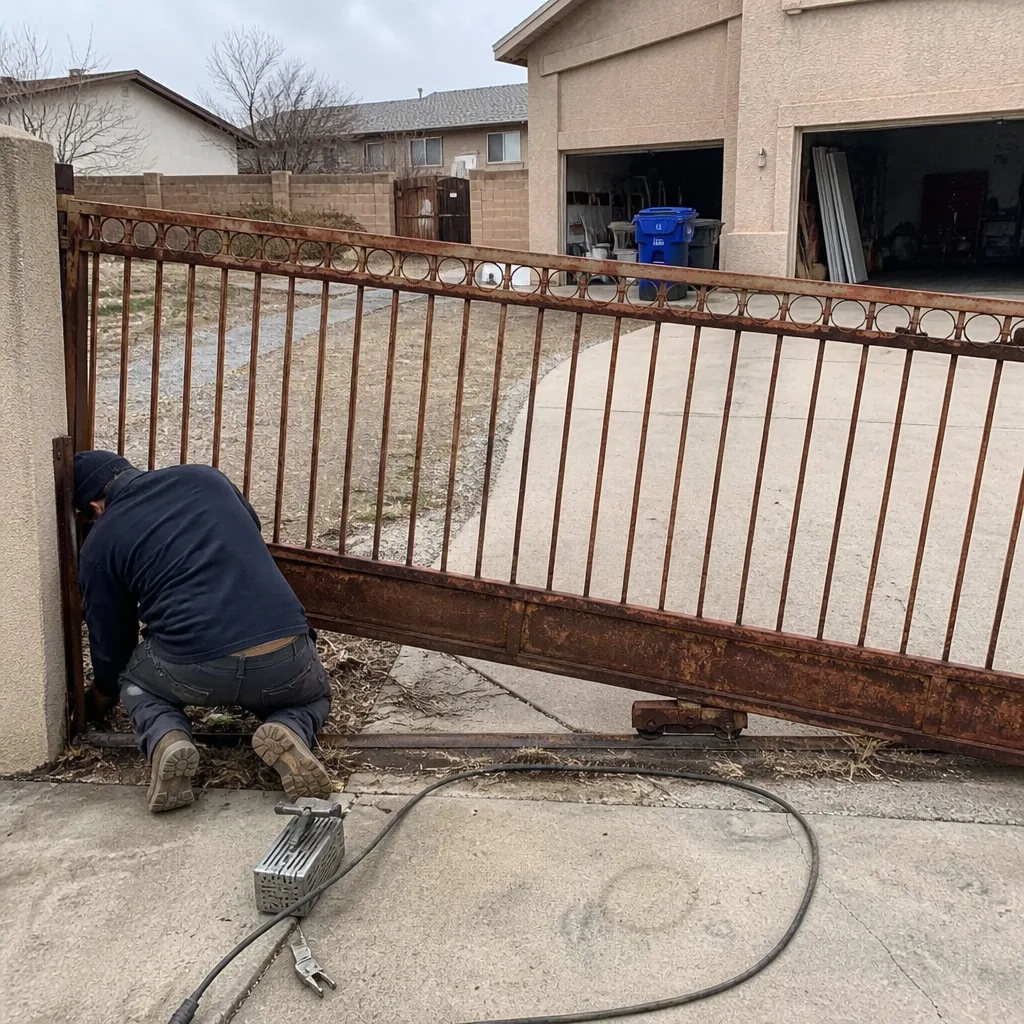 Before
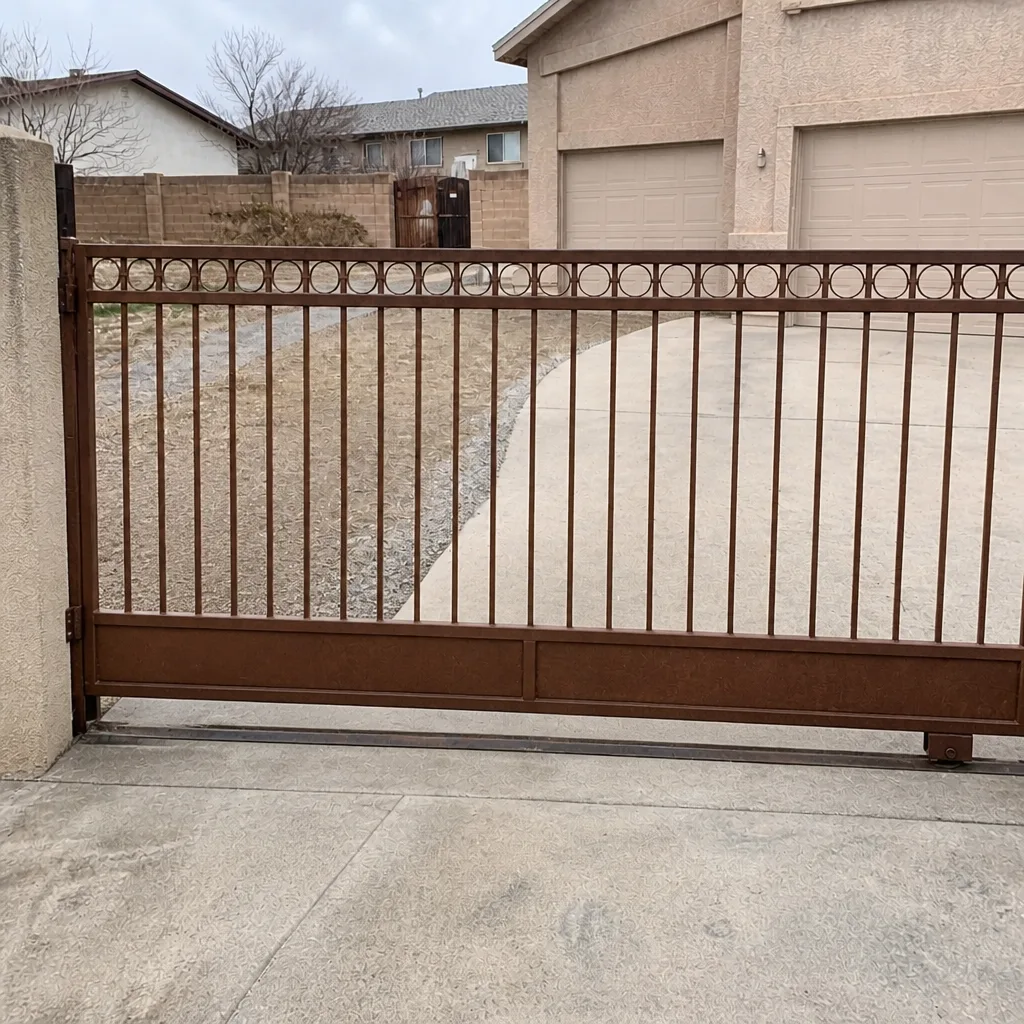 After
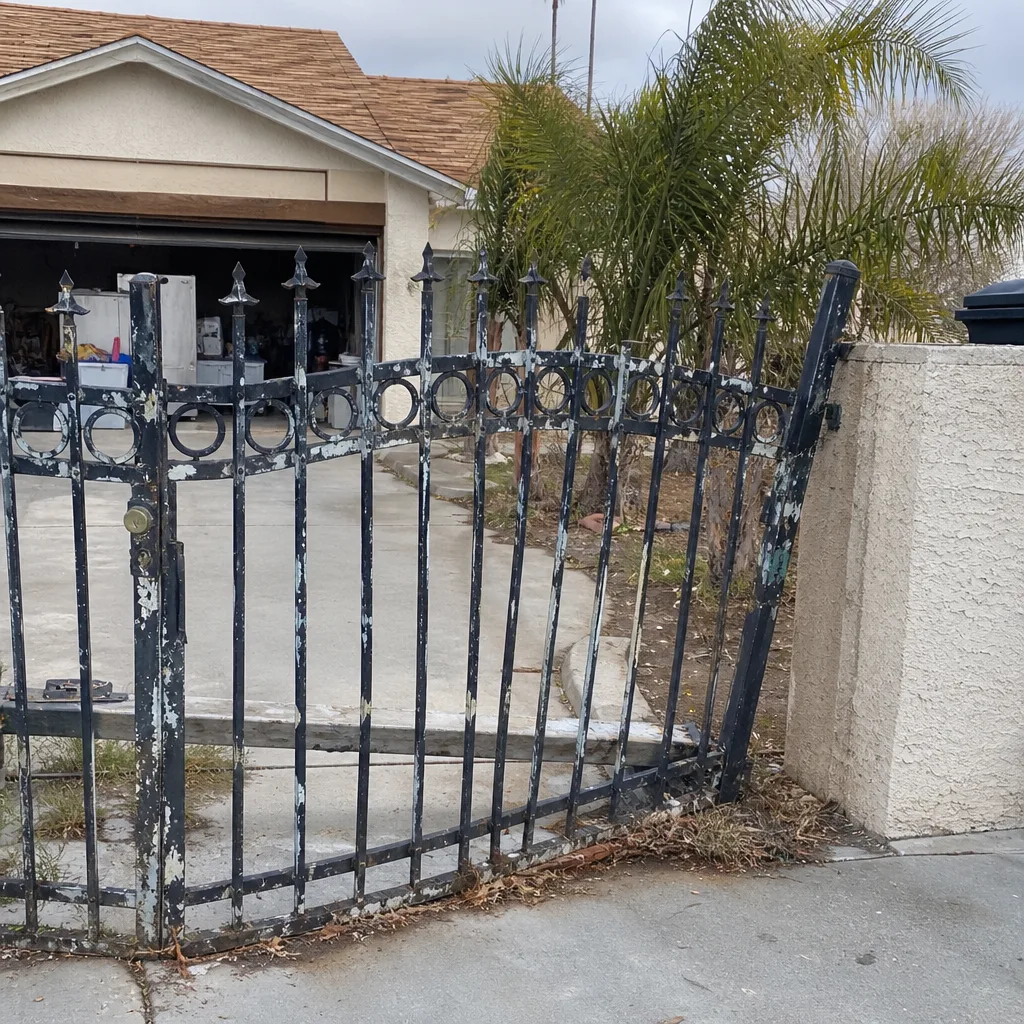 Before
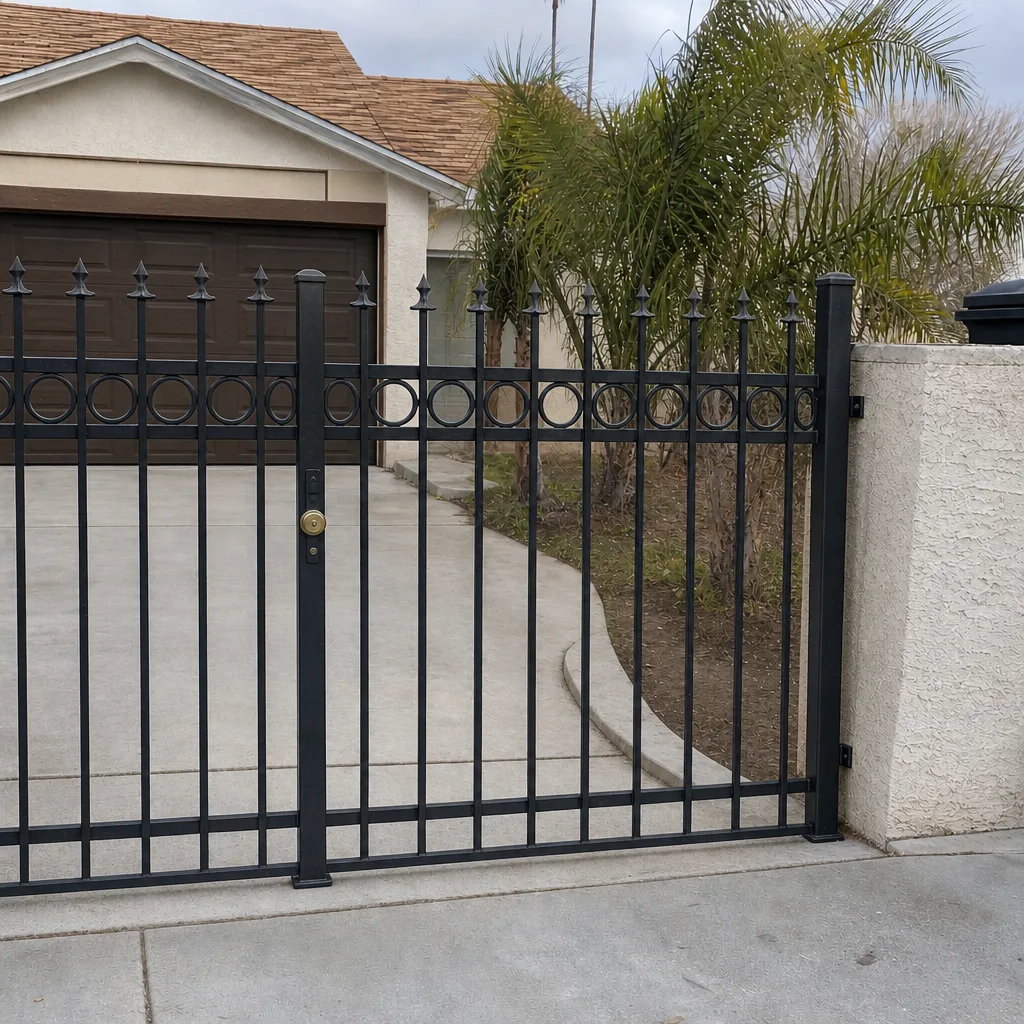 After
Common Mistakes to Avoid
- Not knowing where the manual release is before you need it. Locating the release in daylight, calmly, with the manual open is easy. Locating it at 11 PM with the car trapped inside is not. Do it now.
- Forcing a gate that’s off its track. A sagging or off-track gate is a mechanical failure, and force makes it worse. In Paradise, where gate hardware expands in sustained summer heat, forcing a binding gate can bend a track or snap a hinge pin that was repairable.
- Disengaging safety edges or sensors to “get the gate closed.” This is the most dangerous shortcut on the list. It converts a stuck gate into a genuine hazard.
- Relying on a dead remote battery as the whole explanation. A remote that doesn’t work is often the smallest fix available, but it’s also often the sign of a bigger control board or receiver issue. Test with a second remote or the keypad before assuming.
- Skipping battery backup testing “because the power never goes out.” In Paradise, power events do happen, and heat degrades a battery silently. A backup you haven’t tested is not a backup.
- Hiring a general handyman for a control board or operator diagnostic. Gates use dedicated control boards, loop detectors, and safety sensors. A generalist who hasn’t worked on that specific system is diagnosing by guesswork.
- Not keeping the operator model number and label photo on hand. Every service call is faster with this one photo. Keep it, and update it if the operator is ever replaced.
Frequently Asked Questions
Use the operator’s manual release – a keyed lever, chain, or knob on the operator housing that disengages the motor from the gate. The exact procedure depends on your operator type (swing arm, slide, or overhead arm), and the release design varies by brand. If you can’t identify your release, call (844) 834-1647 and describe the housing – estimates are free and we can usually tell you what type you have over the phone.
Emergency gate repair in Paradise is priced per job by a written estimate – we don’t charge by the hour and we don’t add a premium for same-day work. The estimate is free and the final price is the number agreed before any work starts. Call (844) 834-1647 for an exact quote.
Disengage the operator into manual mode, then secure the opening with a vehicle, a weighted barrier, or a visible chain across existing posts. Don’t force the gate closed and don’t disable safety sensors. If you can’t safely secure it, call us – we’d rather help you plan than have you improvise.
Same-day service is usually available for gate repair calls in Paradise. We answer 24/7, and fast dispatch runs from 7am to 7pm, Sunday through Friday. A call outside dispatch hours is booked into the next opening. Call (844) 834-1647 and estimates are free.
We work on nine major brands: LiftMaster, FAAC, BFT, Linear, Viking, Ghost Controls, DoorKing, Elite, and Mighty Mule. We also work on the brand you already have – if your operator is one of these, our technicians already know the control board, the safety components, and the manual release. Call (844) 834-1647 to confirm your model.
That cycle pattern usually points to a safety sensor or loop detector reading a false obstacle, or to an operator limit that’s out of adjustment. It’s an electric gate repair call rather than a mechanical one – a technician with control board experience will diagnose it in a single visit. Call (844) 834-1647. Estimates are free.
The Bottom Line
Most gate emergencies in Paradise come down to two questions: is the gate stuck open or stuck closed, and do you know where your manual release is? Answer those in the first twenty minutes and the situation stays manageable. The rest – the operator label photo, the battery backup test, the emergency kit, the symptom description – are all things you can put in place before a failure ever happens. Paradise homes with automatic gates are, by nature, homes where a small amount of preparation pays off enormously. Our technicians have up to experience, and we’ve seen what a caller with the right information looks like versus one without. It’s a real difference. If you want a free estimate on a repair, an installation, or a fresh look at your operator, Paradise is the community we serve. Call (844) 834-1647. We answer 24/7, with fast dispatch from 7am to 7pm, Sunday through Friday.
Written by the team at Gate Repair Paradise.