
Last updated November 16, 2026
 Wrought iron
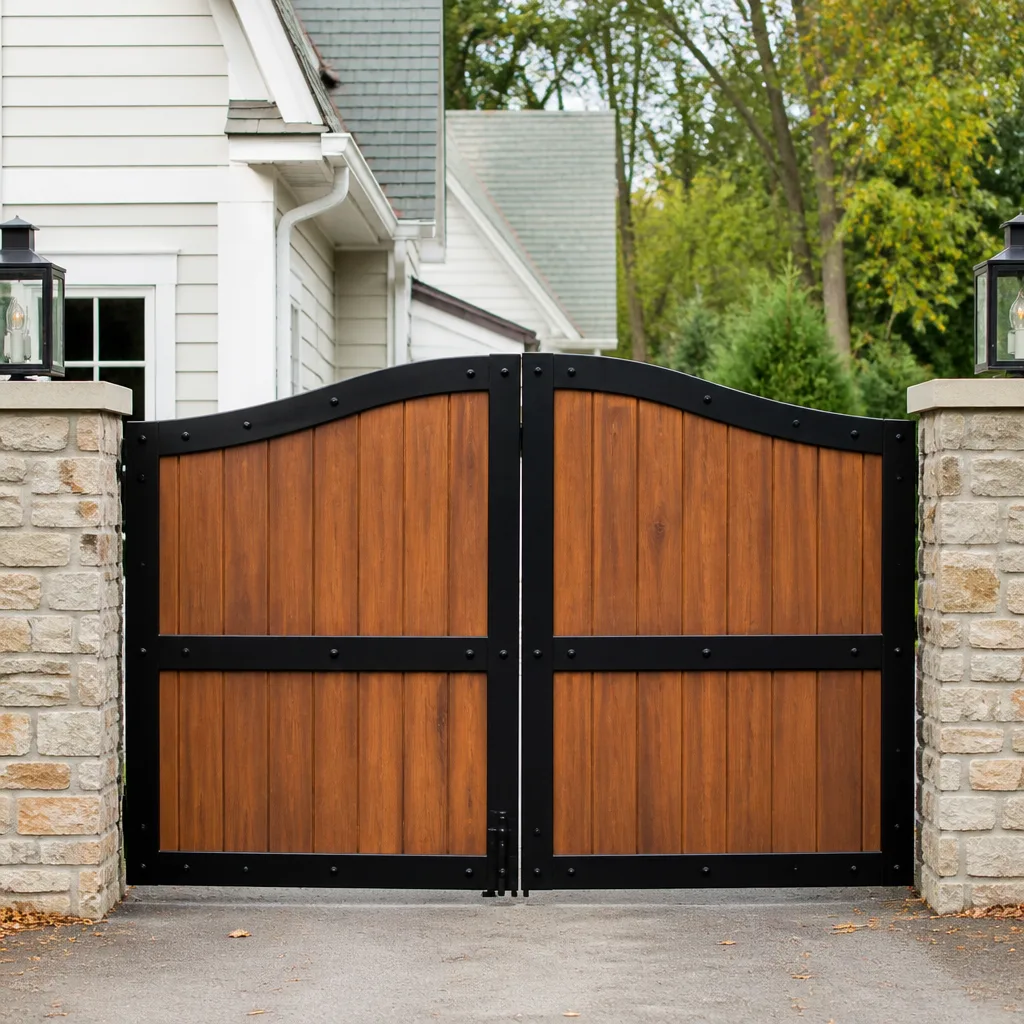 Wood & steel frame
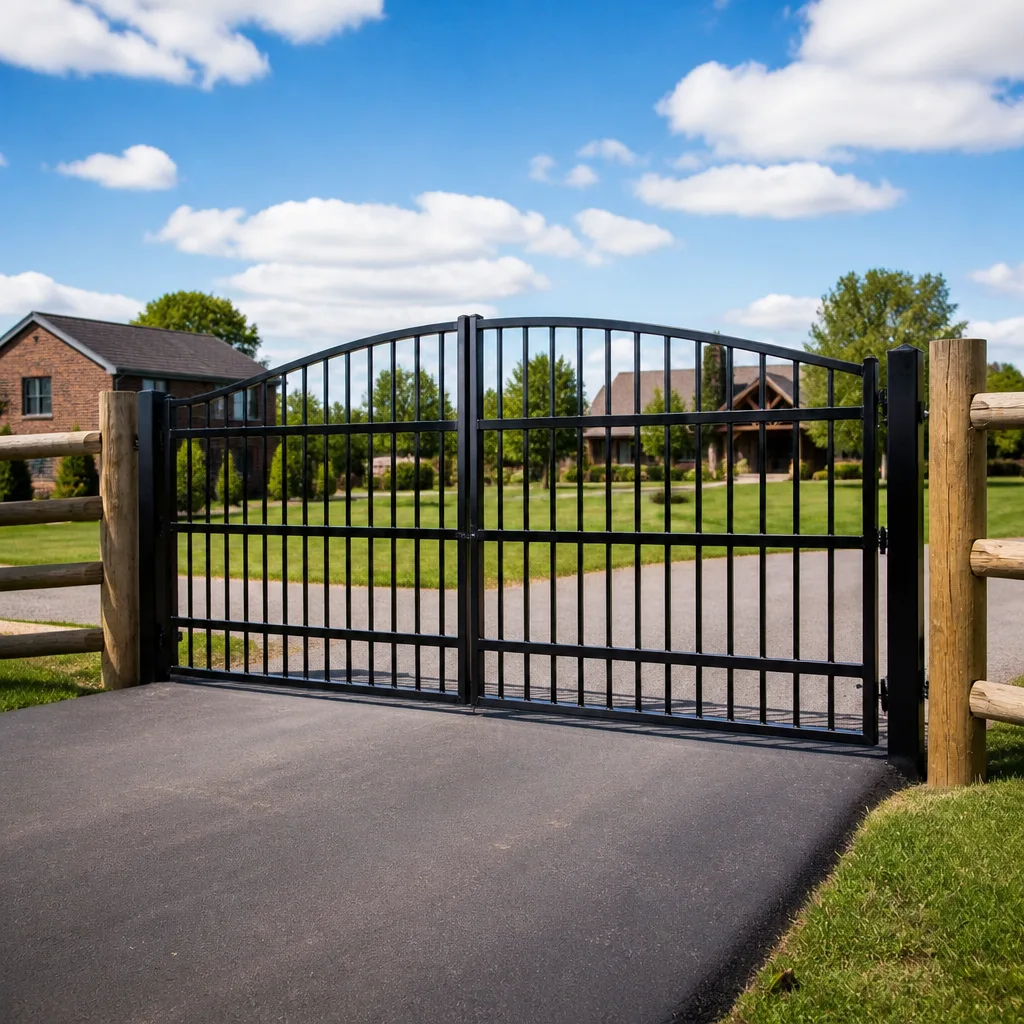 Farm & ranch
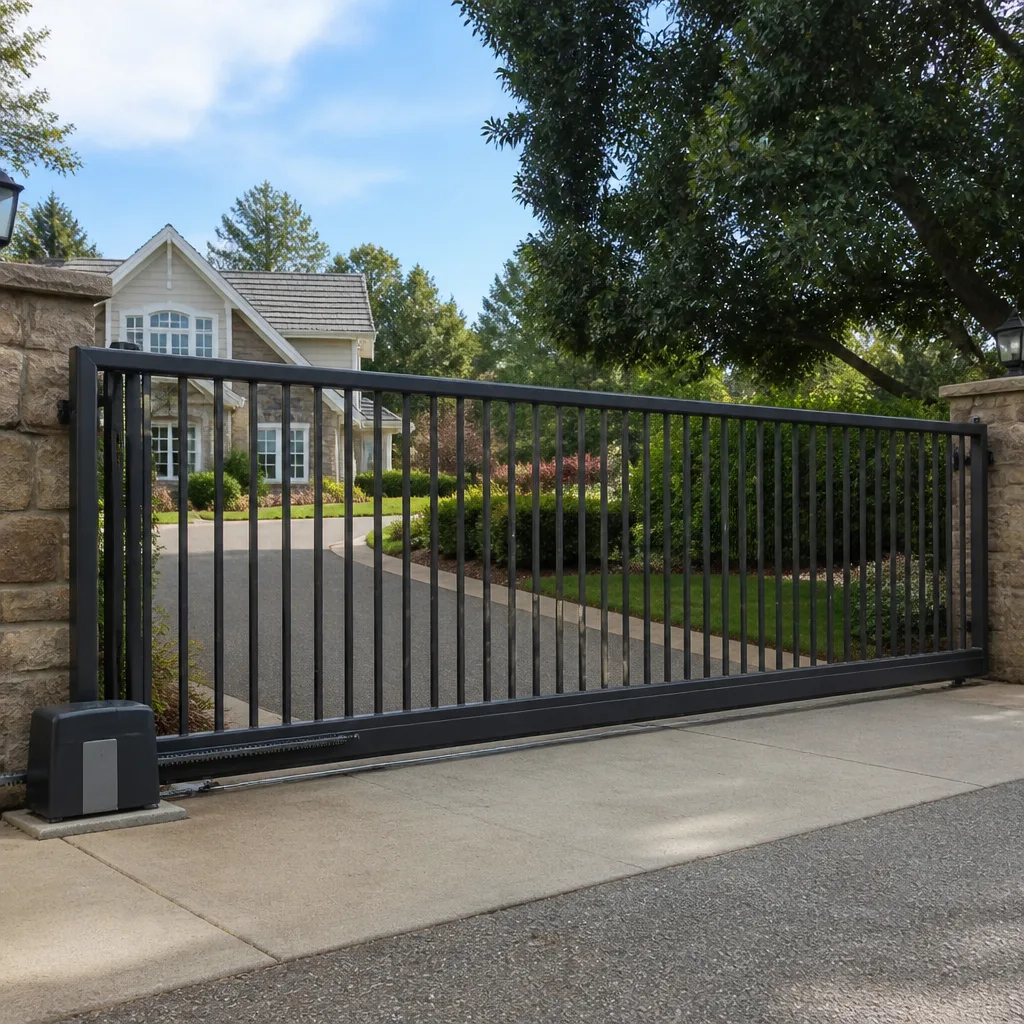 Sliding driveway gates
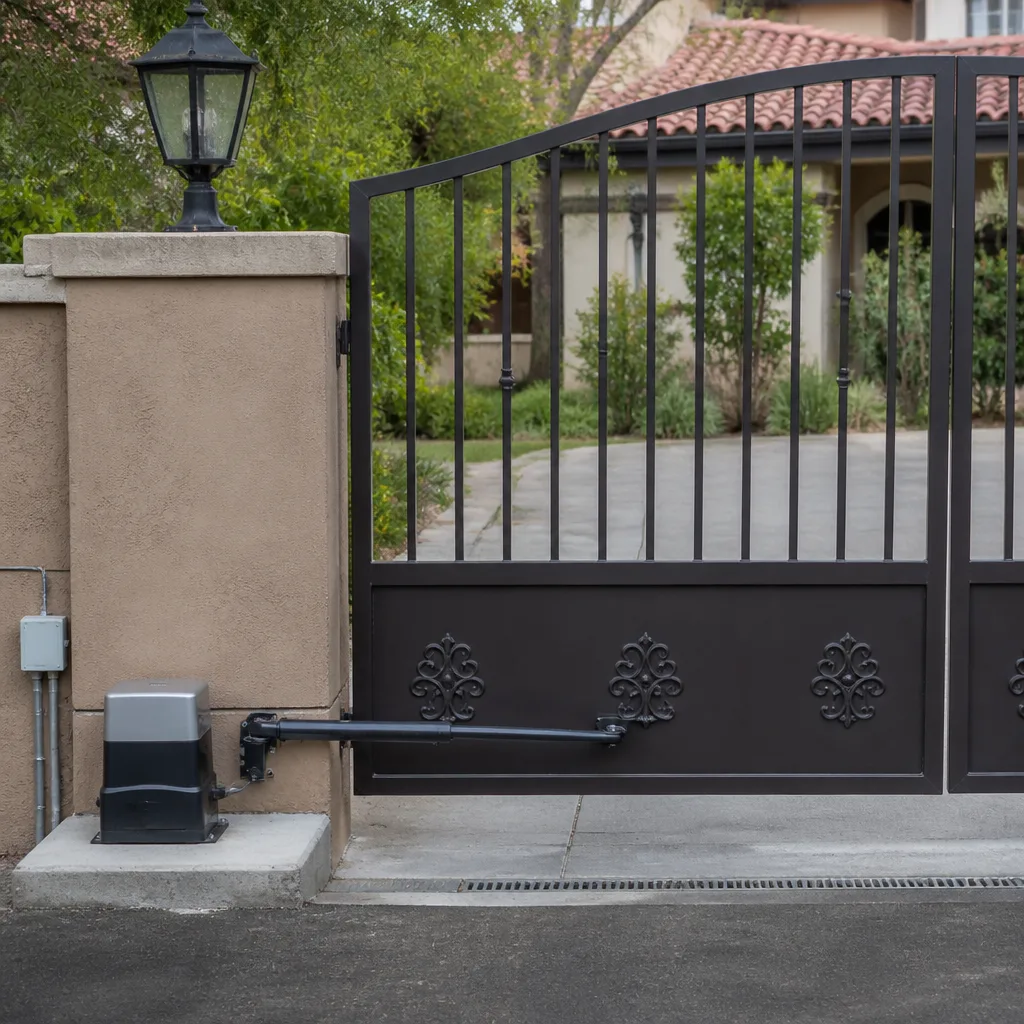 LiftMaster operators
Free on-site gate assessment - hinges, posts, and your LiftMaster or Nice gate operator checked before anything is quoted
The assessment is free and the quote is the invoice.
Get your free estimateGate Repair Permits, Codes & Inspections in Paradise, NV: What You Need to Know
Replacing a gate operator looks like a simple swap, until you sell your home and the inspector asks for the permit that was never pulled. That’s the part most homeowners never hear about. A driveway gate that opens smoothly every morning feels like a finished job, so nobody thinks to ask whether the electrical work behind it was ever inspected. In Paradise, the answer is often no, and that gap can follow you to closing day. This guide walks through which gate repairs need a permit, which don’t, what UL 325 entrapment protection actually requires, how local HOA rules stack on top of county code, and how to confirm your contractor is pulling permits when they should.
Quick Answer
In Paradise, most routine gate repairs like adjusting hinges, replacing a roller, or swapping a remote don’t require a permit. Work involving new or replaced electrical circuits, a new operator installation, or structural post replacement usually does, because it touches building and electrical code. Automated gates must also meet UL 325 entrapment protection standards, and many older Paradise installations fall short. When a permit is required, a licensed contractor should pull it before work begins.
Styles & brands we work with
- Wrought iron
- Wood & steel frame
- Farm & ranch
- Sliding driveway gates
- LiftMaster operators
Table of Contents
- Which Gate Repairs Need a Permit in Paradise?
- What Counts as Maintenance-Exempt Work?
- UL 325 Entrapment Protection: What It Requires
- How Existing Gates Fail the Standard
- HOA Overlay Rules in Paradise Communities
- How to Verify Your Contractor Pulls Permits
- What a Gate Inspection Looks Like
- Common Mistakes to Avoid
Which Gate Repairs Need a Permit in Paradise?
Any repair that adds or changes electrical wiring, installs a new operator, or involves replacing a structural post generally requires a permit in Paradise. Repairs that restore existing parts, like tightening a sagging hinge or replacing a worn latch, typically don’t. The line comes down to whether the work changes the structure or the electrical system, or simply returns it to how it was designed to work.
Here’s how the split usually breaks down:
- Permit usually required: New electric gate installation, operator replacement, adding a new power circuit or outlet for the gate, replacing a structural gate post, and any change to the safety sensor or loop wiring tied to the operator.
- Permit typically not required: Replacing a remote or keypad, adjusting hinges or rollers, replacing a latch, tightening hardware, and swapping a gate board or picket on an existing frame.
- Gray zone, ask first: Replacing a control board on an existing operator, upgrading a safety edge on an existing system, and changing the gate from manual to automatic (this one needs both electrical and building review).
We work on gates across Paradise every week, and the gray zone is where homeowners get surprised. An electrician-sized job like adding a 120-volt circuit for a new LiftMaster or FAAC operator is not something to handle quietly, even when the operator itself looks like a direct swap for an old one. The safer move is to ask your city’s building department whether a permit applies before the work starts, and to have that conversation written down. If your contractor can’t answer that question clearly, that’s your first sign to slow down. For more on how our team approaches routine work versus installs, see gate repair.
What Counts as Maintenance-Exempt Work?
Maintenance-exempt work is anything that restores a gate to the condition it was already in, without changing its structure or electrical system. A squeaky hinge, a dragging swing gate, a remote that won’t sync, or a latch that doesn’t catch are all maintenance issues. These are the repairs most Paradise homeowners call us for, and they rarely need a permit.
A useful rule of thumb is to ask yourself: after this work, is the gate in the same place, the same size, with the same wiring, just working better? If yes, it’s likely maintenance. If the answer is “we’re adding something new or moving something structural,” it’s likely permit territory.
- Confirm the scope. Write down what’s being repaired and what’s being replaced. “Replace the operator” is a different scope from “adjust the operator arm.”
- Ask about the electrical path. If the repair touches the power wiring, the control board, or the safety sensors, expect a permit conversation.
- Ask about the post. If the post is being replaced, or the gate is being re-hung into new footing, that’s structural.
- Get the answer in writing. A one-line email from your contractor confirming “permit not required for this repair” is worth keeping. It’s your record if anything is questioned later.
In Paradise, the desert heat bakes gate hardware and electrical conduit alike, so repair frequency can feel higher than in milder climates. That’s a maintenance volume question, not a permit question, but it’s why so many gates here go through a cycle of small repairs over years. Each one can stay exempt as long as the scope stays small. Once you’re replacing a whole operator or its power, the scope has grown. If you’re not sure which category your repair falls into, our electric gate repair team can help you sort that out before anyone touches the gate.
UL 325 Entrapment Protection: What It Requires
UL 325 is the safety standard for automatic gate operators, and it requires built-in entrapment protection so a closing gate can detect and reverse for a person or object in its path. That protection comes from one or more of: a photo-eye sensor pair, a safety edge on the gate itself, a loop detector in the driveway, or an operator with an inherent reversing feature. Without at least one of these, an automated gate is not considered safe, even if it opens and closes perfectly.
Here’s what a code-compliant entrapment protection setup usually includes:
- Photo-eye sensors positioned at the correct height and angle to detect a person in the gate path, wired to the operator’s safety input.
- A safety edge on the closing edge of the gate, especially on sliding gates or on swing gates that close into a tight space.
- A loop detector to prevent closing while a vehicle or person is in the zone, common on commercial installations and gated residential communities.
- Audible and visual warnings before the gate moves, where the operator supports them.
- Properly labeled and installed controls with the required warning signage on the gate or post.
We install and service LiftMaster, FAAC, BFT, and Linear operators across Paradise, and the entrapment protection requirement applies to all of them. It’s also why a non-compliant gate is a liability question, not just a paperwork one. If you’re unsure whether your gate meets the standard, the safest step is to have it looked at by a specialist who reads control boards for a living, not a general handyman. Our full Gate Repair Paradise team handles this as part of diagnostic visits, and we’ll tell you plainly what’s missing.
How Existing Gates Fail the Standard
Many older automated gates in Paradise fail entrapment protection in the same handful of ways, and none of them are the homeowner’s fault. The equipment was installed to an older standard, or the safety sensors were disabled years ago because they kept tripping on trash cans or stray branches, and nobody reconnected them. A gate that runs fine can still be non-compliant.
From our experience on Paradise properties, the most common failures we see are:
- Photo-eyes disconnected or dead. The operator’s safety input is bypassed so the gate closes regardless of obstructions. This is the single most common failure we find.
- Safety sensors mounted in the wrong spot. Sensors are aimed away from the gate path, or mounted too high to catch a small child or pet.
- No safety edge on the closing edge. Common on older sliding gates where the edge was never installed or has worn through.
- Missing or faded warning signage. The required caution labels on the gate or post have weathered off.
- Operator mode set incorrectly. Some operators have a manual override or “hold to run” mode that bypasses safety entirely, and the setting gets left on after a service call.
Desert heat doesn’t help. Sun-exposed sensor housings crack, wiring insulation degrades, and photo-eye lenses cloud up or get coated in dust, all of which can take a sensor offline without any obvious sign. That’s why a gate that worked perfectly two years ago can now be running without working entrapment protection. If your gate has older sensors on it, it’s worth having them tested, not just looked at. More on general Paradise gate care is available on our city page.
HOA Overlay Rules in Paradise Communities
HOA rules in Paradise often add requirements on top of county code, and those requirements can be stricter than what the county asks for. Many gated communities here regulate the color and style of a replacement gate, the height, the visibility from the street, and sometimes whether the operator is visible from the curb. So even a permit-exempt repair can need HOA sign-off if it changes how the gate looks.
Common HOA overlays we see in Paradise neighborhoods include:
- Design approval before replacement. A like-for-like swap usually passes without issue, but a different gate style or finish often needs written approval.
- Color and finish restrictions. Certain neighborhoods require a specific finish on visible gate components, so mixing brands or finishes can trigger a compliance letter.
- Height and setback limits. Some HOAs cap gate height or require a setback from the property line, which matters when a post is being replaced or repositioned.
- Landscaping and screening rules. Operators and power runs sometimes need to be screened from view, which can affect placement of equipment and wiring.
- Architectural review for new installs. A new automatic gate on a property that never had one often goes through the HOA’s architectural review, separate from the county permit.
The practical takeaway is to check the HOA rules before ordering equipment, not after. If you’re replacing an operator on an existing gate, ask the HOA whether a like-for-like swap needs approval. If the answer is no, you’ve saved yourself a delay. If the answer is yes, get the approval in writing and keep it with your permit paperwork. Either way, the gate itself is what they’re reviewing, not the brand on the control board.
How to Verify Your Contractor Pulls Permits
You verify permit pulls by asking up front and confirming the permit before work starts, not after. A contractor who pulls permits will tell you clearly which jobs need one in Paradise, will name the permit type, and will be fine with you checking on it. A contractor who doesn’t will hedge, say “we’ll handle it,” or tell you it’s not needed without explaining why.
A simple step-by-step way to protect yourself:
- Ask the question at the estimate. “Does this repair need a permit, and will you pull it?” If the answer is unclear, ask them to put it in writing.
- Ask for the permit number. Once the permit is pulled, ask for the number and the inspection schedule. A legitimate contractor won’t hesitate.
- Call the city’s building department to confirm. A quick call can verify a permit is open and matches the scope you were quoted.
- Compare the permit scope to the quote. The permit should cover what’s actually being installed, not less. A permit for “one outlet” on a full operator replacement is a red flag.
- Ask about the inspection. Some work requires inspection before the job is signed off. Know whether that’s part of the plan.
If you discover a prior installation was done without a permit, don’t panic. The path forward is usually to have a qualified contractor evaluate the current installation, bring it up to code if it isn’t, and then pull the permit retroactively before you sell or hand off the property. What you want to avoid is a buyer’s inspector finding an unpermitted gate operator during escrow, because that conversation is much harder to have then. If you suspect your current gate was installed without a permit, get it looked at now, not at closing. Call (844) 834-1647. We answer 24/7. Fast dispatch from 7am to 7pm, Sunday through Friday.
What a Gate Inspection Looks Like
A gate inspection is a targeted check of the operator, the safety systems, and the structural condition of the gate and posts, not a full property review. For a Paradise homeowner, it usually takes well under an hour for a single gate, and it’s the kind of visit that either tells you everything is fine or tells you exactly what to fix. On a newer installation that’s going through the county, the inspection is done by the city or county inspector after the work is complete.
In our experience, a thorough gate inspection covers these points:
- Operator function. Open and close cycle, reversing behavior, and whether the operator’s force settings match the gate’s weight and size.
- Entrapment protection. Photo-eyes, safety edges, and loop detectors are tested, not just eyeballed. The gate should refuse to close when a person or object is in its path.
- Electrical connections. Power supply, control board, and low-voltage wiring are checked for condition and correctness.
- Structural condition. Posts, hinges, rollers, and the gate frame are checked for wear, sag, and looseness. A dragging gate is telling you something.
- Warning signage and labels. Required signage is present and legible, and the operator model matches its documentation.
- HOA compliance, where applicable. A visual check against the HOA’s design requirements, if you’re in a gated community.
Once the visit is done, you get a clear read on whether the gate passes, what needs to change, and whether a permit or inspection is part of that fix. If it’s a repair, we quote it on the spot. If it’s a required permit job, we explain the path. Either way, the price is quoted and agreed before any work starts.
Common Mistakes to Avoid
- Assuming “small repair” means “no permit.” A repair can be small in labor and still touch the electrical circuit. If the scope includes the power run or the safety wiring, ask the permit question before the work starts.
- Letting a contractor disable safety sensors to stop tripping. This is the most common cause of a non-compliant gate in Paradise. Sensors are supposed to trip; disabling them removes the only protection between a moving gate and a person.
- Forgetting the HOA. Even a permit-exempt repair can need HOA sign-off if it changes appearance, height, or visibility. Check the HOA rules before ordering parts, especially in gated Paradise communities.
- Accepting “we’ll handle it” without a permit number. A contractor who pulls permits can give you the number. If they can’t or won’t, that’s your cue to ask more questions.
- Doing it yourself on a live operator circuit. Gate operators run on line voltage and involve a heavy moving gate. A miswired control board or a gate with no entrapment protection is a serious injury risk. This is a job for a trained technician.
- Waiting until the sale of the house. A buyer’s inspector will ask for permits. Bringing a gate up to code before you list is far easier than during escrow.
- Replacing a gate post without considering the footing. A post replacement is structural, and it has to sit on a properly sized footing. Rushing this part is how a gate sags within a year.
See the difference
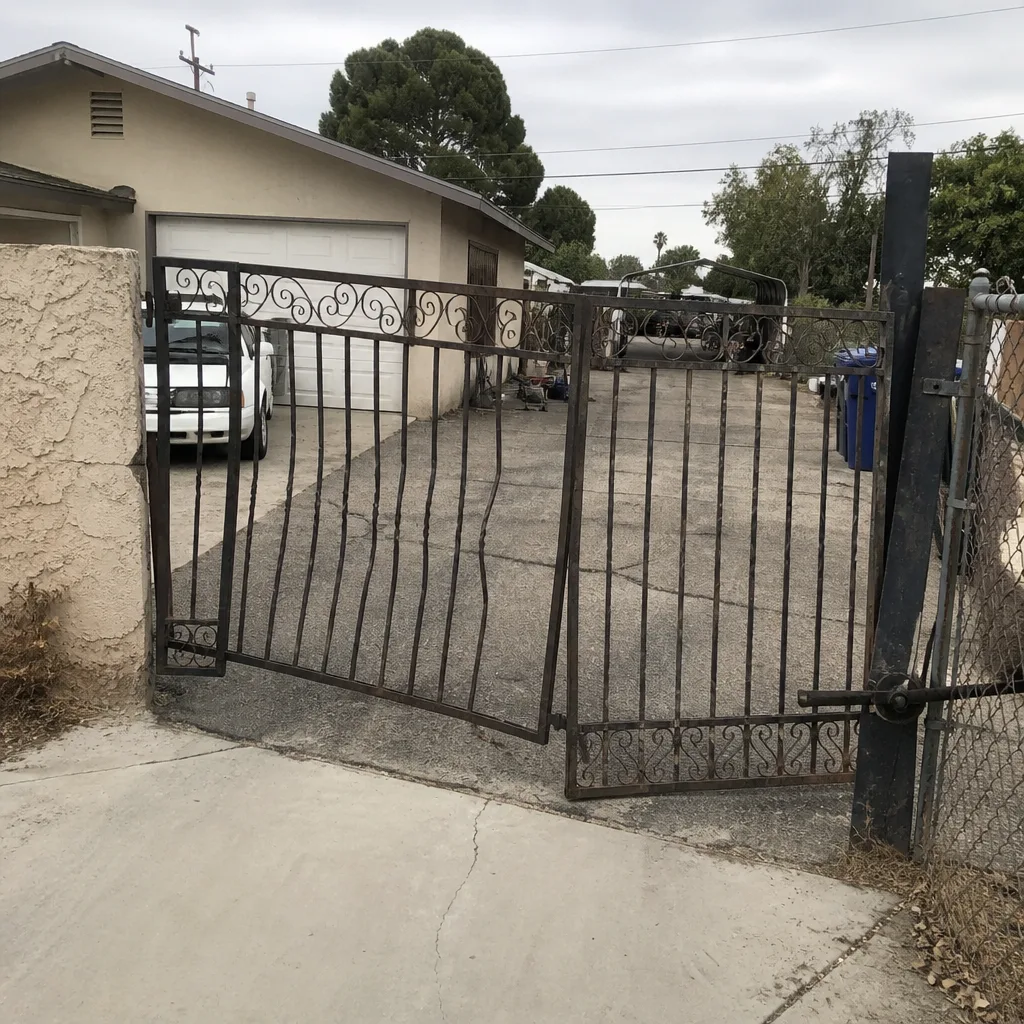 Before
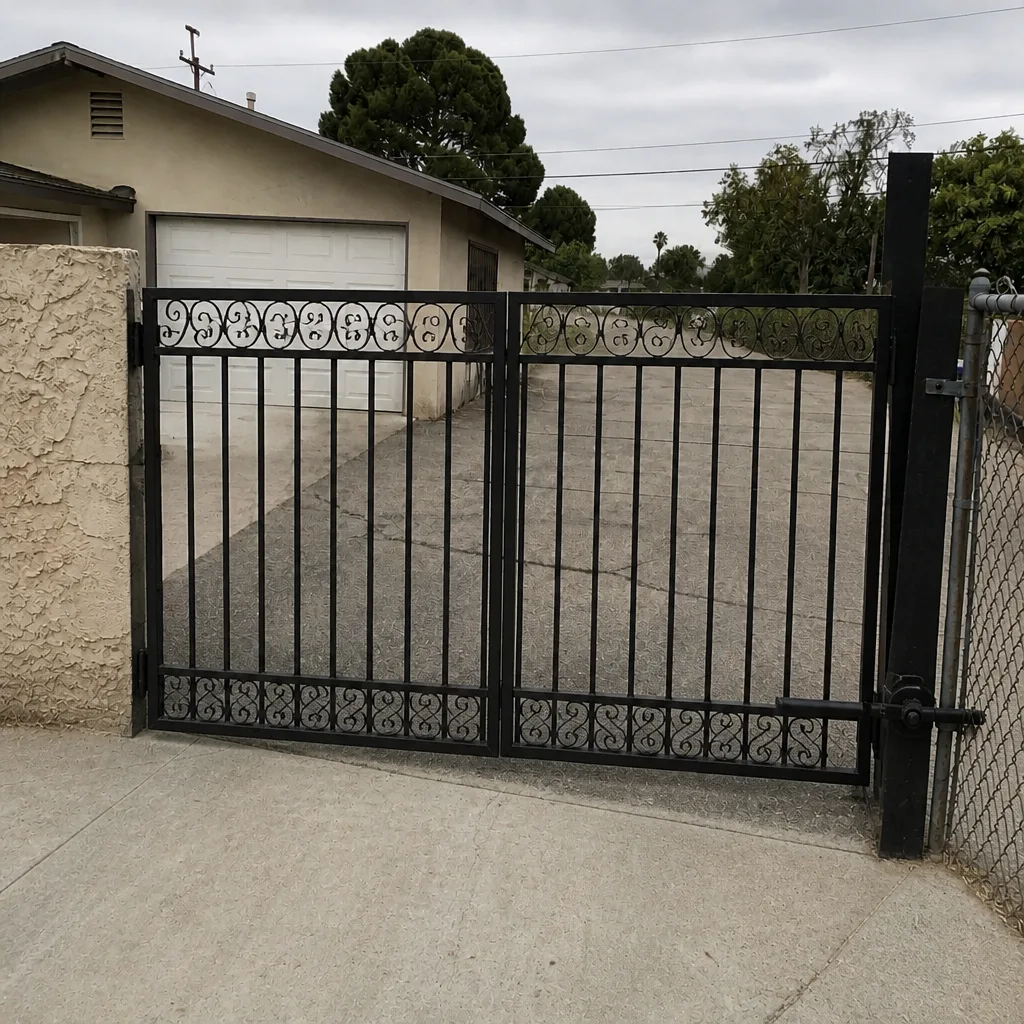 After
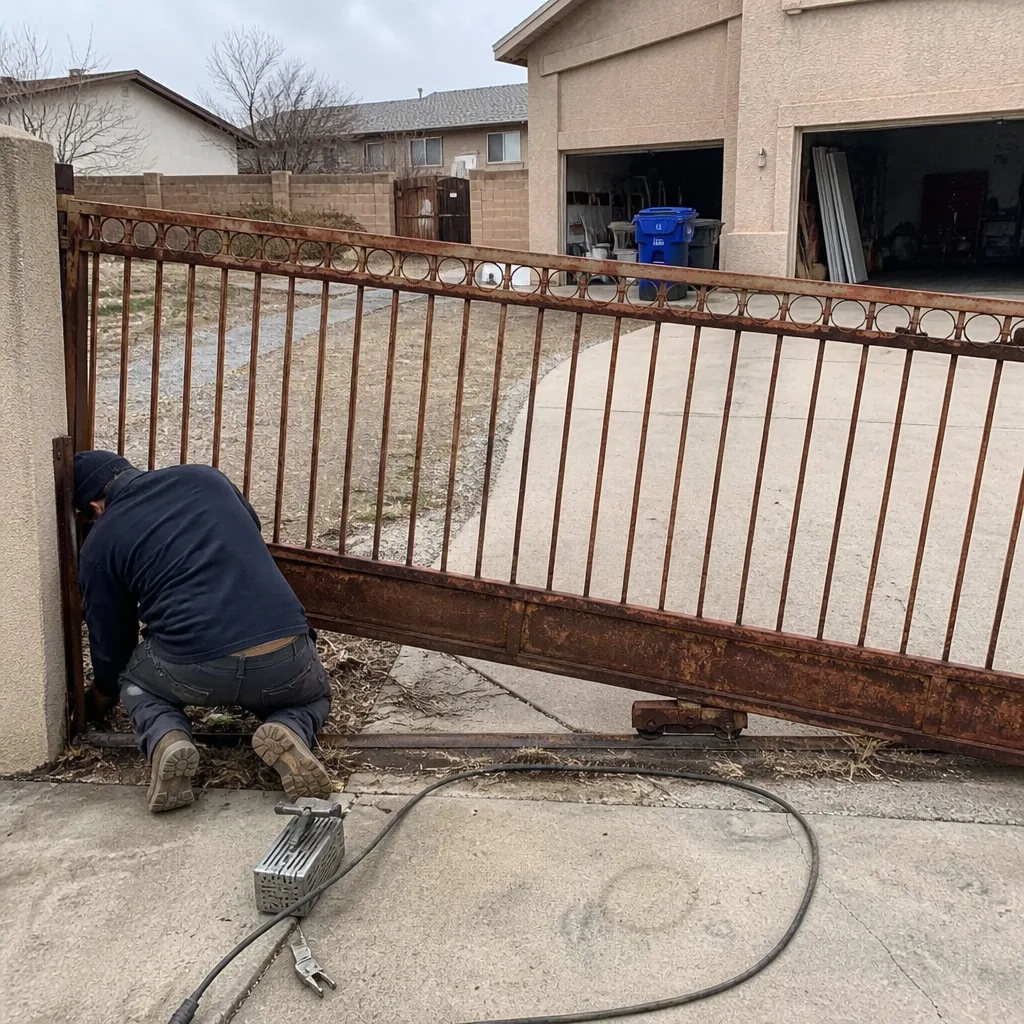 Before
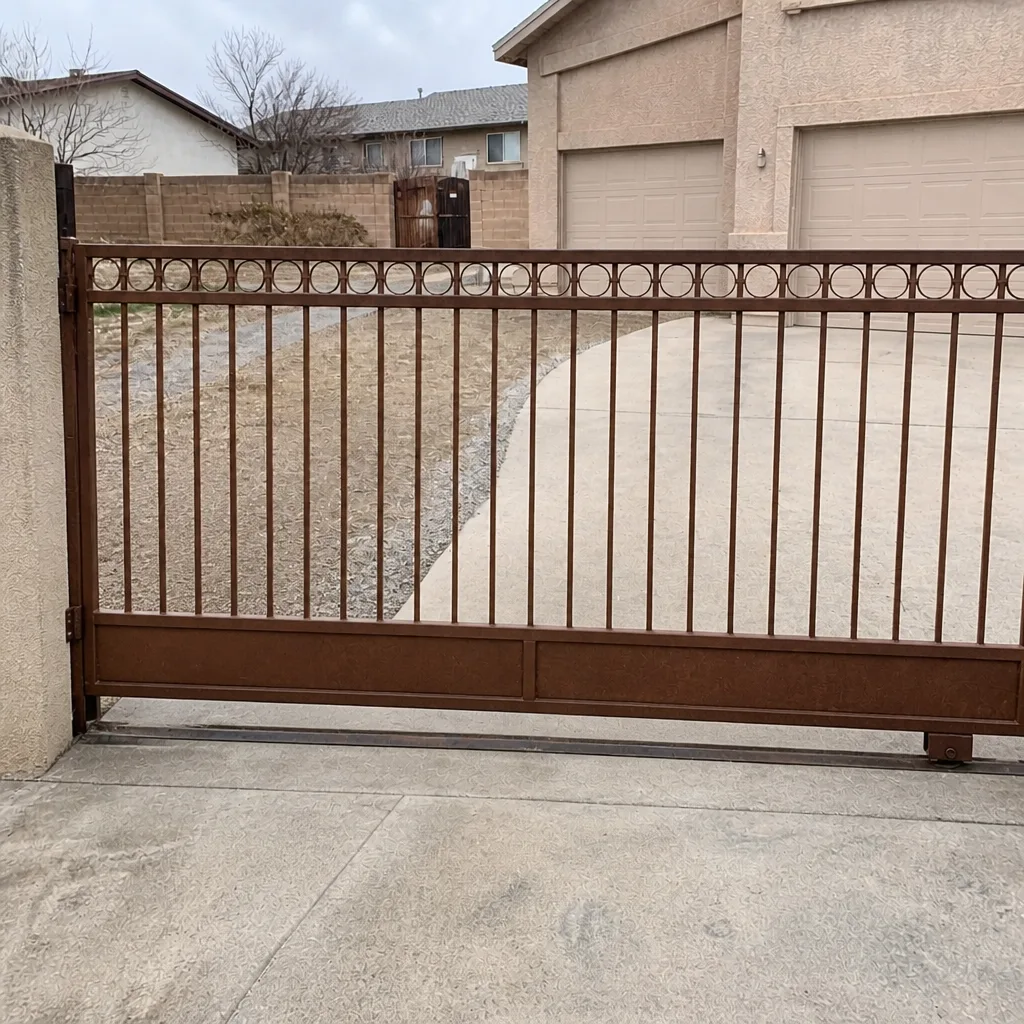 After
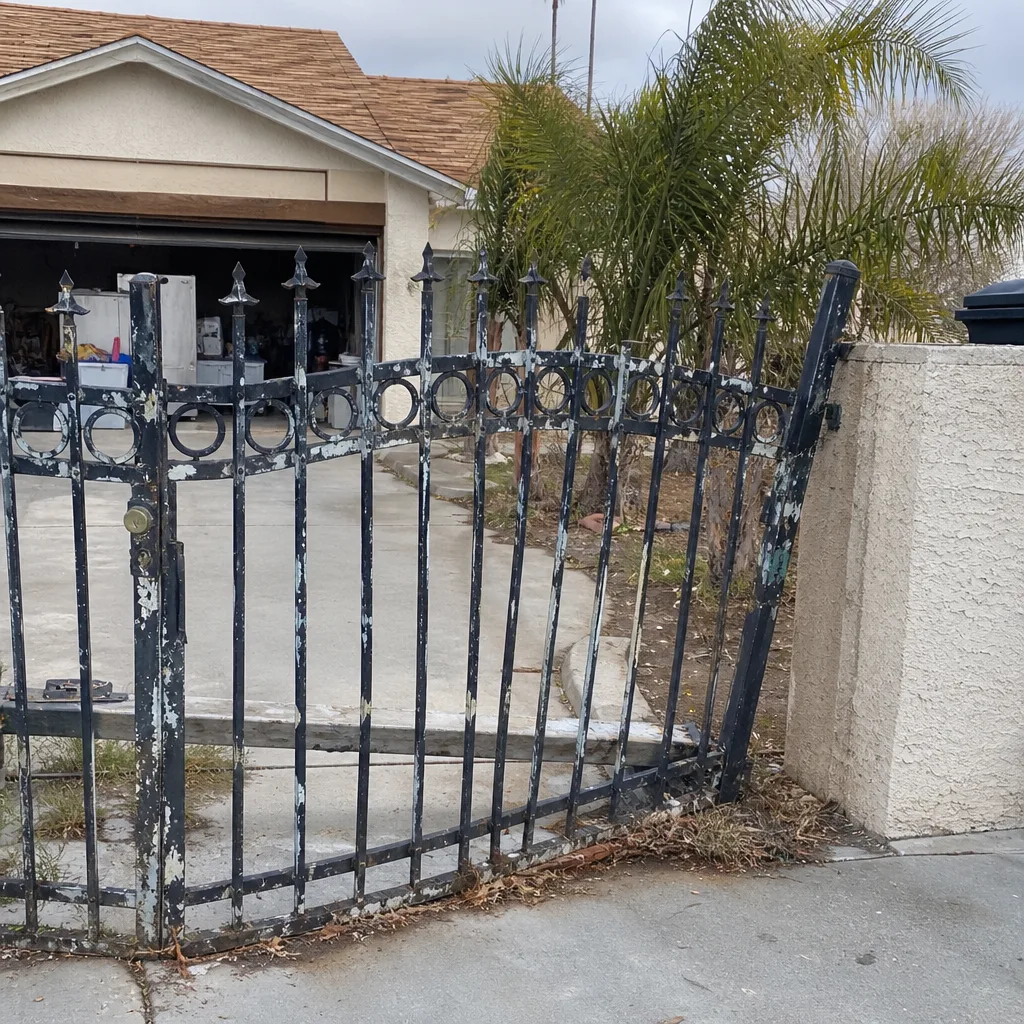 Before
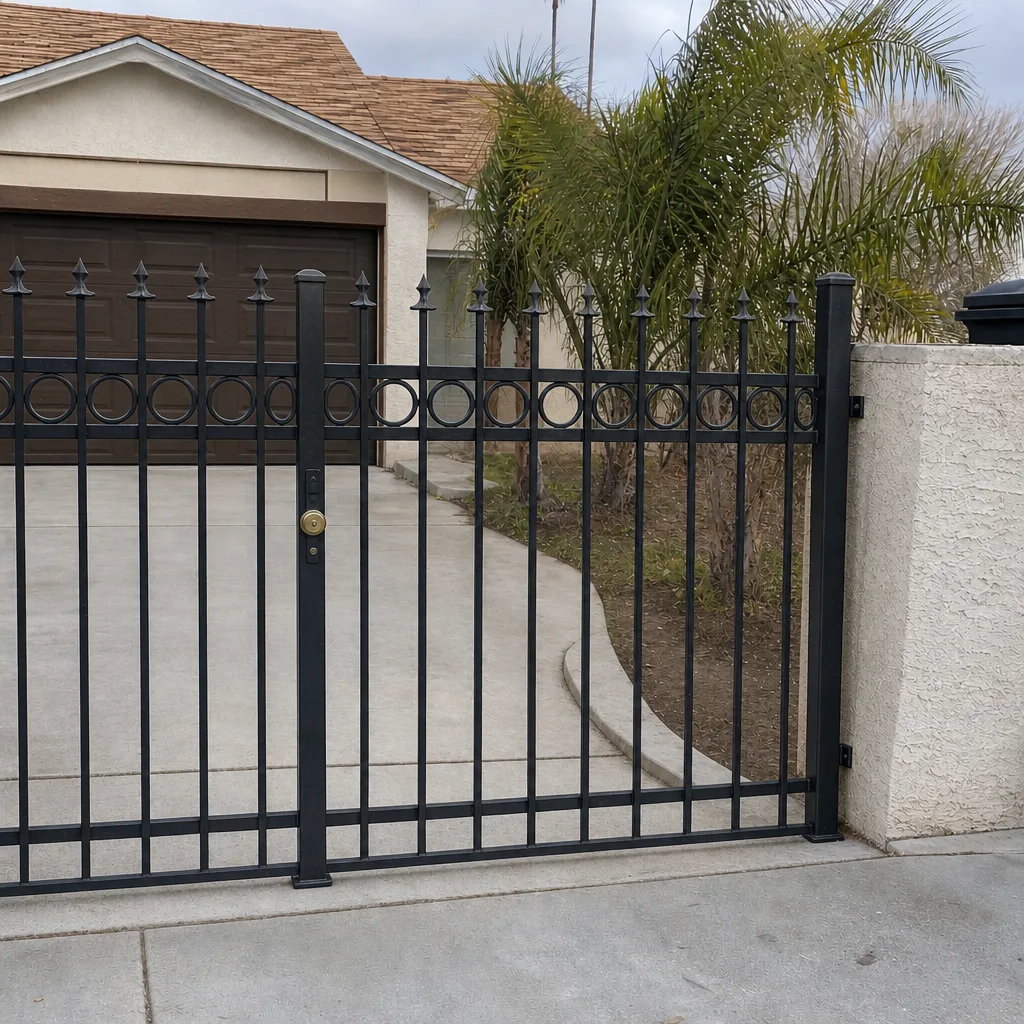 After
When to Call a Professional
Call a professional when the repair touches the operator circuit, the safety wiring, or a structural post, and when the gate is new to you and you don’t know its permit history. Call sooner if the gate is dragging, if the safety sensors aren’t stopping it, or if a storm has moved it out of alignment. Paradise has plenty of wind and sun exposure on gate hardware, so a gate that was fine last season can start misbehaving after a dry, windy stretch. And if you’re planning to sell, a gate inspection now is far cheaper than a problem found during escrow. Gate Repair Paradise offers free estimates in Paradise, call (844) 834-1647. We answer 24/7. Fast dispatch from 7am to 7pm, Sunday through Friday.
Frequently Asked Questions
Usually yes, because replacing an operator involves new or altered electrical work and must meet UL 325 entrapment protection standards. Confirm with your city’s building department, and ask your contractor to pull the permit before work starts. If the replacement is a direct like-for-like swap of an existing operator on an existing circuit, ask whether the city waives the permit. Call (844) 834-1647 for an exact quote. Estimates are free.
UL 325 is the safety standard that requires automated gates to have entrapment protection so a closing gate can detect and reverse for a person or object. Any automated gate in Paradise should meet it, regardless of when it was installed. If your gate closes without checking for obstacles, it likely doesn’t meet the standard. Call (844) 834-1647 to have it tested.
Yes, routine hardware like a hinge, latch, roller, or remote is fine to handle yourself if you’re comfortable with the tools. The line is the operator circuit and the structural post, both of which should go to a trained technician because of electrical and injury risk. If the repair touches the operator, the power run, or the footing, call (844) 834-1647.
HOA rules in Paradise can require approval for a replacement gate style, finish, height, or visibility, even when no county permit is needed. Check the HOA rules before ordering equipment. If the swap is like-for-like, approval is often quick; if the gate is changing, allow time for the architectural review. Call (844) 834-1647 to talk through the scope.
You’ll typically need to have the installation inspected, brought up to code if it has gaps, and permitted retroactively before selling the property. It’s a fixable situation, but far easier to handle before a buyer’s inspector finds it during escrow. Call (844) 834-1647 and we’ll evaluate the current installation and lay out the path.
A compliant setup has at least one working entrapment protection method in place: photo-eye sensors, a safety edge, a loop detector, or an operator with an inherent reversing feature, along with proper warning signage and controls. Many older Paradise gates are missing the photo-eyes or have them disconnected. Call (844) 834-1647 for an inspection and an exact quote. Estimates are free.
The Bottom Line
Most everyday gate repairs in Paradise don’t need a permit, but anything touching electrical wiring, a new operator, or structural post replacement usually does, and skipping it can surface at sale. Automated gates must also meet UL 325 entrapment protection, and many existing installations fall short because a sensor was disabled or weathered out. Check your HOA’s overlay rules before ordering parts, ask your contractor for a permit number when one applies, and verify anything you’re unsure about with the city’s building department. If you want it looked at by a gate specialist, call (844) 834-1647. We answer 24/7. Fast dispatch from 7am to 7pm, Sunday through Friday. The estimate is free, and the price is quoted and agreed before any work starts.
Written by the team at Gate Repair Paradise.