
Last updated November 16, 2026
 Wrought iron
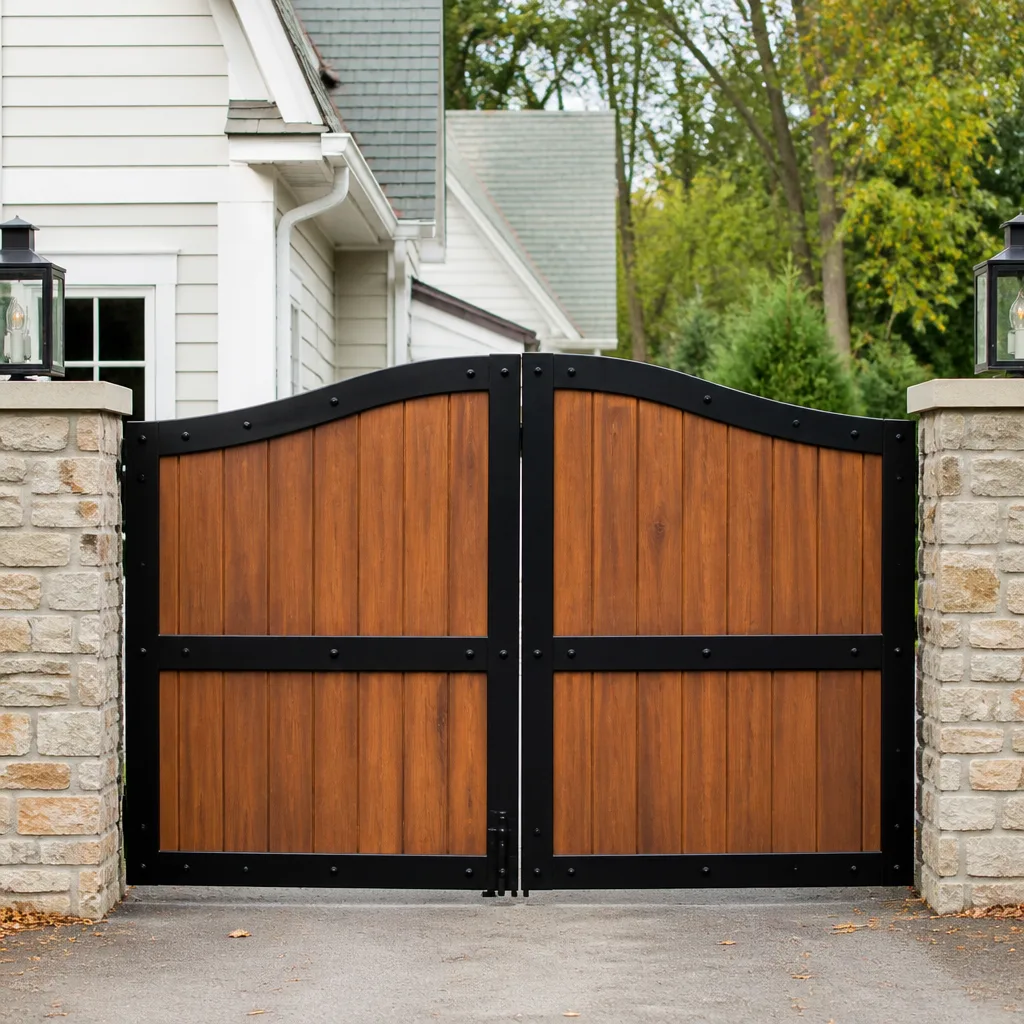 Wood & steel frame
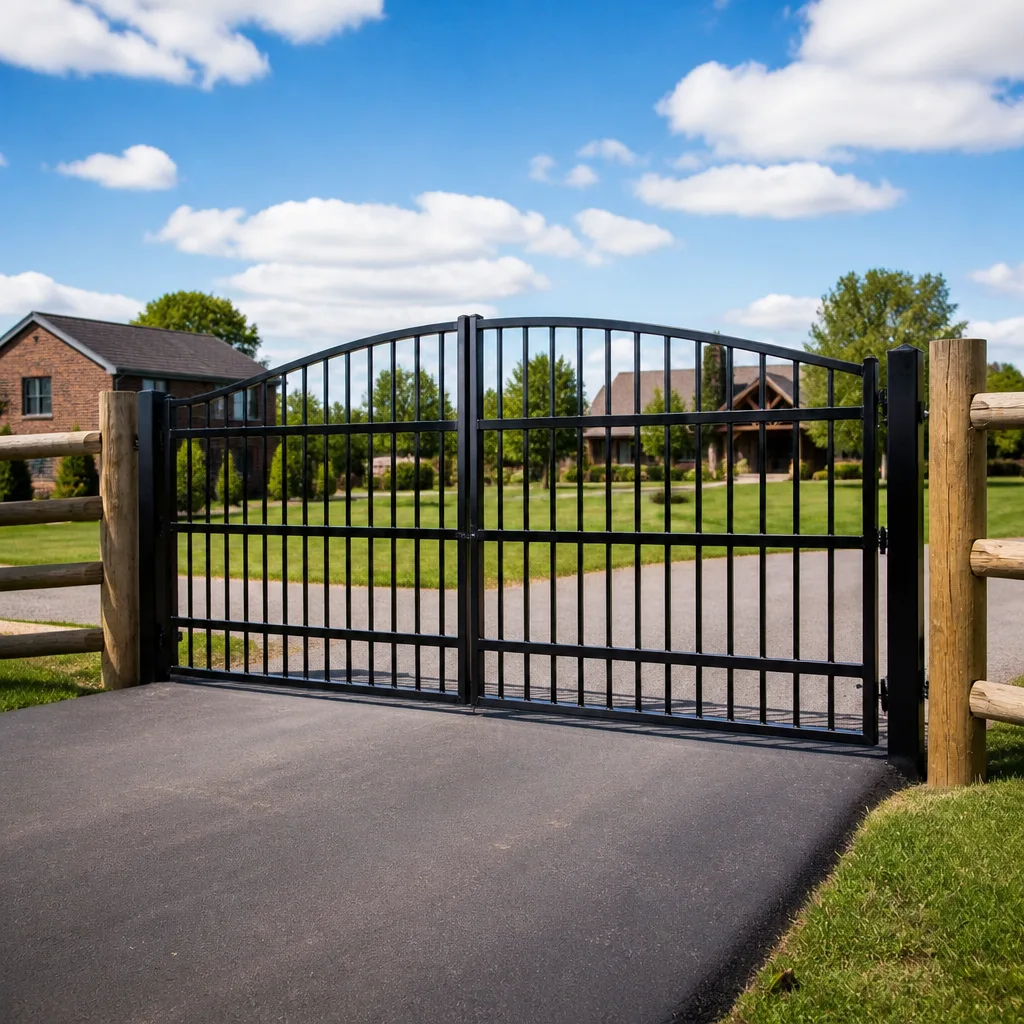 Farm & ranch
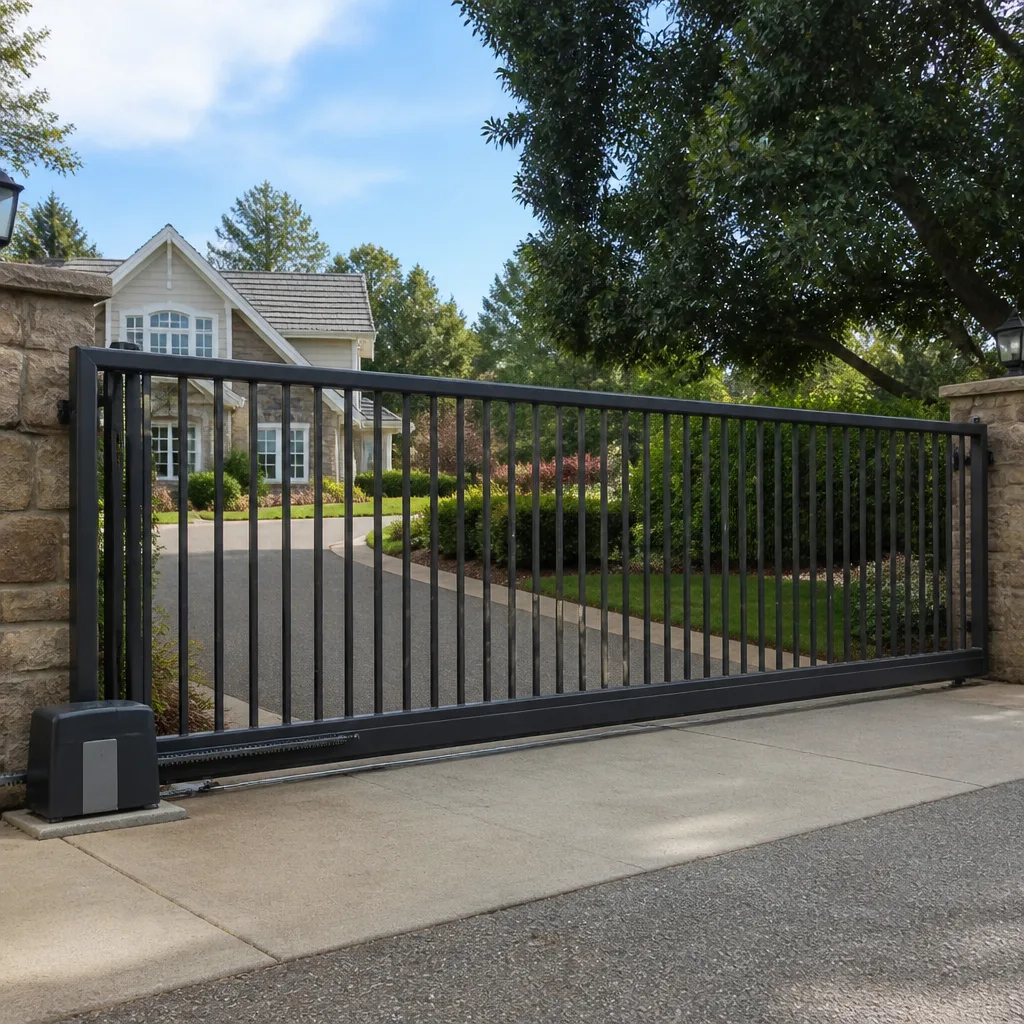 Sliding driveway gates
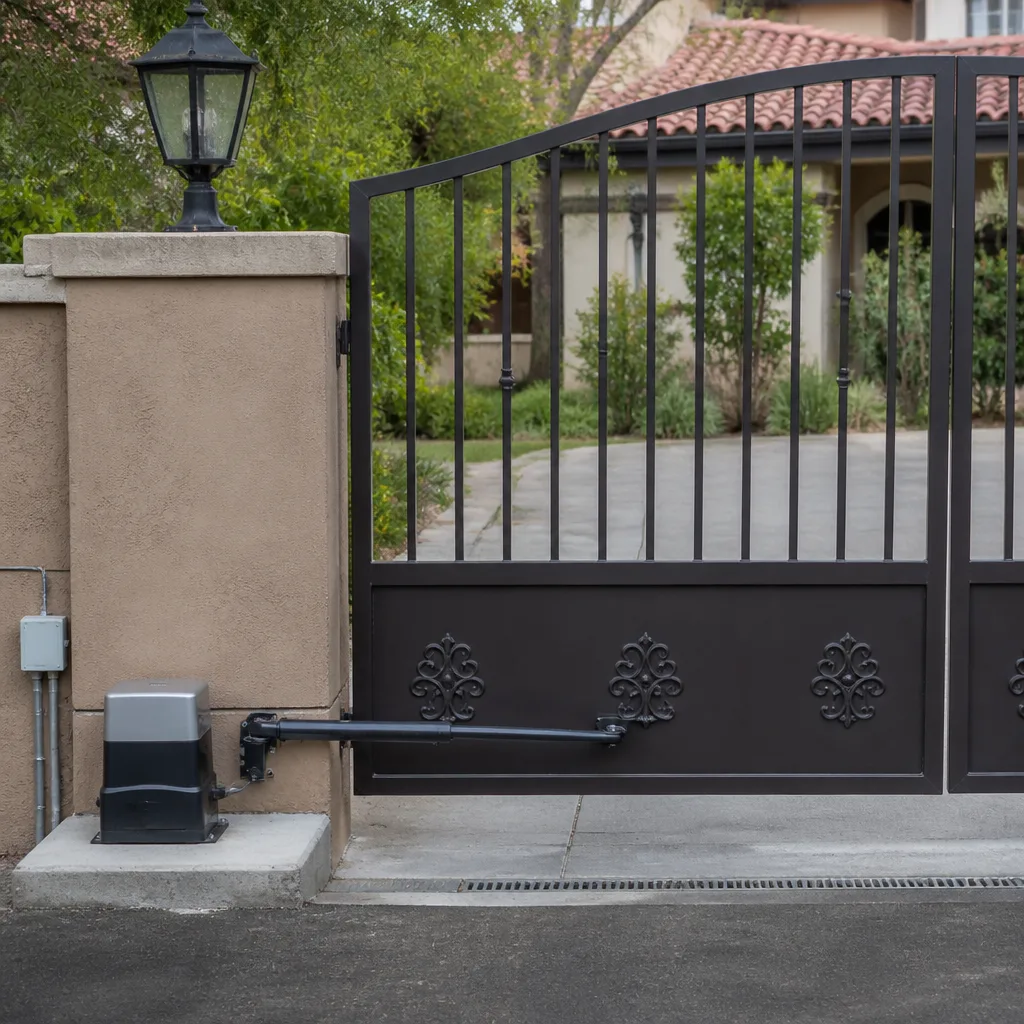 LiftMaster operators
Free on-site gate assessment - hinges, posts, and your LiftMaster or Nice gate operator checked before anything is quoted
The assessment is free and the quote is the invoice.
Get your free estimateGate Repair Maintenance Schedule: What to Do and When
The most common reason gates fail in September in Paradise is a task that was skipped in April, and it takes under ten minutes. That task is checking the operator’s control board area and the drive mechanism for heat stress and dust before the desert summer locks in. Most homeowners think gate maintenance means oiling a hinge now and then. In Paradise, it means building a calendar around heat, dust, and the seasonal swing of a Mojave climate. This guide gives you that calendar: the monthly tasks you can handle, the annual ones that need a technician, the lubrication products that actually work, and the specific points where gates here fail when nobody’s looking.
Quick Answer
A gate maintenance schedule for Paradise breaks into monthly checks (sensors, tracks, hardware tightness), quarterly tasks (battery backup testing, lubrication), and an annual technician inspection timed for October after summer stress. The two most important windows are April through May for pre-summer heat prep, and October for the post-summer mechanical inspection. Skipping either one is how a gate that worked fine in spring stops working in fall.
Styles & brands we work with
- Wrought iron
- Wood & steel frame
- Farm & ranch
- Sliding driveway gates
- LiftMaster operators
Table of Contents
- Why a Gate Maintenance Schedule Matters More in Paradise
- Monthly Tasks You Can Do Yourself
- The Paradise Seasonal Calendar: April, July, October
- Lubrication: What Works on Hinges, Racks, and Chains
- Cleaning and Testing Photo-Eyes and Loop Detectors
- Battery Backup Testing: The Task Everyone Skips
- Owner Tasks vs. Technician Tasks: Where the Line Is
- The Annual Technician Inspection Checklist
Why a Gate Maintenance Schedule Matters More in Paradise
Gates in Paradise live through a harder year than gates almost anywhere else in the country. Summer afternoons push the metal and the operator housing well past the temperatures most manufacturer specs are written around, and the dust that blows through the valley works its way into every moving part. That combination is what makes a schedule matter. It’s not about keeping the gate pretty. It’s about keeping the operator, the safety sensors, and the fasteners inside their operating envelope so the gate doesn’t quit on a ninety-degree afternoon when you need it most.
The most common pattern we’ve seen on gate repair calls in Paradise is not age or abuse. It’s accumulation. Dust packs into photo-eye lenses until the beam can’t read. Heat cycles work a bracket bolt loose over a season. A loop detector that was fine in March is buried under blown debris by August. None of these are dramatic failures. They’re slow ones that a schedule catches before they turn into a call.
Two more local factors shape the calendar. First, Paradise sits in a valley where wind-blown dust and construction grit move with the seasons, not steadily. Second, the seasonal temperature swing is wide: cool enough in winter that the gate hardware expands and contracts significantly between morning and afternoon. That cycle is what loosens fasteners and stresses seals on operator housings, and it’s why a mid-summer and mid-winter check both earn their place.
The good news is that a gate in Paradise doesn’t need exotic care. It needs regular, boring attention at the right times. The sections below lay out exactly which times those are.
Monthly Tasks You Can Do Yourself
Most of what keeps a gate working between professional visits takes ten to fifteen minutes a month, and you don’t need specialty tools. Here’s what to do and how often.
- Walk the gate path. Open the gate fully by hand (with the operator disengaged) and watch for dragging, scraping, or a hitch in the swing or slide. A gate that drags stresses the operator motor, and that’s an expensive way to find out a hinge is loose.
- Wipe the photo-eye lenses. Dust in Paradise is the single biggest cause of false safety trips. Clean both photo-eye lenses on a swing or slide gate every month, and more often during the windy season.
- Check the safety edges. Press the leading edge of the gate by hand while the gate is stopped. It should trigger a reverse. If it doesn’t, stop using the automatic cycle and get it looked at.
- Look at the operator housing. Check for cracked seals, dust accumulations around the vents, and anything nesting or blocked. Clear debris from around the housing so the motor can breathe.
- Test the remote and keypad. Press each remote button once. A remote that needs a hard press or works only at close range usually means a dying battery in the remote, not a failing operator.
- Eyeball the fasteners. Look at the hinge and bracket bolts on a swing gate, and the track brackets on a slide gate. You don’t need to torque them every month, just watch for anything that’s visibly backed off or crooked.
- Clear the tracks and the gate path. On a slide gate, sweep the track. On a swing gate, clear the arc of travel of rocks, blown debris, and grass. A single rock under a slide gate’s path is enough to trip the operator.
These monthly tasks are also the best early-warning system you have. A dragging swing gate, a photo-eye that trips repeatedly, or a remote that’s suddenly intermittent are the exact symptoms that, caught in month one, are a small repair and, caught in month four, are a control board diagnosis.
The Paradise Seasonal Calendar: April, July, October
Paradise gates follow a three-marker calendar, and the reason is heat and dust, not marketing. The three windows below are the ones that matter most.
April through May: Pre-Summer Heat Prep
This is the window that catches the most problems before they cost anything. The point of pre-summer prep is to get the gate and operator into summer in clean, cool-running condition. What’s in scope:
- Clean the photo-eye lenses and test the reverse cycle.
- Test the battery backup. (See the battery section below. Dead backup batteries are the single most common “we didn’t know” call we get in summer.)
- Lubricate hinges, the rack-and-pinion, and any chain drive with the correct product for each.
- Check fasteners on the gate frame and the operator bracket, and torque anything that’s backed off.
- Clear debris and nesting material from around the operator housing.
- Confirm the manual release works. If the power goes out, you need to be able to open the gate by hand.
July through August: Monsoon-Season Dust and Debris
Paradise’s wind-blown dust and summer storms put debris in places the rest of the year doesn’t. In this window, add two recurring checks to your monthly routine:
- Inspect photo-eye lenses and loop detector points for dust and grit more frequently, especially after a windy stretch.
- Clear the track or swing arc of blown debris, and check the operator intake vents for dust buildup.
- Check safety-edge function once a week during this window, not once a month.
October: Post-Summer Mechanical Inspection
October is the best month for a professional inspection in Paradise because it’s after the heat stress and before the winter temperature swing. The mechanical and control-board checks a technician does in October catch the wear summer revealed while the parts are still available and the repair is still small. It’s also the natural time to check that battery backup actually held through the summer.
These three windows are the backbone of the schedule. If you do nothing else, hit all three.
Lubrication: What Works on Hinges, Racks, and Chains
The single most common lubrication mistake we see on Paradise gates is spraying WD-40 on hinge pins and calling it maintenance. WD-40 is a solvent and light oil, not a lubricant. On a hinge pin in a desert gate, it cleans the old grease out, gives you a quick slick feel, then evaporates and leaves the pin drier than before. That accelerates wear, and it’s why we tell people to stop reaching for it on gate hardware.
Here’s what actually belongs on each component:
- Hinge pins and swing-gate pivots: a lithium or white lithium grease, or a purpose-made gate hinge lubricant. Applied sparingly to the pin, worked in by hand-swinging the gate a few times.
- Rack-and-pinion (slide gates): a dry-film or lithium-based rack lubricant. Not oil-based grease, which attracts dust in Paradise and turns into a grinding paste over a season.
- Chain drives: a chain-specific lubricant, applied to the chain after cleaning, not sprayed on top of dirt. Clean first, then lube.
- Rollers (slide gates) and hinge bearings: a light grease applied with a syringe or grease gun, small quantity.
Frequency matters as much as product. In Paradise, hinges and pivots on a swing gate typically get lubricated every three to six months, and rack-and-pinion on a slide gate every three to six months as well, but the track and rollers benefit from a quick dry-brush and dry-lube more often during the dusty season. Over-lubricating is a real problem here. A thick coat of oil-based grease collects dust, and dust is a grinding compound when the gate slides or swings against it.
Never lubricate the operator’s internal mechanism, the control board, or any electrical connector. Those are technician-only components, and oil on a control board is how a small fix becomes a full operator replacement.
Cleaning and Testing Photo-Eyes and Loop Detectors
Photo-eye sensors and loop detectors are the parts of an automatic gate most likely to cause a phantom failure in Paradise, and they’re also the parts homeowners most often misdiagnose. A gate that reverses or stops for no visible reason is usually not a failing operator. It’s a dirty photo-eye, a buried loop, or a safety edge that’s been tripped.
Photo-Eyes
Photo-eyes are the paired sensors on either side of the gate opening. They shoot a beam across the opening. If dust, a spiderweb, or a bit of blown debris breaks the beam, the gate refuses to close, or reverses mid-travel. On a Paradise gate, we recommend cleaning both lenses every month, and every two weeks during a windy stretch. Wipe with a soft dry cloth, not a wet one, and don’t scrub the lens – microbubbles in the plastic are not the issue; dust is. Test the sensor by standing between the pillars and pressing the close button. The gate should refuse to close. If it tries, stop using the automatic cycle and call us.
Loop Detectors
A loop detector is a wire loop buried in the driveway, connected to the operator. It detects the metal of a vehicle and either opens the gate or holds it open. In Paradise, a loop can be thrown off by debris piled on it, a crack in the driveway that shifts the loop, or a rodent chewing a lead-in wire. If your gate is opening spontaneously or failing to close when a car is on the driveway, suspect the loop before the operator. You can’t easily test the loop yourself, but you can visually check that the driveway over the loop is intact and free of debris. Anything else is a technician job.
Safety Edges
The safety edge is the rubber bar or strip on the leading edge of the gate. It’s tested by pressing it by hand with the gate stopped. The gate should reverse. In Paradise, the heat and UV cycle hardens the rubber over time, and a safety edge that no longer depresses reliably needs replacing, not adjusting. Test it weekly during summer and monthly the rest of the year.
Battery Backup Testing: The Task Everyone Skips
Battery backup is the most-skipped maintenance task on an automatic gate, and it’s the one that bites hardest. If you don’t test it, you don’t have it. Most homeowners discover their backup is dead the first time the power goes out and the gate stops responding, trapping them inside or outside their property. In a Paradise summer, that’s a problem in the middle of a hot afternoon.
Testing battery backup takes about five minutes and no equipment beyond your hand:
- Confirm the gate is fully closed and the operator is engaged (in normal automatic mode).
- Locate the AC power switch or breaker feeding the operator and turn it off.
- Press the open button on your remote or keypad.
- The gate should open normally on battery power. If it opens slowly, hesitates, or doesn’t move, the battery is either depleted or dead.
- Turn the power back on and confirm the gate returns to normal operation.
What to do with the result: if the gate opened normally, the backup works. If it didn’t, the battery is the likely culprit – not the operator. Batteries in gate operators degrade over time, and the general trend is two to five years of useful life depending on the operator and the heat exposure. In Paradise, the heat pushes that toward the low end, which is one reason we recommend testing in April and again in October.
Replacement battery choice depends on the operator brand. LiftMaster, FAAC, BFT, and Linear operators all use their own battery types, and putting the wrong battery in a system is a common DIY mistake. If testing shows the battery is dead, it’s worth a technician visit or a quick call to confirm exactly what your system takes.
Owner Tasks vs. Technician Tasks: Where the Line Is
You can and should handle a good chunk of gate maintenance yourself. But there’s a line, and it’s worth being clear about where it is so you don’t turn a small fix into a bigger one.
Tasks you should own
- Cleaning photo-eye lenses and testing safety-edge function
- Sweeping tracks and clearing the gate path of debris
- Testing battery backup
- Visual checks on hinges, brackets, and operator housing
- Cleaning and lubricating hinges and rack-and-pinion with the correct products
- Replacing remote batteries
- Confirming the manual release works
Tasks that should stay with a technician
- Anything involving the control board. This is where generalist handymen get gates wrong. Control-board diagnostics on a LiftMaster or a FAAC operator is not guesswork; the wrong jumper setting or the wrong test can damage the board.
- Loop detector diagnostics and wiring repair.
- Operator motor repair or replacement.
- Hinge and bracket replacement, particularly where the original fasteners are embedded in concrete or metal.
- Gate alignment on a swing or slide system that’s come off track.
- Any electrical work at the operator’s power feed.
The dividing line is electricity and structural load. Anything on the power side of the operator, or anything that involves the gate panel itself being supported or repositioned, is a technician task. Everything else is ongoing care that keeps the technician’s visits short and cheap. If you need a specialist on the electrical side, that’s electric gate repair territory, and it’s a different skill set than a general handyman brings.
The Annual Technician Inspection Checklist
An annual inspection in Paradise should be scheduled for October, after the summer heat has done its work and before the winter temperature swings start. The reason for that timing is simple: October is when the wear that built up over summer is still visible, still small, and still cheap to fix. A spring inspection misses the summer damage; a mid-winter inspection is looking at damage that’s already settled in.
A thorough annual inspection should include:
- Full operator diagnostic. Control board, motor load, and error log review. This is where a technician finds the small fault that would otherwise become a mid-summer failure.
- Battery backup load test. Not just a functional test – a load test that tells you how much battery life is left.
- Photo-eye and safety-edge calibration. Alignment, sensitivity, and reverse-cycle response.
- Loop detector test. Signal strength and response to a vehicle.
- Mechanical inspection. Hinges, pivots, brackets, wheels, track, and gate alignment.
- Fastener torque check. Every bracket, hinge, and operator mount.
- Lubrication refresh. Hinges and rack-and-pinion with the correct product for each.
- Manual release function. Confirm the gate can be opened by hand if power fails.
- Visual inspection of the gate panel and structure. Cracks, rust at hinges, and any panel that’s racked.
For a Paradise gate, that inspection is the single best investment you can make in the system. It’s the difference between a scheduled lubrication visit and an emergency repair call in August.
Common Mistakes to Avoid
- Using WD-40 on hinge pins. It’s a solvent, not a lubricant, and it leaves the pin drier than it started. Use lithium grease or a purpose-made gate hinge lubricant.
- Skipping battery backup testing. Testing in April and October catches a dead battery before a power outage does. Most homeowners figure out the battery is dead the hard way.
- Ignoring photo-eye dust during the windy season. In Paradise, weekly cleaning during the windy stretch is the difference between a working gate and a gate that won’t close.
- Running the operator with a dragging gate. A dragging gate is a symptom of a hinge, track, or alignment problem. Ignoring it stresses the motor and burns it out faster.
- Oiling a control board or its connectors. Oil in the operator housing is how a $200 board fix becomes a $1,200 operator replacement.
- Cleaning the track with a wet rag. Wet cleaning on a slide-gate track leaves grit behind and starts a rust cycle. Use a dry brush.
- Scheduling the annual inspection in spring instead of October. A spring inspection misses the summer wear that matters most. October is the right window in Paradise.
See the difference
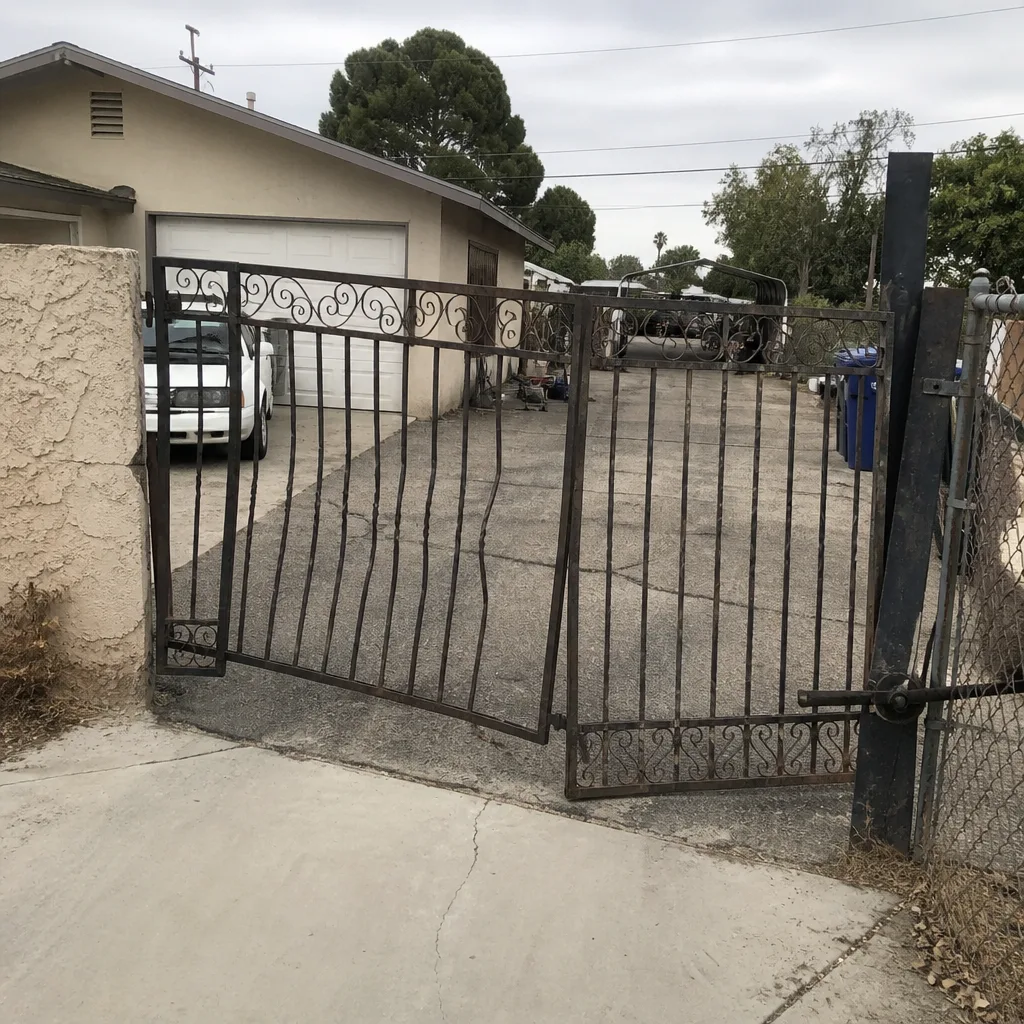 Before
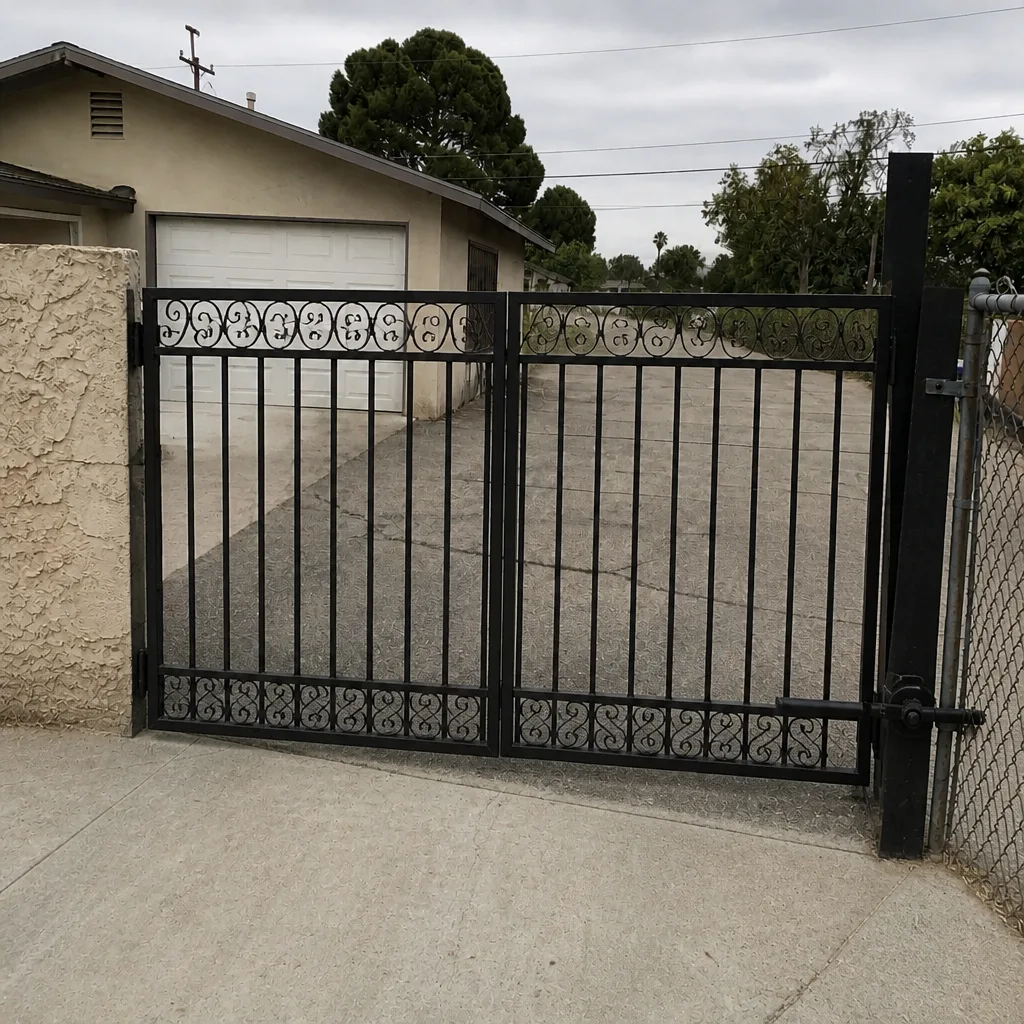 After
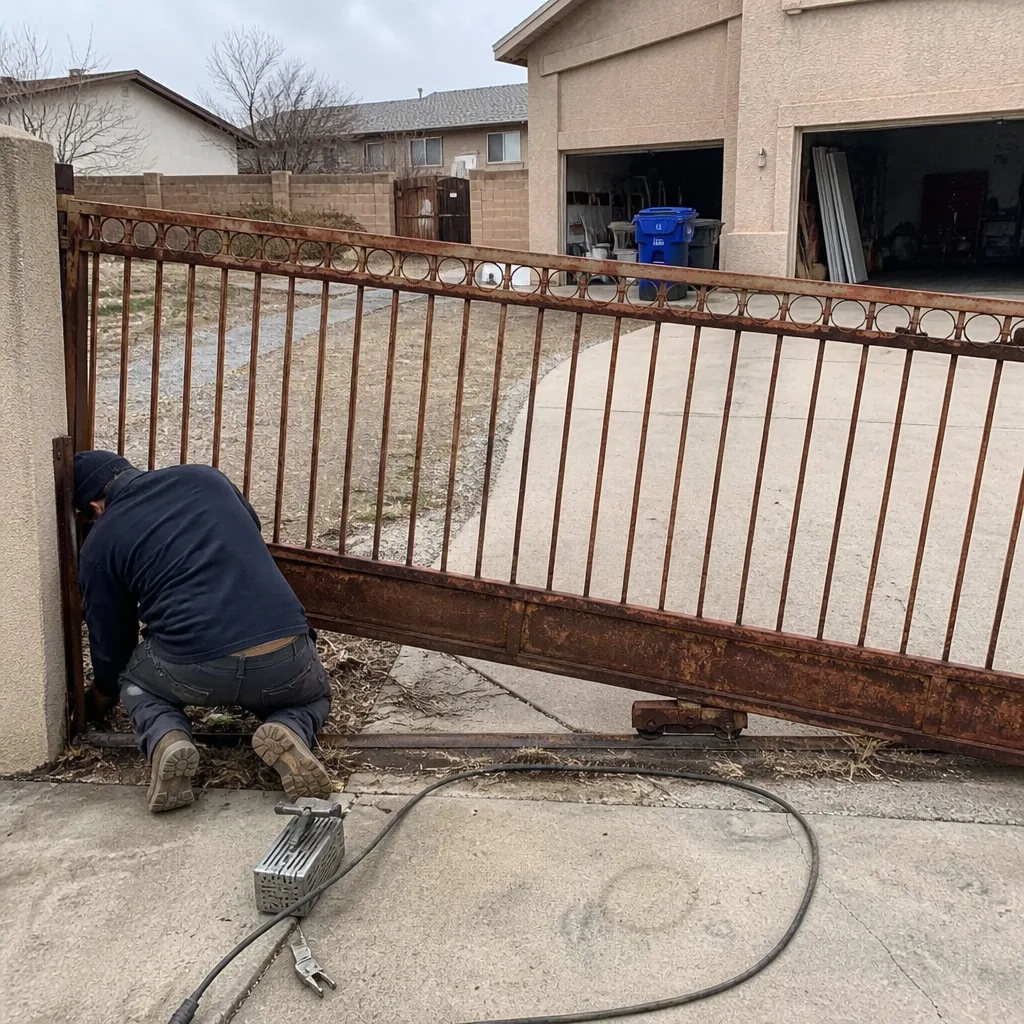 Before
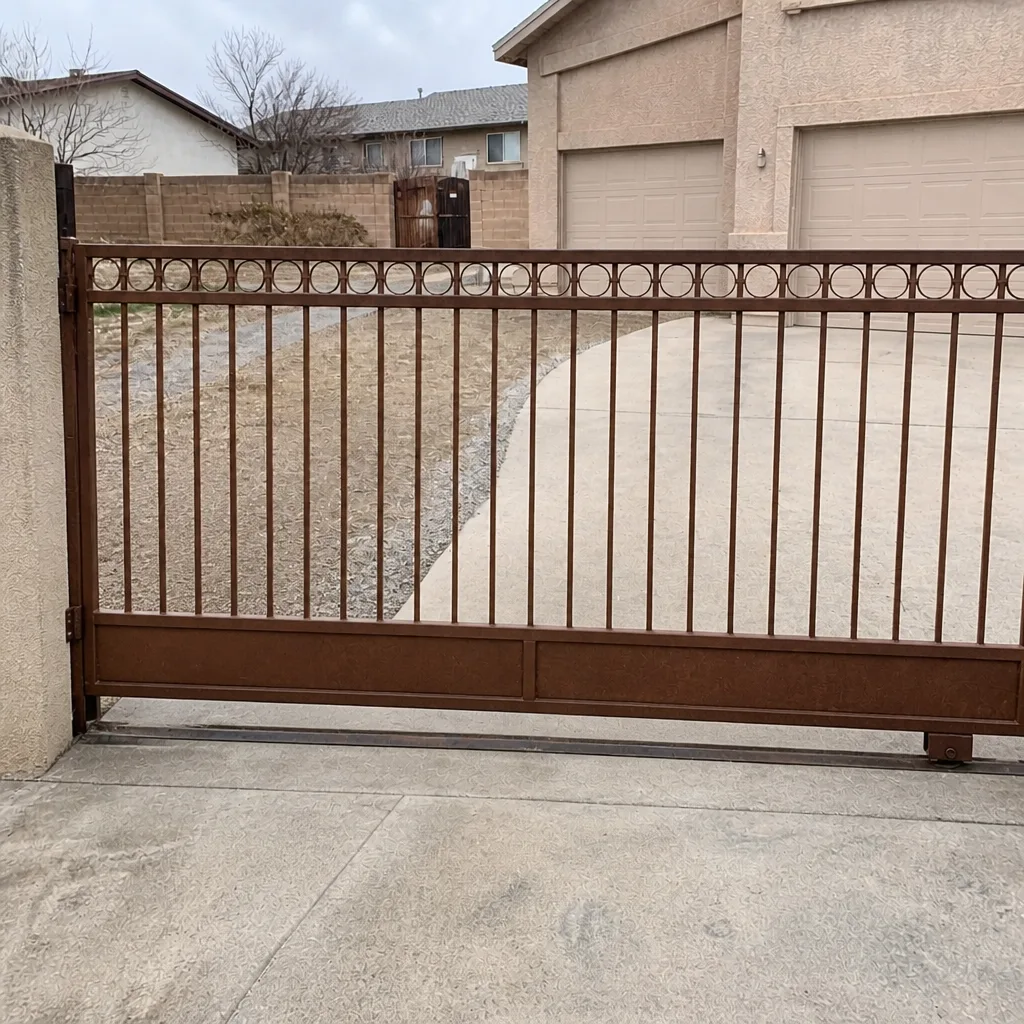 After
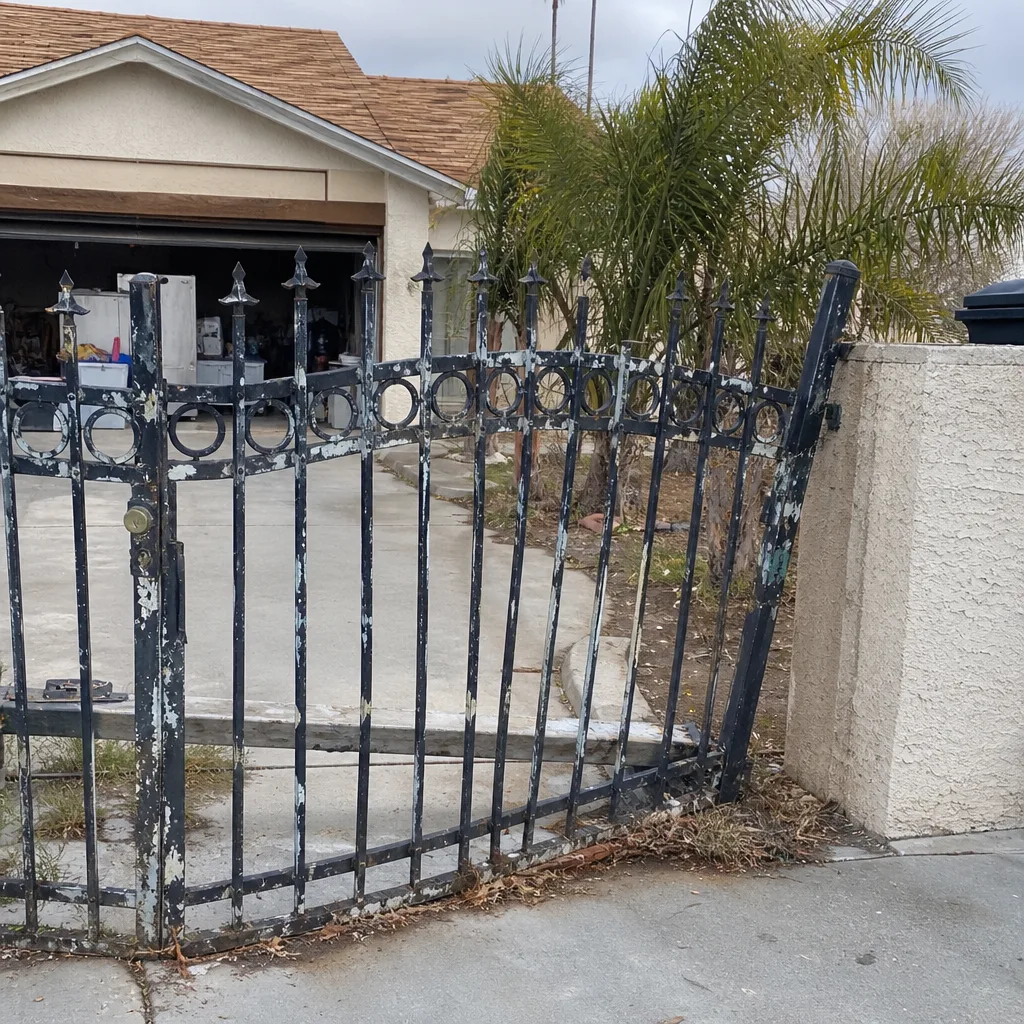 Before
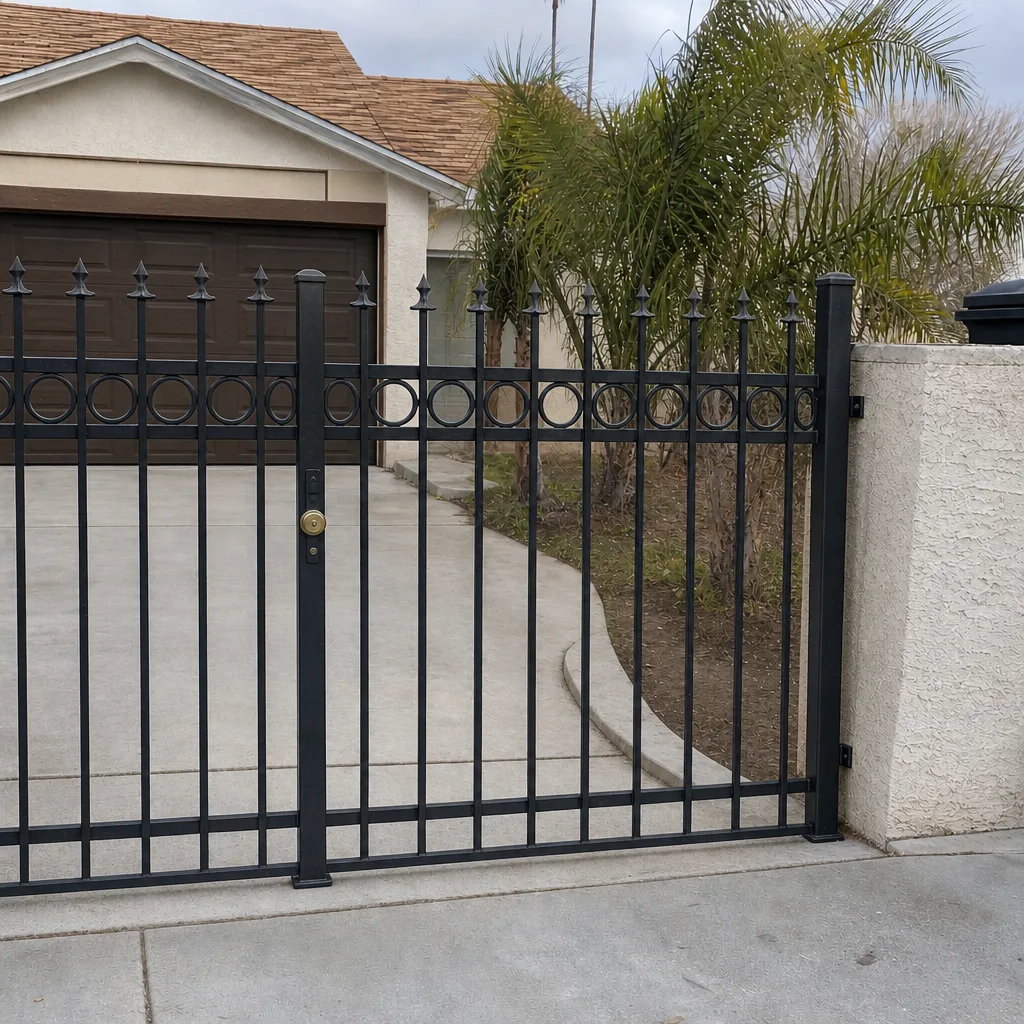 After
When to Call a Professional
Call a professional when the gate reverses on its own and cleaning the photo-eyes doesn’t fix it, when the gate drags, scrapes, or won’t travel the full path, when the operator refuses to run or runs only briefly, when the battery backup fails its test, when the gate has come off its track or is visibly out of alignment, or when anything electrical is involved. Those are not tasks to talk yourself through. They’re the exact failures a gate specialist diagnoses correctly the first time. Our technicians have up to experience, and we work on the brand you already have – LiftMaster, FAAC, BFT, Linear, and the rest – rather than the one we’d prefer to sell. We also serve the wider area, so if you’re nearby in Paradise or the surrounding neighborhoods, we’re set up for it. Gate Repair Paradise offers free estimates in Paradise – call (844) 834-1647.
Frequently Asked Questions
Every three to six months with lithium or white lithium grease, not WD-40. The desert heat dries out light oils fast, and hinges that go dry wear out quickly. During the windy season, check them more often. Call (844) 834-1647 for an exact quote – estimates are free.
You can and should test it yourself in April and October. The five-minute test is switching off the AC feed to the operator and pressing the open button. If the gate doesn’t open normally on battery power, the battery is dead or dying, and that’s the call to make. Call (844) 834-1647 for an exact quote – estimates are free.
Most of the time, it’s a dirty photo-eye or a tripped safety edge. In Paradise, dust accumulates on the photo-eye lenses faster than in most places, and a false reverse is usually a lens that needs a wipe. If cleaning doesn’t fix it, the sensor or its wiring needs a technician. Call (844) 834-1647 for an exact quote – estimates are free.
Yes in Paradise, because the failures the inspection catches – heat-stressed control board components, loosened fasteners, a battery at the end of its life – are invisible until they fail. The right window is October, after summer and before winter. Call (844) 834-1647 for an exact quote – estimates are free.
A gate specialist works on gates only, including the control boards, loop detectors, and safety sensors that a generalist can misdiagnose. The right fix for the operator you already have is the goal, not the brand a handyman happens to carry. Call (844) 834-1647 for an exact quote – estimates are free.
You can handle the exterior tasks – cleaning photo-eyes, testing safety edges, testing battery backup, and lubrication. You should not open the operator housing or touch the control board. Those need a technician trained on the specific brand. Call (844) 834-1647 for an exact quote – estimates are free.
The Bottom Line
A gate maintenance schedule in Paradise isn’t a generic checklist. It’s a calendar pinned to the desert year: pre-summer prep in April and May, dust and debris checks in July and August, and the post-summer inspection in October. Between those windows, monthly lens cleaning, safety-edge testing, and hinge checks keep the system in condition. Get the lubrication products right – no WD-40 on hinge pins – and test the battery backup twice a year. Everything else is best left to a technician who works on gates and only gates. That’s the schedule that keeps a Paradise gate working through the summer without an emergency call in August.
Written by the team at Gate Repair Paradise.