
Last updated November 16, 2026
 Wrought iron
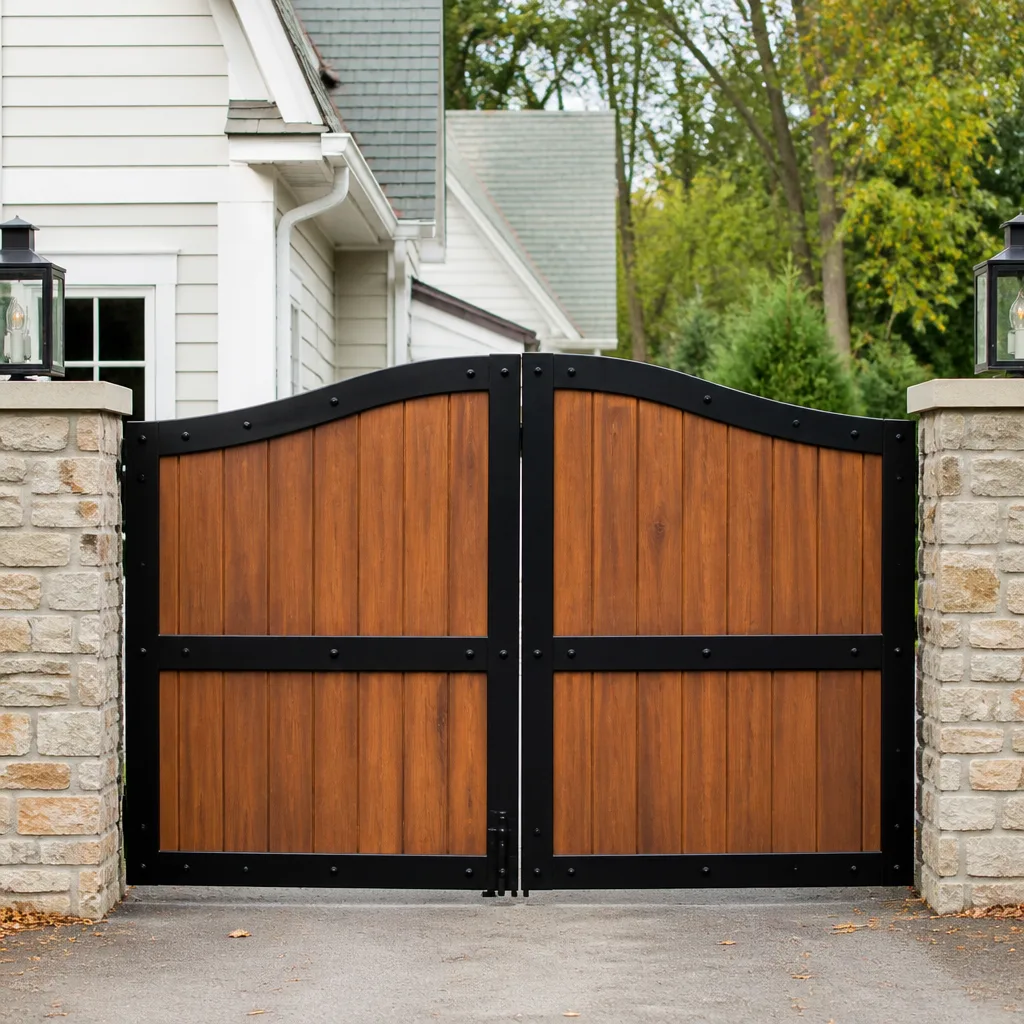 Wood & steel frame
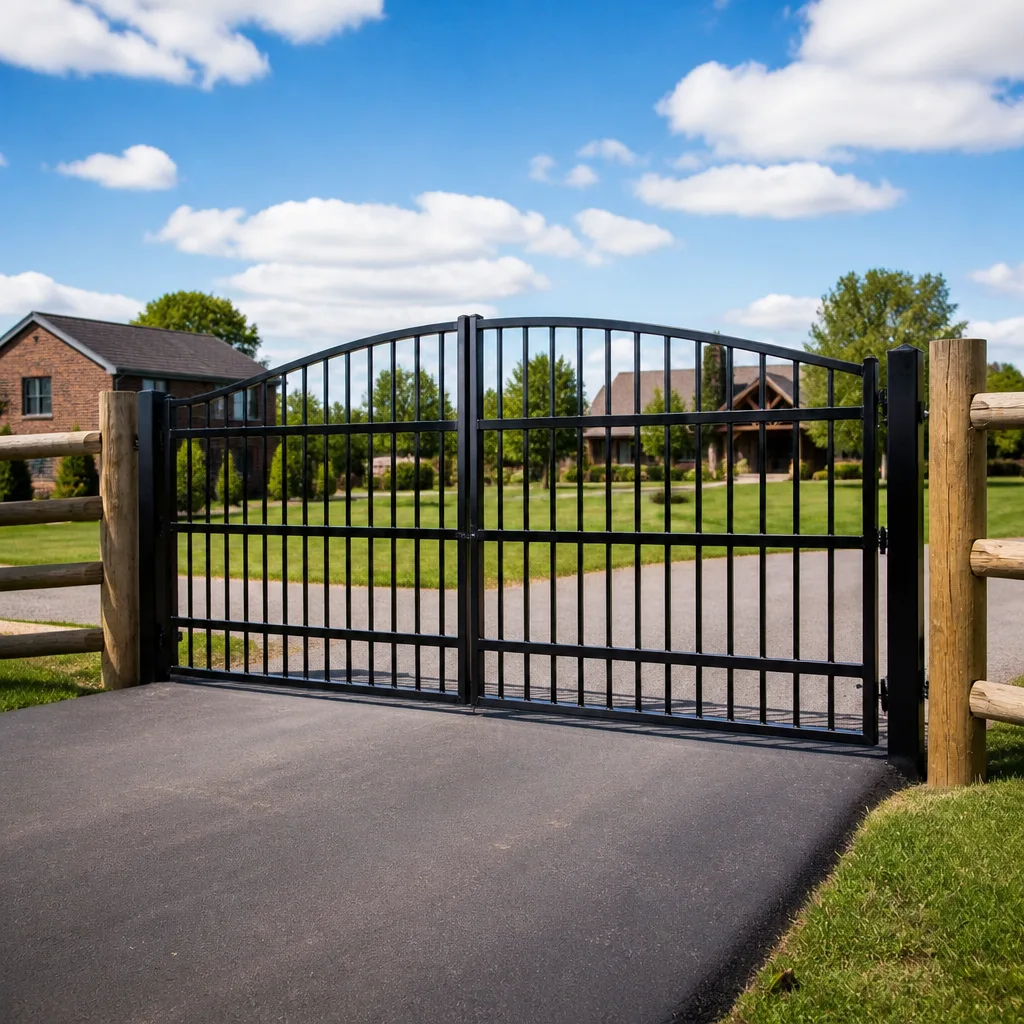 Farm & ranch
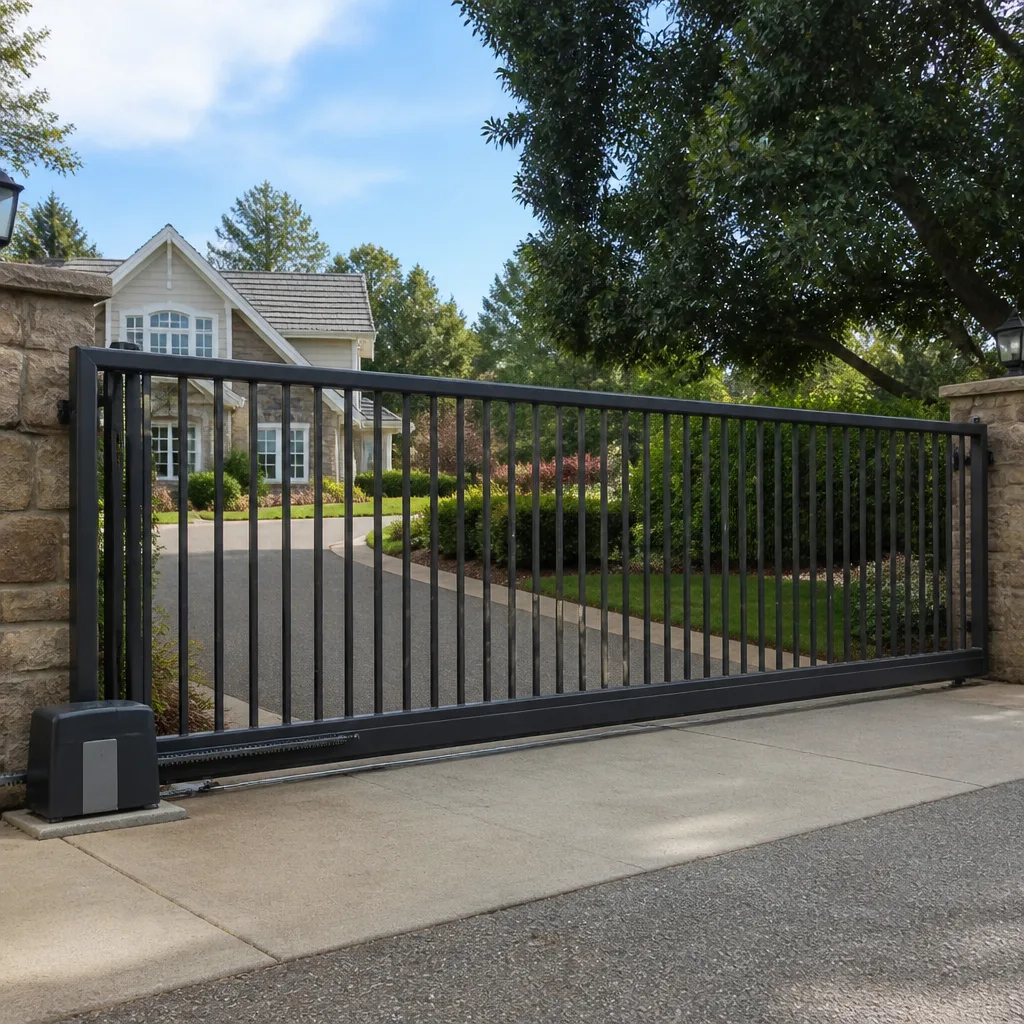 Sliding driveway gates
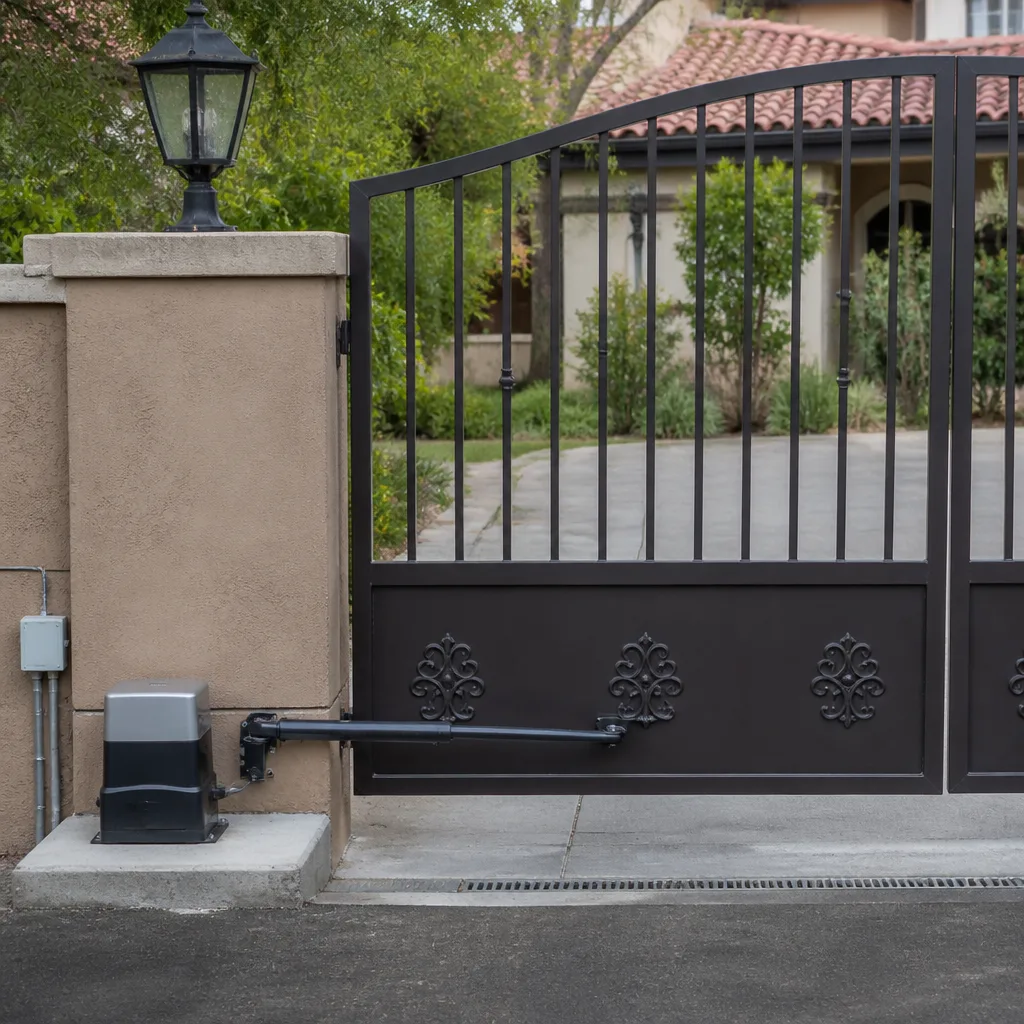 LiftMaster operators
Free on-site gate assessment - hinges, posts, and your LiftMaster or Nice gate operator checked before anything is quoted
The assessment is free and the quote is the invoice.
Get your free estimateChoosing the Right Gate Repair Brand: A Buyer’s Guide for Paradise
A gate operator rated for “heavy use” in a Connecticut winter behaves very differently under Paradise’s summer heat load, and the warranty that sounds strongest on paper often covers the least in a desert climate. Most buyers compare brands on cycle counts, app features and price. Almost none check the two things that decide how a gate actually lives in Paradise: thermal duty rating and whether a replacement part sits in a Las Vegas distributor’s rack or on a slow truck from the Midwest. This guide walks through both, plus UL 325 paperwork, battery backup behavior in high heat and firmware support. By the end you’ll know which gate brand fits your property in Paradise, not just which brochure looked best.
Quick Answer
The right gate repair brand for a Paradise property is the one whose operator is rated for sustained high-ambient performance, whose parts are available locally or next-day through Las Vegas distributors, and whose manufacturer publishes UL 325 compliance documentation and current firmware. Feature lists and national advertising matter far less than those three factors. When a brand gets all three right, repairs get faster and cheaper for the life of the gate.
Styles & brands we work with
- Wrought iron
- Wood & steel frame
- Farm & ranch
- Sliding driveway gates
- LiftMaster operators
Table of Contents
- Why Paradise Changes the Brand Calculation
- How to Read Thermal Duty Cycle Specs (and Why They Beat Cycle Counts)
- Local Parts Availability: Las Vegas Distributors vs. Week-Long Shipping
- Battery Backup in High Heat: What Separates the Brands
- UL 325 Compliance Documentation: What to Ask For
- Manufacturer Support and Firmware Updates for Smart Operators
- Evaluating the Leading Brands Through a Paradise Lens
- A Step-by-Step Way to Choose Your Brand
Why Paradise Changes the Brand Calculation
Paradise sits in the Mojave Desert, and that single fact reshapes how gate equipment ages. Summer highs climb well past 110°F, the ground bakes for months, and an operator housing on a west-facing wall can run hotter than the air around it. A motor working inside that enclosure heats up faster, reaches its thermal cutoff sooner and rests more often. None of that shows up in a showroom demo. It shows up in July, on a driveway gate that stops halfway open because the control board is protecting the motor.
Winter doesn’t balance the books either. Paradise gets cold desert nights and occasional hard freezes, which stress battery chemistry and seal materials just as surely as summer heat stresses motors. Equipment has to hold up at both ends of a wide temperature swing.
Then there’s the local service picture. Paradise is a compact community inside the Las Vegas Valley, and the parts pipeline that feeds it runs through valley distributors. A brand with a Las Vegas stocking distributor can have a control board or limit switch in hand quickly. A brand with no regional presence means waiting on freight. On a property with a single gate serving a whole driveway, that wait is the difference between a working gate and a propped-open one.
What we’re describing is why a dedicated gate specialist matters more here than a brand logo. We work on the brand you already have, not the brand we prefer to sell, and that independence lets us judge equipment honestly against a Paradise climate instead of a national spec sheet. If you want the full picture of what local service looks like, our Paradise overview covers the ground we work.
Quick Takeaways
- Heat load in Paradise stresses motors, boards and batteries harder than most of the country.
- Parts distance is a repair-speed factor, not a shopping preference.
- Desert-specific performance rarely appears in manufacturer marketing.
- A specialist who reads the specs will steer you better than a feature comparison chart.
How to Read Thermal Duty Cycle Specs (and Why They Beat Cycle Counts)
Duty cycle is the percentage of time an operator’s motor can run before it must cool down. A motor rated at 25% duty cycle can run about 15 minutes out of every hour; the rest is cooldown enforced by the control board. Cycle count tells you how many open-close events an operator is engineered to last in a lab. Thermal duty tells you how it behaves on a hot afternoon when the housing is already 130°F before the motor even starts.
Most buyers scan the cycle count and ignore duty. In Paradise, flip that. Here’s how to compare the two numbers across brands:
- Find the duty rating. It appears in the operator’s technical datasheet, usually as a percentage or as “cycles per hour.” If the spec sheet hides it, that’s a data point in itself.
- Find the ambient operating range. The datasheet lists a maximum ambient temperature. An operator rated to a lower ceiling will derate sooner in Paradise heat.
- Look for a thermal protection statement. Better boards sense motor temperature and throttle or pause operation. That’s the feature that saves your gate and your afternoon.
- Compare cycles per hour, not just total cycles. A high total cycle count with a low hourly rate describes a motor that lasts a long time but hesitates on busy days. On a property with steady traffic, the hourly number matters more.
- Ask what happens after a stall. Some boards fault out and need a reset; others cool, retry and resume. The retry behavior is the one you want.
Where brands diverge is in how truthful their ratings are. We’ve diagnosed operators sold as “heavy residential” that trim motor output after a handful of cycles on a 110°F day. The label said heavy use; the thermal logic said otherwise. Reading both numbers before you buy, or before you authorize a replacement, is the single most useful filter a Paradise buyer has. Our technicians have up to experience reading these boards, and the difference between a misread spec and a correct one is often a replaced operator that never needed replacing.
Local Parts Availability: Las Vegas Distributors vs. Week-Long Shipping
Parts availability separates brands into two practical classes for a Paradise property: those with regional distribution through Las Vegas and those without. The first class puts common failure items – control boards, remotes, safety sensors, limit switches, batteries, loop detectors – within reach in days or hours. The second class turns a routine fix into a supply-chain wait. Neither class is “better” in a showroom, but they’re miles apart when your gate is down.
Here’s how we’d size up a brand’s local parts picture before committing to it:
- Check distributor presence. Ask whether the brand’s authorized distributors in the Las Vegas Valley stock gate operator components, not just gate hardware.
- Ask which parts are common stock. Boards and safety edges are the frequent losers; remotes get lost. Brands with good regional stock carry all three.
- Ask about the oddball items. Limit switch cams, motor brushes, gear assemblies and loop detector harnesses are where shipping times bite.
- Find out the warranty parts channel. A warranty means little if the replacement part ships from out of state.
- Confirm the operator is in current production. Discontinued lines force you onto retrofits, and retrofits cost more in time than in money.
Brands with established commercial and residential distribution tend to do well here. DoorKing, common on managed residential and commercial sites, benefits from a wide distribution footprint and steady parts flow. Elite’s commercial and residential operators also move through established channels that reach the valley. Mighty Mule and Ghost Controls, both popular on residential DIY installs, are generally easy to source new but can take longer on service parts depending on the model.
This is exactly where a gate-only trade shows its value. A specialist knows which of the nine brands we service – LiftMaster, FAAC, BFT, Linear, Viking, Ghost Controls, DoorKing, Elite and Mighty Mule – will actually be serviceable in Paradise and which to treat with more caution. A general handyman won’t know any of this, and a general contractor’s supply bench is built for other trades. If you’re already dealing with a failing system, gate repair starts with exactly this kind of parts and brand assessment.
Battery Backup in High Heat: What Separates the Brands
Battery backup sounds like a simple feature until you ask it to work in a Paradise summer. Lead-acid and sealed AGM batteries, the common chemistry in gate operators, lose capacity faster at high ambient temperatures. A battery pack sized for a mild climate may deliver a fraction of its rated runtime when the enclosure has been sitting at 120°F for weeks. That’s not a knock on any brand; it’s physics, and it’s the reason battery backup decisions in Paradise should be read through a thermal lens.
What to compare across brands:
- Battery chemistry and spec. Some operators use sealed lead-acid, others lithium variants. Lithium generally tolerates heat better but charges differently and costs more.
- Charge management. Look for a controller that regulates charging by temperature. Simple float chargers cook batteries in desert heat; smart chargers last far longer.
- Enclosure placement. Whether the battery lives inside a shaded housing or on a sun-exposed post changes its life more than the brand label does.
- Runtime claims in context. “Backup cycles” figures are usually quoted at room temperature. Discount them in a Paradise summer and ask what happens when the battery ages.
- Low-battery behavior. A good controller warns you before the battery dies and lets the gate open manually without drama.
In our experience, battery age and enclosure heat account for more backup failures in Paradise than brand choice alone. DoorKing’s commercial operators typically use well-documented battery setups, which makes servicing them straightforward. Ghost Controls and Mighty Mule packages vary by model, so the pack and charger matter. Whatever brand you have, ask a technician to test battery capacity under load rather than just checking voltage at rest.
UL 325 Compliance Documentation: What to Ask For
UL 325 is the safety standard for gate, door and window operators in the United States. It covers entrapment protection, and it’s the reason an automatic gate needs safety edges, photo eyes or loop detectors alongside the operator itself. For a Paradise buyer, the practical question isn’t whether a brand mentions UL 325 – most do – but whether the compliance documentation is easy to produce.
Here’s what to request when you’re evaluating a brand or a specific operator:
- The operator’s UL 325 listing. The manufacturer should be able to point you to the listing or the model’s compliance documentation.
- The entrapment protection plan. Ask what safety accessories are required for your specific installation – safety edges on the leading and trailing edges, photo eyes, or both.
- The installation manual’s safety section. Some brands spell out entrapment zones and accessory requirements clearly; others bury them.
- The label on the operator. A compliant unit carries its listing information on the housing, which makes future service simpler.
- The control board’s entrapment logic. Some boards monitor safety device health and refuse to run if an edge is faulty; others keep running. The stricter behavior is what you want.
Brands with strong commercial roots tend to have the cleanest paperwork. DoorKing, with its history in access control and commercial vehicle gates, is typically straightforward to verify. Elite, also common on commercial and multi-family properties, documents its entrapment requirements well. Consumer-focused lines may require a closer look, and some models rely on accessory packages that must be verified against the operator.
This documentation matters even when nothing is wrong. When a gate changes hands, when a property manager takes over a site, or when a technician arrives to service an unfamiliar system, clear UL 325 paperwork is what lets everyone work from the same plan. That’s a quiet part of why we focus on gates only: a specialist reads these documents as part of every diagnosis, and a generalist usually doesn’t.
Manufacturer Support and Firmware Updates for Smart Operators
Smart gate operators – the ones with app control, remote diagnostics and networked access – live and die by firmware. A control board is a small computer, and like any computer, it needs updates to fix bugs, patch security holes and correct compatibility issues with remotes and software. When a brand stops issuing updates, its “smart” operator becomes an unpatched one, and the long-term repair bill climbs.
Here’s how we evaluate firmware support across brands:
- Publication of version history. Good brands document firmware releases with dates and notes. Brands that don’t publish a version history are asking you to update blind.
- Update method. USB, on-board, or over-network – the easiest method reduces technician time and your repair cost. Ask before you buy.
- Release cadence. An active brand ships fixes regularly. A stalled cadence is a sign of a product line heading toward end of life.
- Remote diagnostics support. Some brands let technicians query fault codes through the app; this shortens service calls and often reveals a failing loop detector or safety edge before it strands you.
- Backward compatibility. Firmware updates should preserve existing remote pairings and access credentials. A “fix” that wipes remotes is a nuisance that recurs.
- Support responsiveness. Manufacturer technical support quality varies widely. A specialist who calls manufacturer hotlines weekly knows which brands actually pick up.
In Paradise, where a single failed operator can leave a driveway or a managed community lot blocked, firmware matters twice: once for reliability and once for the speed of the fix. When a smart operator acts up, electric gate repair is where the diagnosis starts – control boards, loop detectors and safety sensors are common misread components, and generalists routinely guess at them.
Evaluating the Leading Brands Through a Paradise Lens
We service nine brands: LiftMaster, FAAC, BFT, Linear, Viking, Ghost Controls, DoorKing, Elite and Mighty Mule. Each has a personality. Here’s how we’d size up a few of the most common names in Paradise properties against the criteria above.
DoorKing
DoorKing leans commercial. Its operators are built for heavier duty, and its entrapment protection and documentation practices reflect that. For a property manager in Paradise running a shared residential or commercial gate, DoorKing’s commercial lineage is a real asset – parts paths are well-worn, and its on-board diagnostic logic tends to be more informative. If you’re comparing brands for a multi-tenant site, put DoorKing on your list and talk to a technician about the model before deciding.
Elite
Elite covers both commercial and residential applications and tends to hold up well on larger residential gates. Its documentation and parts channels are generally accessible through valley distribution. For a Paradise property that needs a reliable residential operator without the full commercial footprint, Elite is a reasonable candidate. Ask about the thermal rating on the specific model you’re considering; the line spans a wide range.
Mighty Mule and Ghost Controls
Both brands are common on residential driveway gates and both are popular with DIY installers. Neither is a bad product, but they sit in a different class on some of our criteria. Thermal duty ranges from model to model, and service parts flow varies. If you already own one, the brand isn’t the issue – the model is. A technician who knows them can tell you whether your specific unit is a keeper or a replacement case, which is a decision feature lists can’t make for you.
What the rest of the roster brings
LiftMaster, FAAC, BFT, Linear and Viking round out a broad mix. LiftMaster’s residential operators and accessories are widely distributed, which helps on service. FAAC and BFT bring European swing and slide engineering; their service picture in Paradise depends on the model’s distribution within the region. Linear is common on managed residential properties. Viking has a following on certain gate types. The point isn’t to rank these brands in the abstract – it’s to match the brand and model to the property, the traffic and the local parts path.
If you’re looking for a starting point on the brand you already have, the Gate Repair Paradise home page lays out the three services we offer and the brand roster. Nine brands. One specialty. Your gate fixed.
A Step-by-Step Way to Choose Your Brand
Use this sequence to decide which brand or model fits a Paradise property. It works for a homeowner replacing an aging operator and for a property manager standardizing across a site.
- Start with the property, not the brand. Note the gate’s weight, the daily traffic, the power location and the amount of sun the operator receives. Those facts filter the field fast.
- Read the thermal duty and ambient specs. Look at cycles per hour, duty cycle, maximum ambient temperature and thermal protection behavior. Discount marketing language.
- Check parts availability. Ask about Las Vegas Valley distribution for the failure parts: control boards, safety edges, remotes, batteries, loop detectors.
- Confirm UL 325 documentation. Ask for the operator’s listing and the entrapment protection plan for your setup. Any brand that stalls on this is a caution sign.
- Review battery backup in heat. Ask about chemistry, charge management and expected degradation.
- Ask about firmware support. Look for a version history, an update method and active release cadence.
- Get a hands-on evaluation before you commit. A specialist can test the existing system and tell you whether a repair, a partial upgrade or a full replacement is the right call. That’s a service decision, not a sales one.
Common Mistakes to Avoid
- Buying on cycle count alone. Cycle count is a lab number. Thermal duty is what your Paradise gate actually experiences on a hot afternoon. Compare both.
- Ignoring the parts pipeline. A brand with no regional fixture in the Las Vegas Valley can turn a same-week repair into a multi-week wait. Ask where the parts come from before you commit.
- Assuming “heavy duty” means desert-ready. Some labels are set for cooler climates. Always check the ambient rating on the specific model.
- Forgetting the safety accessories. UL 325 requires entrapment protection; the operator alone isn’t a complete installation. Budget for safety edges, photo eyes or loop detectors from day one.
- Letting a generalist diagnose a control board. Electric operators have specific failure patterns a fence or garage company may not recognize. A specialist reads boards, loops and sensors every day.
- Skipping firmware questions. Smart operators need updates. A stalled release history is a sign the product is drifting toward end of life.
- Overlooking the battery. Battery backup in Paradise is a heat-management decision. Ask what will happen in year three, not just on day one.
See the difference
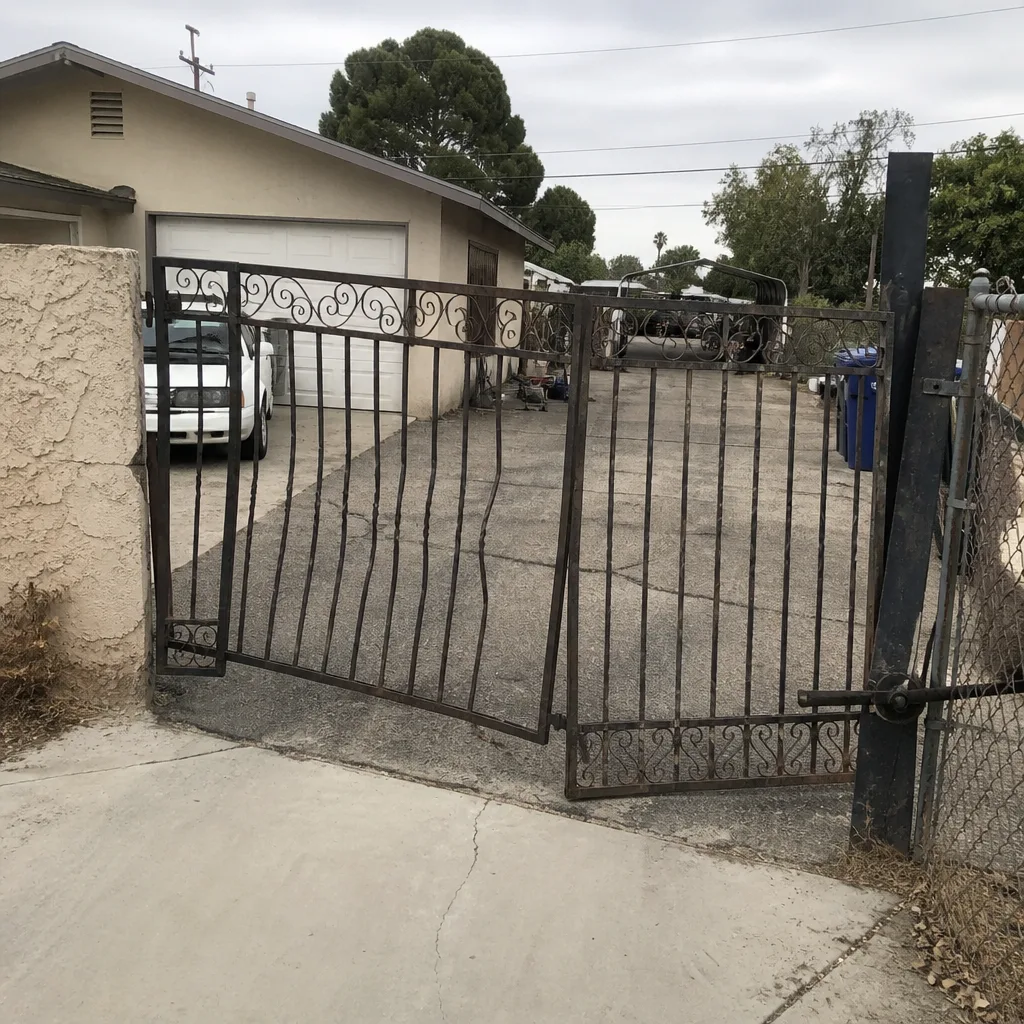 Before
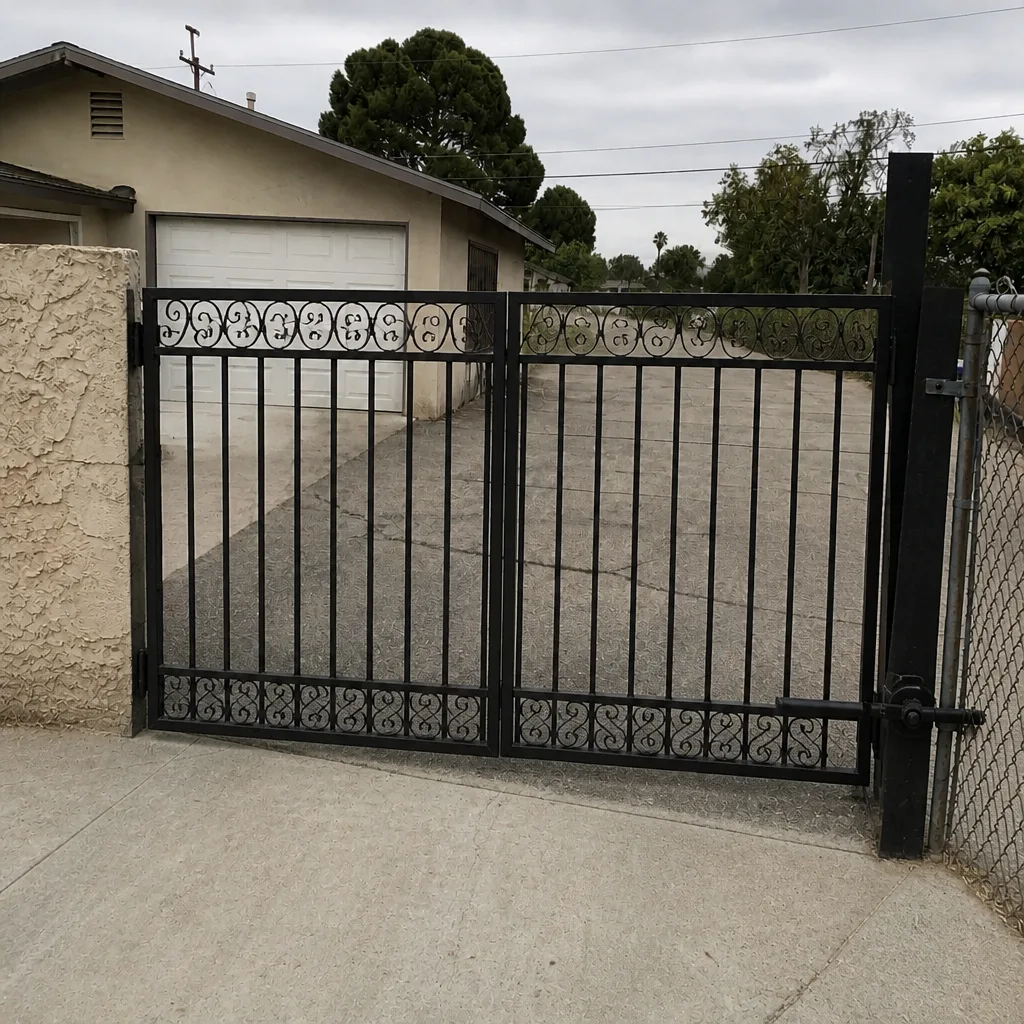 After
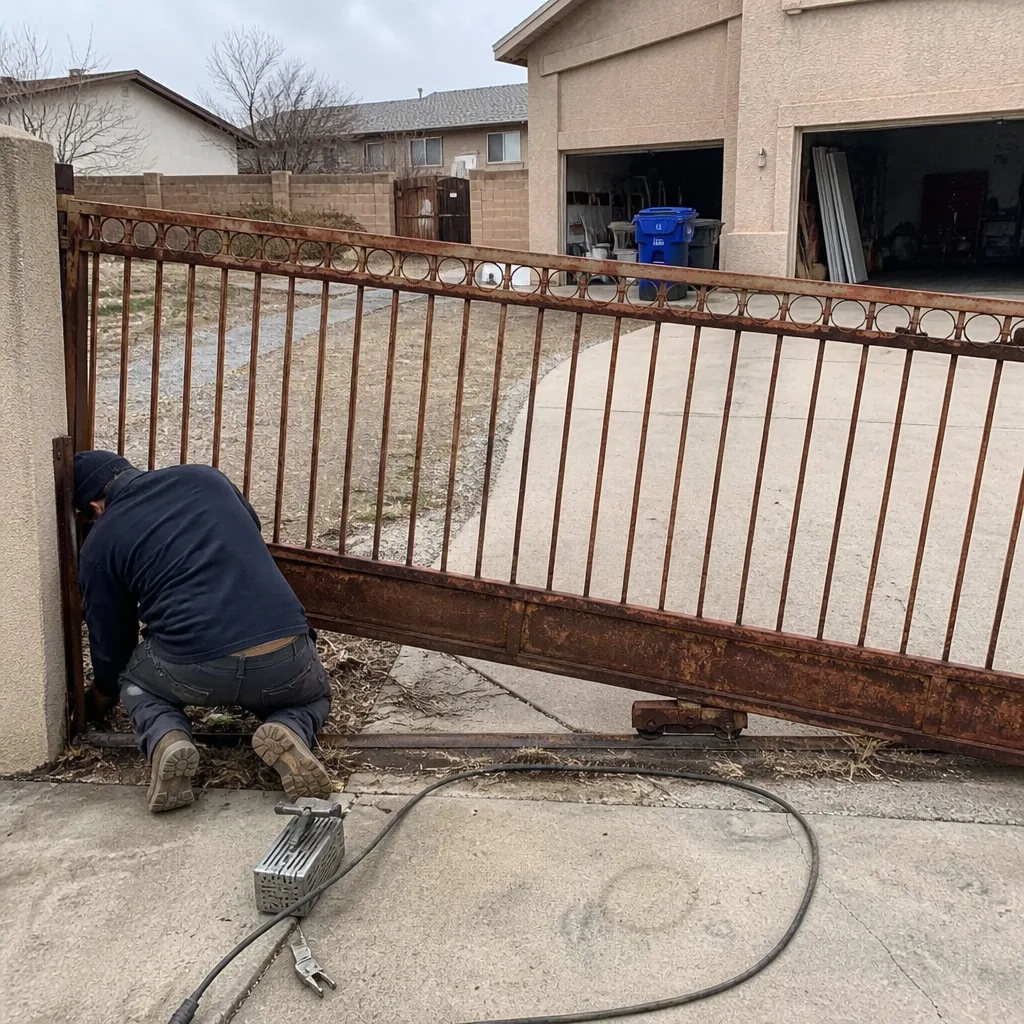 Before
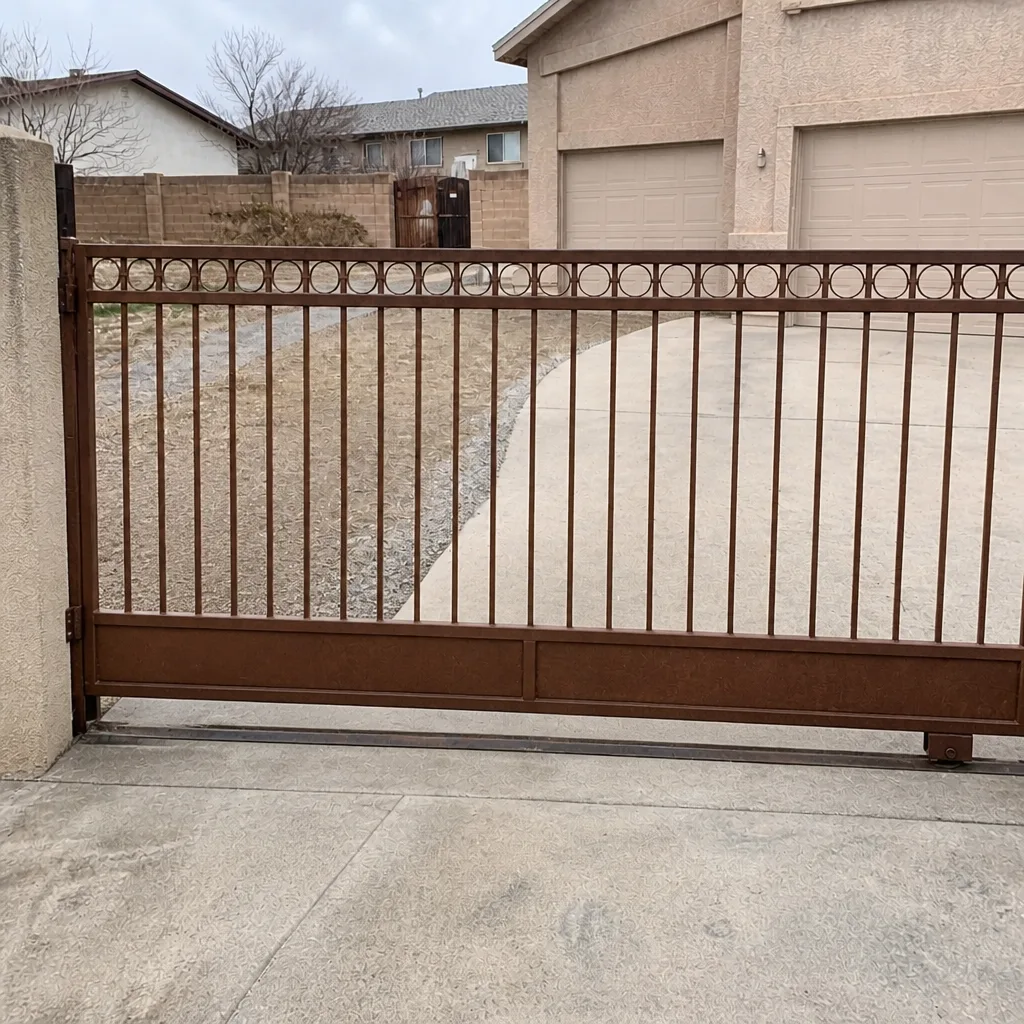 After
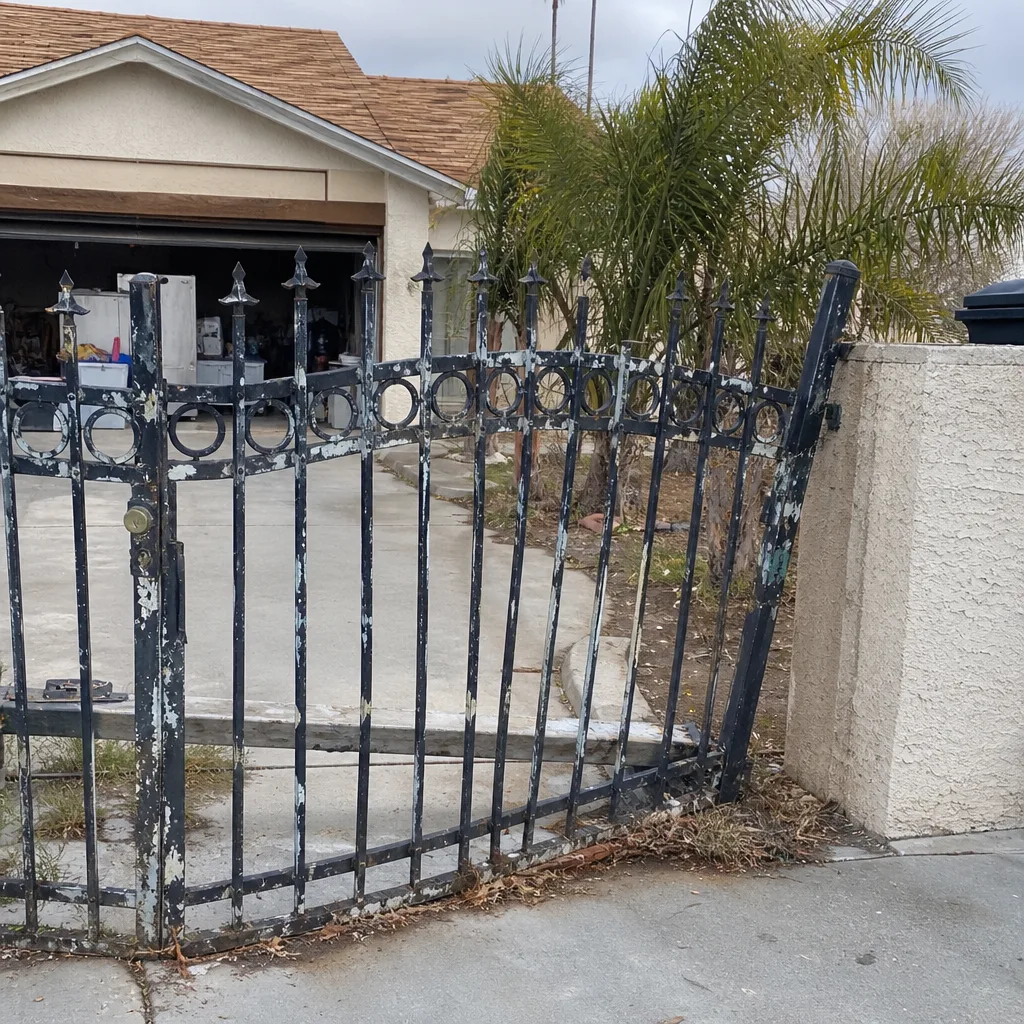 Before
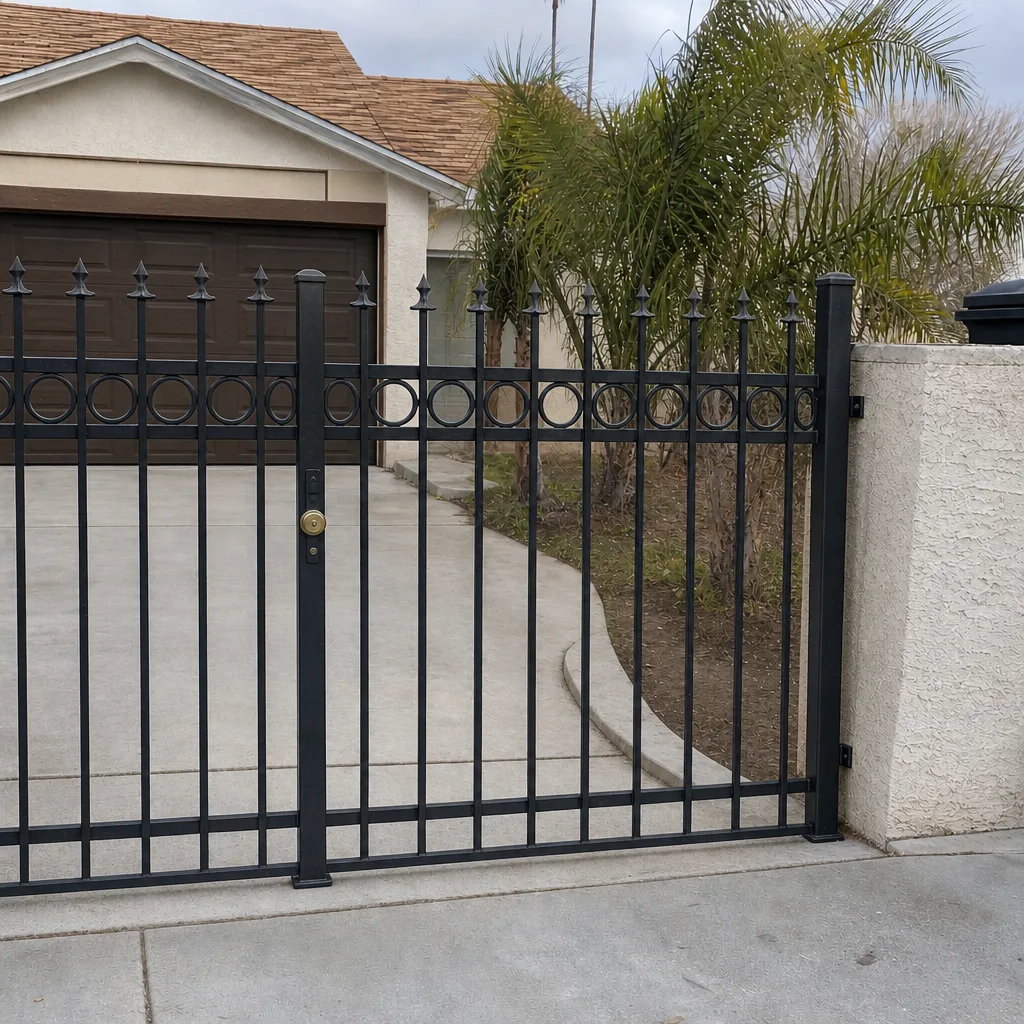 After
When to Call a Professional
Gate work touches electricity, heavy moving panels and safety-critical software. Some situations clearly warrant a trained technician: an operator that faults out and won’t reset, a gate that reverses or stops mid-travel with no clear obstruction, a safety edge that no longer registers, a loop detector that ignores a vehicle, a battery that won’t hold charge, or a control board that smells or shows visible heat damage. Panels that have come off their track, hinges that have sagged onto a slab, and any gate whose movement is unpredictable belong in the same category. High heat can mask trouble, then reveal it abruptly, so don’t wait for a total failure before getting a diagnosis. Gate Repair Paradise offers free estimates in Paradise – call (844) 834-1647. We answer 24/7. Fast dispatch from 7am to 7pm, Sunday through Friday.
Frequently Asked Questions
The best brand for a Paradise property is the one that scores well on thermal duty, local parts access and UL 325 documentation for the specific model, not the one with the longest feature list. DoorKing and Elite often fit that profile on commercial and heavier residential sites. LiftMaster, FAAC, BFT, Linear, Viking, Ghost Controls and Mighty Mule can all work depending on the property and the model. Call (844) 834-1647 for an evaluation – estimates are free.
Thermal duty cycle defines how long an operator’s motor can run before it must cool, and Paradise’s summer heat makes that cooldown arrive sooner. A high cycle count describes lab longevity, but a shallow duty rating can leave a gate stopping on a 110°F afternoon. Compare both numbers on any model before you buy or authorize a replacement. A technician can read the datasheet with you and flag the risk – call (844) 834-1647.
Ask whether the brand’s authorized distributors in the Las Vegas Valley stock gate operator components – boards, limit switches, safety edges, loop detectors, batteries and remotes. Regional stock is the difference between a short repair and a shipping wait. A gate-only specialist usually knows the answer for each of the nine brands we service. For a free parts assessment, call (844) 834-1647.
Most reputable brands do, though the depth varies. You should be able to ask for the operator’s UL 325 listing and the entrapment protection plan specific to your installation – safety edges, photo eyes, loop detectors or a combination. If a brand can’t produce that paperwork cleanly, treat it as a caution. Call (844) 834-1647 and we’ll help you check a specific model.
Battery backup works in high heat, but lead-acid and similar chemistry degrades faster at temperature, and runtime claims are usually measured at room temperature. Charge management and the battery’s placement matter more in Paradise than brand alone. A load test tells you how much backup you actually have. Call (844) 834-1647 to schedule one – estimates are free.
Repair is usually the right answer when the failure is a part – board, safety edge, loop detector, battery – and the operator’s thermal specs still suit your gate. Replacement makes more sense when the model is discontinued, its local parts path is weak or its duty rating is thin for the traffic. A specialist can tell the difference, and a free estimate will lay out both paths. Call (844) 834-1647 to get started.
The Bottom Line
Gate brand decisions in Paradise are won on three fronts: thermal duty, local parts access and documented safety. Features and advertising copy don’t make a gate open on a 110°F day. Compare thermal specs against a real operator’s ambient range. Confirm that replacement boards, safety edges and batteries flow through Las Vegas distributors and not a slow truck. Ask for UL 325 paperwork and check firmware support before you commit. If you work from those criteria, you’ll pick a brand that fits your property and a service partner who fits your gate – and that’s the difference between one repair and a string of them.
Call (844) 834-1647 for a free estimate. Same-day service is available for repair calls. We answer 24/7, and fast dispatch runs from 7am to 7pm, Sunday through Friday. The price for any job is quoted and agreed before the work starts, and the written estimate sets the final price. From a dragging swing gate to a failed operator, we diagnose it right the first time.
Written by the team at Gate Repair Paradise.