
Last updated November 16, 2026
 Wrought iron
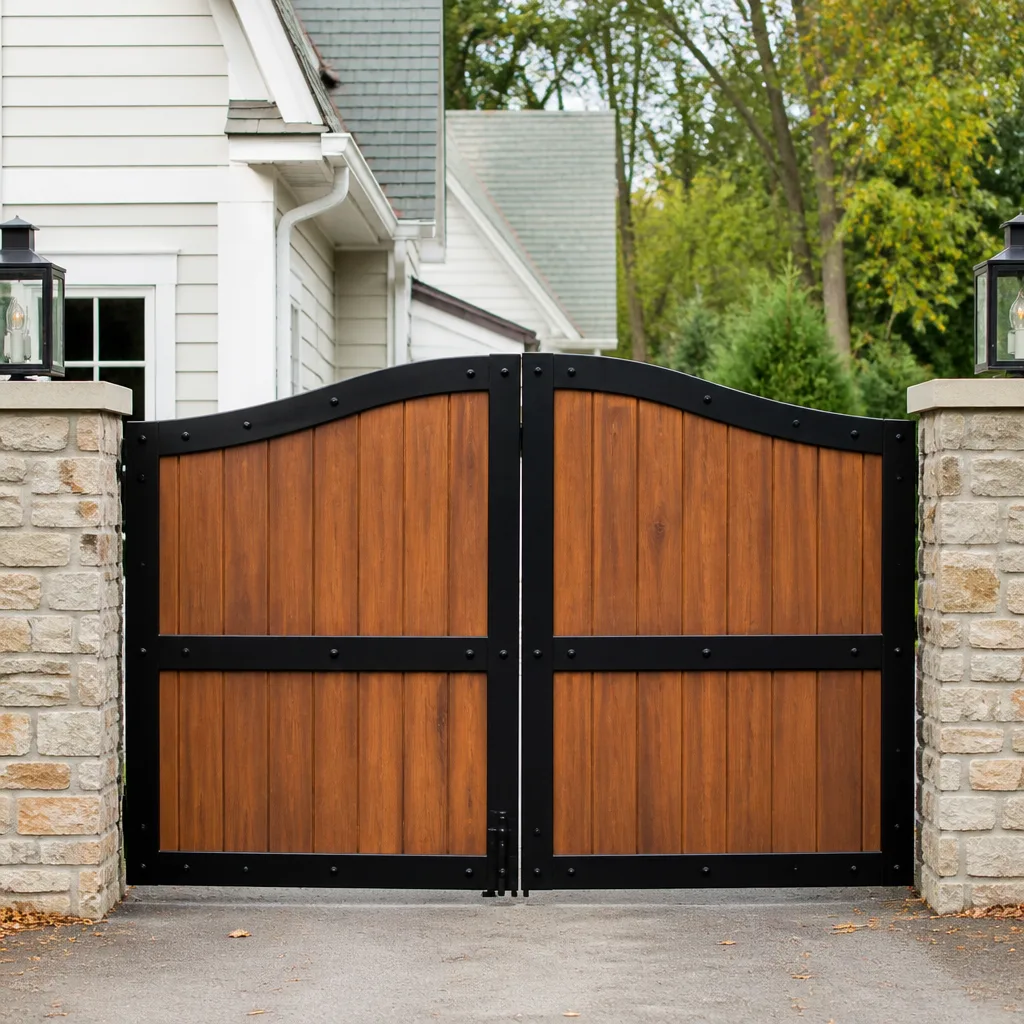 Wood & steel frame
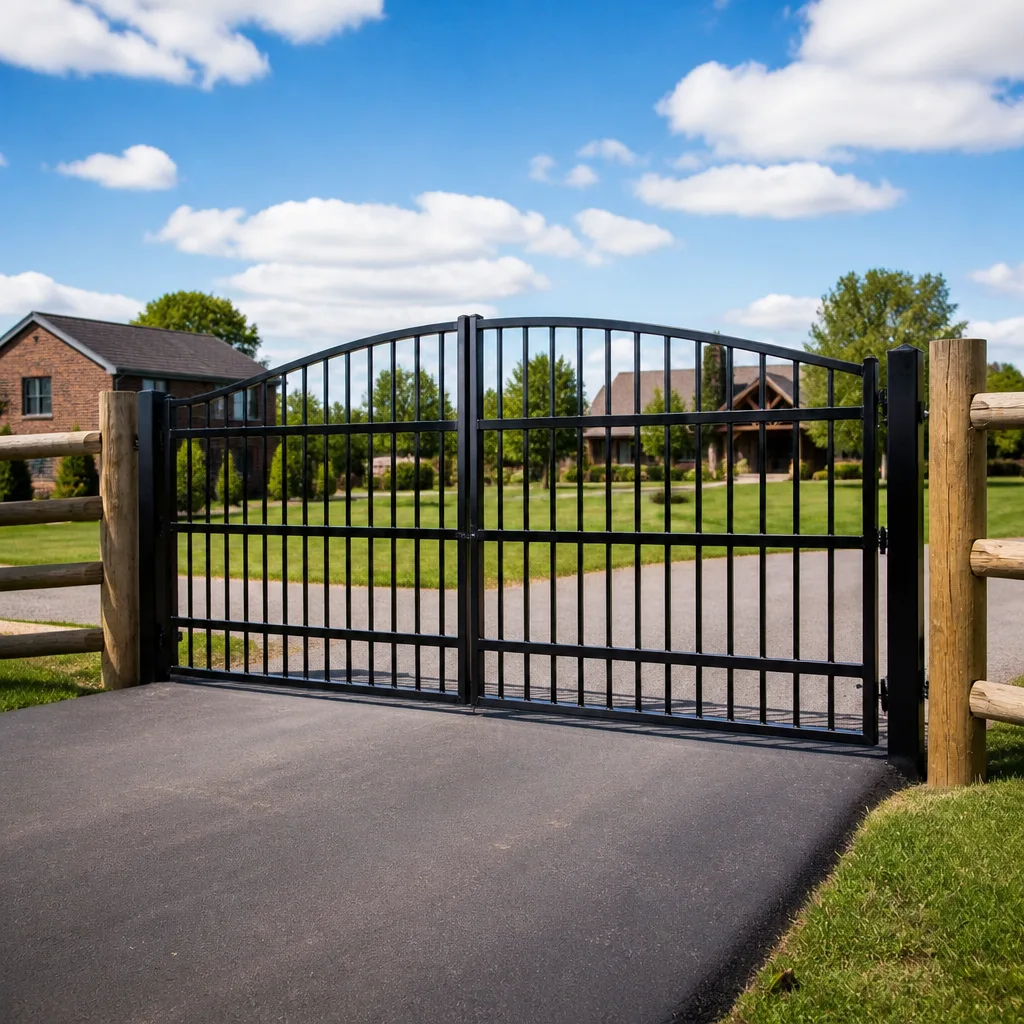 Farm & ranch
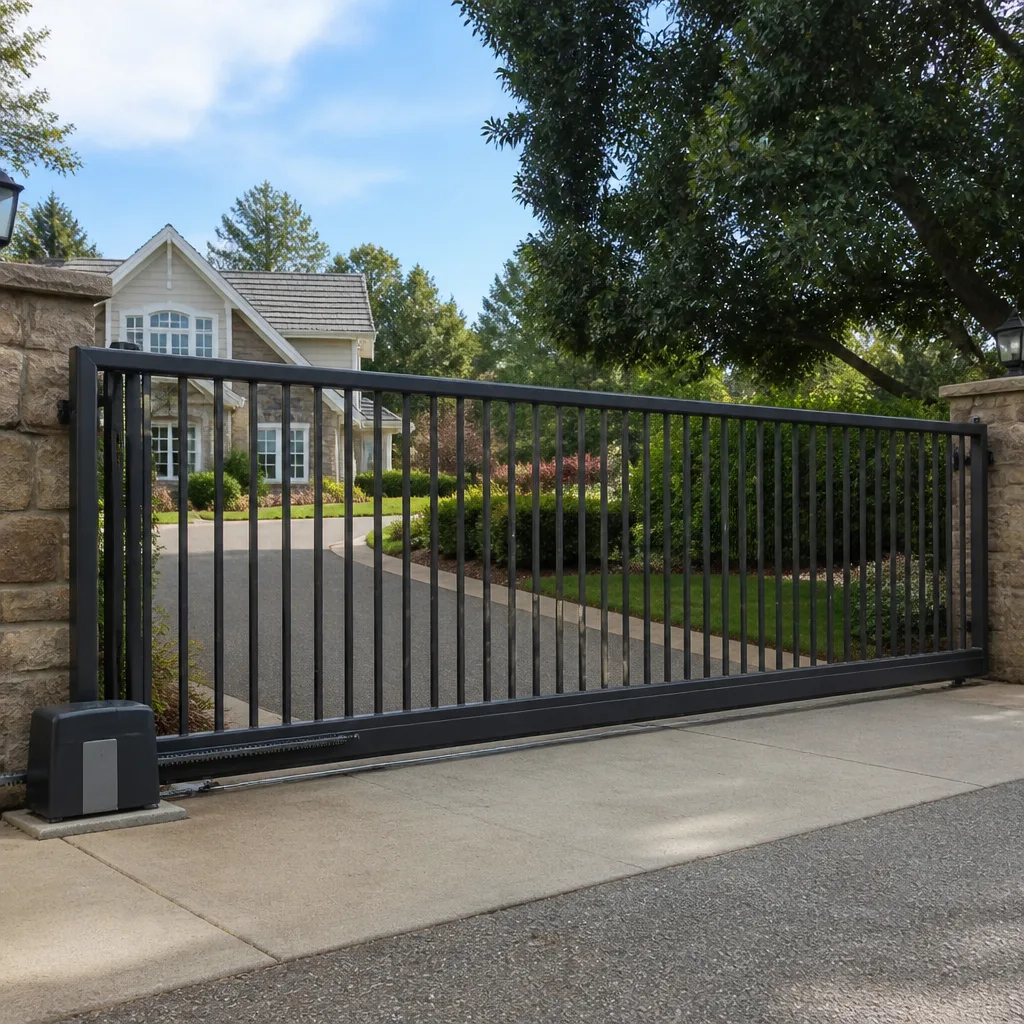 Sliding driveway gates
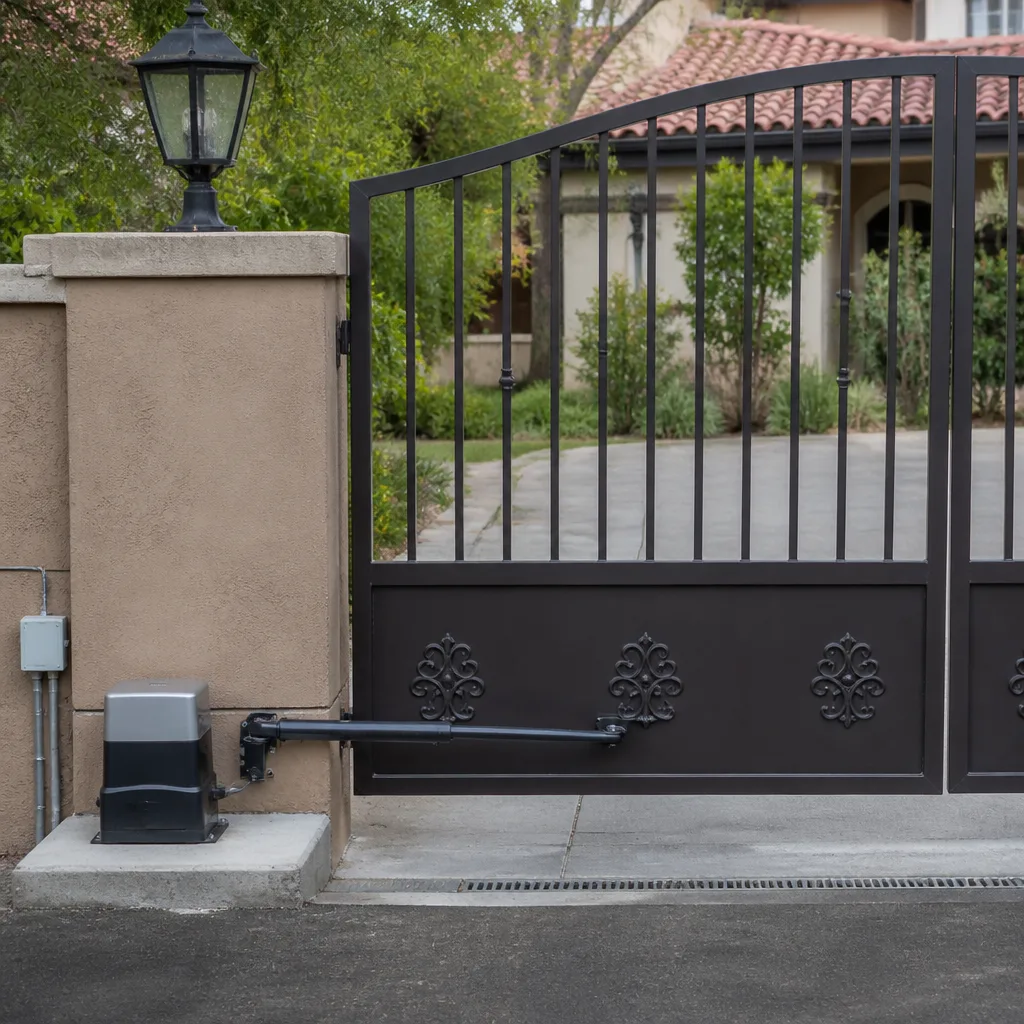 LiftMaster operators
Free on-site gate assessment - hinges, posts, and your LiftMaster or Nice gate operator checked before anything is quoted
The assessment is free and the quote is the invoice.
Get your free estimateGate Repair Warning Signs: A Paradise Homeowner’s Reference Guide
A gate that hesitates on the way open and a gate that reverses unexpectedly are not the same kind of problem. One is a nuisance you can plan around. The other is a safety device failing in real time, and every cycle you run it in that state adds risk. Most gate failures we look at in Paradise announced themselves days or weeks earlier, and the homeowner simply didn’t know which sounds and motions meant “watch this” and which meant “stop using the gate now.” This guide maps specific symptoms to three urgency levels so you can make that call with confidence.
Quick Answer
Gate repair warning signs fall into three urgency tiers. Cosmetic signs (faded paint, minor rattles, a squeaky hinge) mean schedule service when convenient. Functional signs (slow operation, grinding, a remote that works only close up, a gate that stops partway) mean book a repair soon and expect a mechanical or electrical fault. Safety-critical signs (unexpected reversal, a gate that won’t stop on command, a sagging post, exposed wiring) mean stop using the gate and call a specialist today. In Paradise’s desert heat, operator slowdown is the most commonly misread sign: it’s often heat-related, not a dead motor.
Styles & brands we work with
- Wrought iron
- Wood & steel frame
- Farm & ranch
- Sliding driveway gates
- LiftMaster operators
Table of Contents
- The Three Urgency Tiers of Gate Problems
- Desert-Specific Warning Signs: Heat, Slowdown, and Motor Failure
- What Your Gate’s Sounds Are Telling You
- Visual Warning Signs on Posts, Hinges, and Panels
- Warning Signs That Look Like the Operator but Aren’t
- Safety-Critical Signs: When to Stop Using the Gate
- A Ten-Minute Monthly Walkthrough You Can Do Yourself
- What Routine Gate Service Actually Involves
The Three Urgency Tiers of Gate Problems
Every warning sign you notice on a gate fits into one of three tiers. The tier is about consequence, not appearance: a loud noise can be harmless and a quiet hesitation can be serious. Getting the tier right is what stops a small repair from becoming a structural one, and what stops a real safety fault from being driven until something breaks.
Tier 1: Cosmetic (schedule when convenient)
- Paint or finish fading, chalking, or peeling on a sun-facing panel
- A slight rattle in a loose panel or picket
- A hinge that squeaks but doesn’t bind
- Weatherstripping or a gate stop that’s worn but functional
- A cosmetic dent with no effect on travel or latching
These are signs of age and sun exposure. They can wait for a planned service visit, but they shouldn’t wait forever: a squeaking hinge is a lubrication question today and a worn hinge pin later.
Tier 2: Functional (book a repair soon)
- The gate moves slower than it used to, or stalls partway
- Grinding, scraping, or a rhythmic clunk during travel
- The remote works only from close range, or intermittently
- The gate reverses or stops at random, then works on the next cycle
- The operator runs but the gate barely moves, or the motor hums without movement
- A gate that no longer latches cleanly or sits out of alignment
Functional problems are usually a worn mechanical part, a binding hinge or roller, or an electrical fault in the operator or its wiring. They need a technician’s diagnosis fairly soon. Running a functional fault for weeks usually makes the repair bigger, because a binding gate wears the operator motor harder every cycle.
Tier 3: Safety-Critical (stop using the gate today)
- The gate reverses unexpectedly, or fails to reverse when it meets an obstruction
- The gate won’t stop when you press the control, or continues after the command
- A post is leaning, cracked, or pulling away from its footing
- Visible exposed wiring at the operator, the posts, or the safety loops
- A gate that has come off its track or dropped on its hinges
These are safety defects, not maintenance items. A gate that reverses unexpectedly is a safety system failing in progress: on an automatic gate, the reversing function is what keeps a person, a pet, or a vehicle from being trapped. Stop using the gate, leave it in a safe position, and call a specialist.
Desert-Specific Warning Signs: Heat, Slowdown, and Motor Failure
Paradise summers put a specific kind of stress on a gate operator. The control board, the motor windings, and the battery backup all sit in a metal housing in direct sun, and the ambient temperature inside that housing climbs well above the outside air temperature. That’s why the first sign many Paradise homeowners notice is a gate that’s slower in July than it was in March, and the most common mistake is assuming the motor is dying when it’s actually heat.
Heat slowdown versus motor failure: how to tell them apart
Heat slowdown is temperature-dependent. The gate is sluggish on a hot afternoon, recovers in the cooler morning, and the pattern tracks the weather. The operator housing may feel hot to the touch (which is normal on a desert afternoon, not a sign of failure on its own). The gate still completes its full travel and still reverses correctly on an obstruction test.
Motor failure is not temperature-dependent. The gate is slow in the morning too. It may stall at the same point in travel every time, or the motor may hum without the gate moving at all. Some operators will run a few cycles and then stop responding entirely as the motor overheats. That pattern points to the motor or the drive, not the weather.
What to check before you call it motor failure
- Note the time of day and outside temperature when the gate is slow, and whether it’s fast again in the morning.
- Note whether the gate completes a full cycle or stalls at a repeatable point.
- Check whether the gate still reverses correctly when you obstruct it (a light push against the closing edge, done carefully, is enough on most operators).
- Notice the operator housing: extremely hot to the touch on a full-sun afternoon is expected, but a hot housing plus a stalling gate is worth a call.
- If the gate has a battery backup, notice whether the gate only acts up after the power has cycled.
That information is exactly what a technician needs to separate a heat-and-load issue from a motor or control-board fault. If the symptom is electrical, we handle it as part of electric gate repair and diagnose the operator, its wiring, and its safety devices together, because the fault is rarely isolated to one of them.
What Your Gate’s Sounds Are Telling You
Sound is the most reliable early warning a gate gives you, and it’s also the most misread. The same grinding noise can mean a worn roller, a bound hinge, or a misaligned drive, and the fix is different for each. Here’s how the common sounds map to likely causes and their urgency tier.
- Grinding or scraping during travel: usually metal-on-metal at a hinge, roller, or track. Functional tier. Left alone, it wears the moving parts and loads the operator.
- Rhythmic clunk or thud: often a loose panel, a worn pivot, or a chain or drive with a tight spot. Functional tier.
- Clicking that repeats but with no movement: often a control or safety-sensor fault, or a relay in the operator not engaging. Functional tier, and worth a diagnostic rather than a parts guess.
- Humming without movement: the motor is receiving power but can’t turn the load. This can be a seized mechanism, a failed capacitor, or a jammed drive. Stop using the gate until it’s looked at, because the motor can overheat and fail from repeated attempts.
- Continuous running after the command stops: safety-critical. The operator isn’t receiving or honoring its stop signal.
- A single loud snap followed by a gate that drops or swings free: safety-critical. Stop using it and keep people clear.
The point of mapping sounds this way is to stop the guess-and-swap habit. Replacing an operator because it “sounds tired” when the real problem is a binding hinge is how a small repair becomes an expensive one.
Visual Warning Signs on Posts, Hinges, and Panels
Structural problems on a gate rarely appear suddenly. They usually announce themselves as small changes at the posts and hinges first, and those changes are easy to miss because they develop slowly. A walk around the gate with a critical eye once a month catches most of them.
Post warning signs
- A post that leans slightly, or that used to be plumb and isn’t
- Cracks at the base of the post, or concrete pulling away from the post
- Rust streaks at the base where the post meets the ground
- A post that moves when the gate is pushed, even a little
A leaning post is a structural warning. The gate’s weight is carried by the posts and hinges, and a post that’s shifting means the gate’s alignment will follow. On a swing gate this shows up first as a gate that drags or doesn’t latch cleanly; on a slide gate it shows up as a gate that binds on its track. The sooner a post is looked at, the less likely the whole gate frame needs to come off to fix it.
Hinge and hardware warning signs
- Hinges that squeak, groan, or bind
- Visible wear or elongation at the hinge pin
- Rust or corrosion on load-bearing hardware (desert sun is hard on coatings)
- A gate that sits lower on one side than it did before, or that scrapes the ground
- Loosened bolts on the hinge plates
Panel and frame warning signs
- Panels that rattle or flex when the gate moves
- Weld cracks at a corner or a crossbar
- A panel that’s out of line with its neighbors
- Paint or finish worn through to bare metal on a sun-facing surface
None of these are cause for alarm on their own, but they’re the checklist that tells you whether the next step is a planned hinge service or a post evaluation. When you’re ready to have a specialist look, we handle the full range, from manual hardware to automation, as part of gate repair.
Warning Signs That Look Like the Operator but Aren’t
This is the most expensive warning sign in the guide, because it’s the one that leads to unnecessary parts. A gate that won’t respond, opens slowly, or stops halfway is often blamed on the operator when the actual cause is upstream of it: the wiring, the control board, the safety devices, or the power supply. Replacing a working operator won’t fix a fault in the loop detectors or a bad control signal.
Signs that point away from the operator
- The gate works from one remote but not another. That points to the remote or its receiver programming, not the operator motor.
- The gate works from the wall control but not the remote (or vice versa). That points to the receiver, the antenna, or the control wiring, not the motor.
- The gate only acts up intermittently, then works fine. Intermittent failures are classic wiring, connector, or safety-sensor problems. A failed motor usually fails consistently.
- The gate reverses for no reason, then works on the next cycle. That points to a safety device (loop detector or safety sensor) seeing a false signal, not to the drive.
- The gate opens partway and stops, always at the same point. That can be a limit-setting or control-board issue rather than a mechanical jam.
- The gate loses its position memory after a power cut. That’s a control-board and battery-backup question, not a motor question.
Why this matters in a desert climate
Heat accelerates problems in wiring insulation and connectors too. A connector that’s been baking in a sun-facing housing for years can develop a high-resistance joint that causes intermittent faults that look exactly like an operator failing. A technician who specializes in gates knows to test the wiring and the control board before condemning the operator, and can do it on multi-brand systems without guessing. In our experience, the honest answer to “is it the operator or the wiring” is only as reliable as the diagnostic that came before it.
Gate Repair Paradise works on the brand you already have, not the brand we prefer to sell. That’s why we diagnose before we recommend parts, and why we carry components for systems from BFT, Linear, Viking, and Ghost Controls, along with the other brands we service.
Safety-Critical Signs: When to Stop Using the Gate
Some warning signs aren’t a scheduling decision. They’re a stop-now call, and they stay stop-now calls even if the gate “still works.” The distinction matters because an automatic gate has a safety function built into it: it’s supposed to reverse or stop when it meets an obstruction. A gate that doesn’t is failing that function, and the failure happens with a person or a vehicle in the way.
Stop using the gate today if you see any of these
- The gate fails to reverse when obstructed, or reverses randomly.
- The gate won’t stop when you press the control.
- The gate has come off its track, dropped on its hinges, or is hanging loose.
- A post is visibly leaning, cracked, or moving.
- Wiring or an operator housing is exposed, damaged, or visibly overheating (smell of hot plastic, scorch marks, a housing too hot to touch).
- Any sign of a spark, a burning smell, or a control that stays live after the gate should be off.
For a safety-critical sign, leave the gate in a safe position (open, ideally, so it can’t close on someone), keep people and vehicles clear, and call a specialist. Do not attempt to diagnose an operator’s internal wiring or attempt any repair to the power side of an electric gate yourself. The dangerous parts on a gate are the operator’s power and wiring, the heavy panels a swing or slide gate can crush under, and a slide gate that comes off its track: those are a trained technician’s work, not a homeowner’s. If you’re in Paradise and a safety-critical sign comes up, our team specializes in the electrical and mechanical side of gates and can evaluate the fault on-site.
A Ten-Minute Monthly Walkthrough You Can Do Yourself
A quick visual and audio check once a month catches most Tier 1 and Tier 2 signs before they become expensive, and it’s safe to do as an observation, not a repair. Here’s the walkthrough, in order.
- Listen to a full open and close cycle. Note any grinding, scraping, or clunk you didn’t hear last month.
- Watch the travel. Note whether the gate moves smoothly or hesitates, and whether it still completes the full cycle.
- Test the reversal. With care, obstruct a closing gate and confirm it reverses as it should. If it doesn’t, stop using the gate and call.
- Walk the posts. Check for lean, cracks, movement, and rust at the base.
- Check hinges and hardware. Look for wear, looseness, and rust on load-bearing parts.
- Check the panels. Look for rattle, flex, cracks, or panels out of line.
- Check the housing. Look for damage, exposed wiring, or signs of overheating. Don’t open the housing yourself.
- Note it down. A one-line note each month is what lets a technician separate a new problem from an old one.
The walkthrough is an observation, not a repair. Leave anything involving the operator’s electrical side, the internal wiring, or the safety devices to a technician. You can also get a general sense of the local picture on our Paradise service page if you want to see how the local climate and typical gate systems line up with what you’re seeing.
What Routine Gate Service Actually Involves
Routine service is the visit that keeps a gate out of the safety-critical tier. It’s not a plan, a contract, or a subscription: it’s a one-time service visit, priced per job after we look at the gate. Here’s what that visit covers.
- Full cycle test: open, close, and reversal checked on the operator.
- Hinge and hardware inspection: wear, binding, and lubrication where it’s needed.
- Post and footing check: lean, movement, and rust at the base.
- Operator and control check: limit settings, control board health, battery backup, and the remote.
- Safety device check: loop detectors and safety sensors tested for proper function.
- Wiring inspection: connectors and insulation checked for heat wear, without opening anything that shouldn’t be opened.
A routine visit is also where multi-brand experience earns its keep. Gate systems from nine brands don’t all diagnose the same way, and the part that fails on one isn’t the part that fails on another. Gate Repair Paradise stocks and services components for LiftMaster, FAAC, BFT, Linear, Viking, Ghost Controls, DoorKing, Elite, and Mighty Mule, so a routine visit isn’t the start of a weeks-long parts order. Our technicians have up to experience, and every tool and part in our kit is purpose-built for gates.
Common Mistakes to Avoid
- Treating a safety-critical sign as a scheduling item. A gate that fails to reverse is a safety fault, not a nuisance. Stop using it and call a specialist; don’t drive it “a few more times” while you wait for a convenient day.
- Replacing the operator before diagnosing the wiring. The most expensive unnecessary repair on a gate is a new operator installed because the old one “seemed dead,” when the real fault was in the control wiring, the loop detector, or the remote receiver. Diagnose first, replace later.
- Assuming a slow gate in July means a failing motor. In Paradise, heat slowdown is the most common misread sign. If the gate is fast in the morning and slow in the afternoon, it’s likely heat and load, not a dead motor.
- Lubricating everything and calling it maintenance. Lubricant on the wrong part attracts grit and accelerates wear. Use it only where the hardware type calls for it, and only on the parts that are supposed to move freely.
- Ignoring a squeaking hinge until it binds. A squeak is a small, cheap fix. A bound hinge loads the operator and the post and can turn a hinge service into a post evaluation.
- Ignoring a leaning post because the gate “still opens.” A post is the foundation of a gate, and a lean doesn’t correct itself. The longer it’s left, the more likely the whole gate needs to come off to fix it.
- Letting a safety device go untested. Loop detectors and safety sensors need a real test, not a glance. A safety device that’s stopped working is invisible until it’s needed, and that’s the worst time to find out.
See the difference
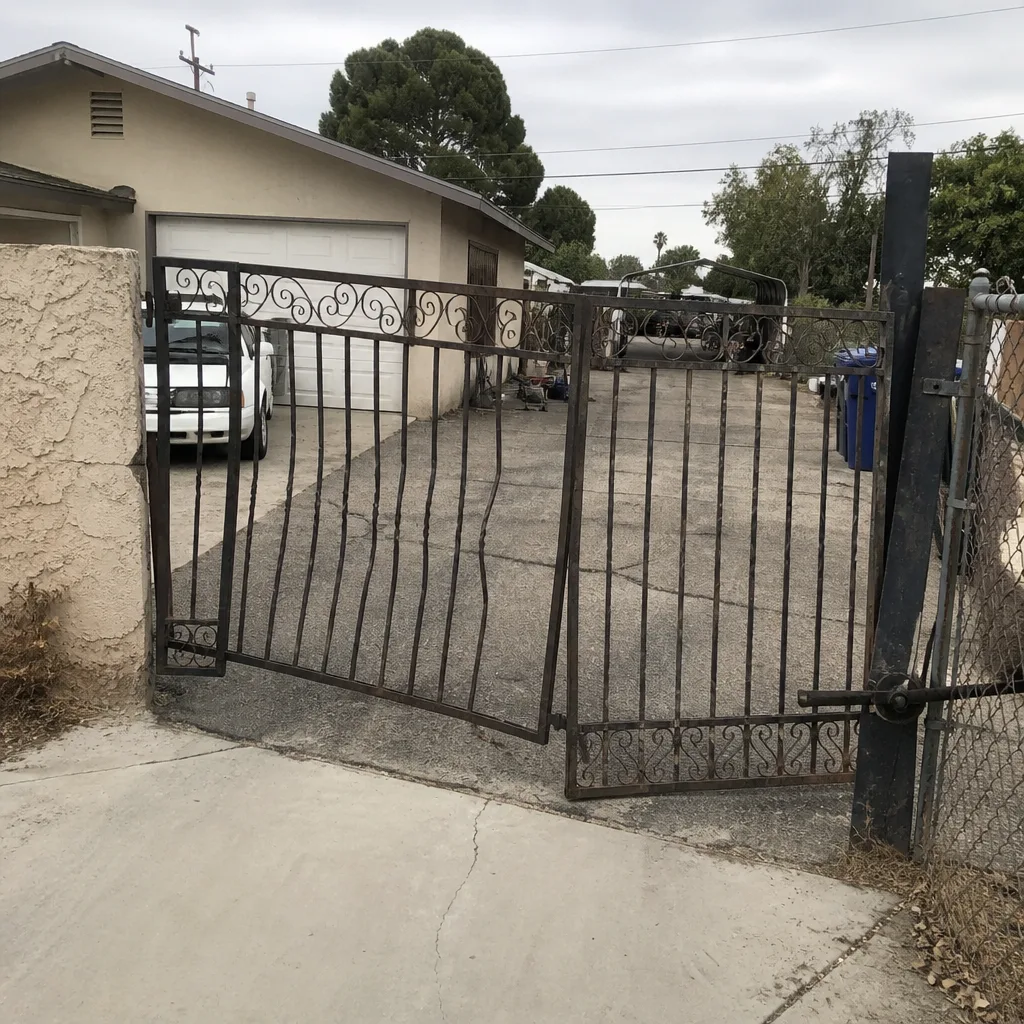 Before
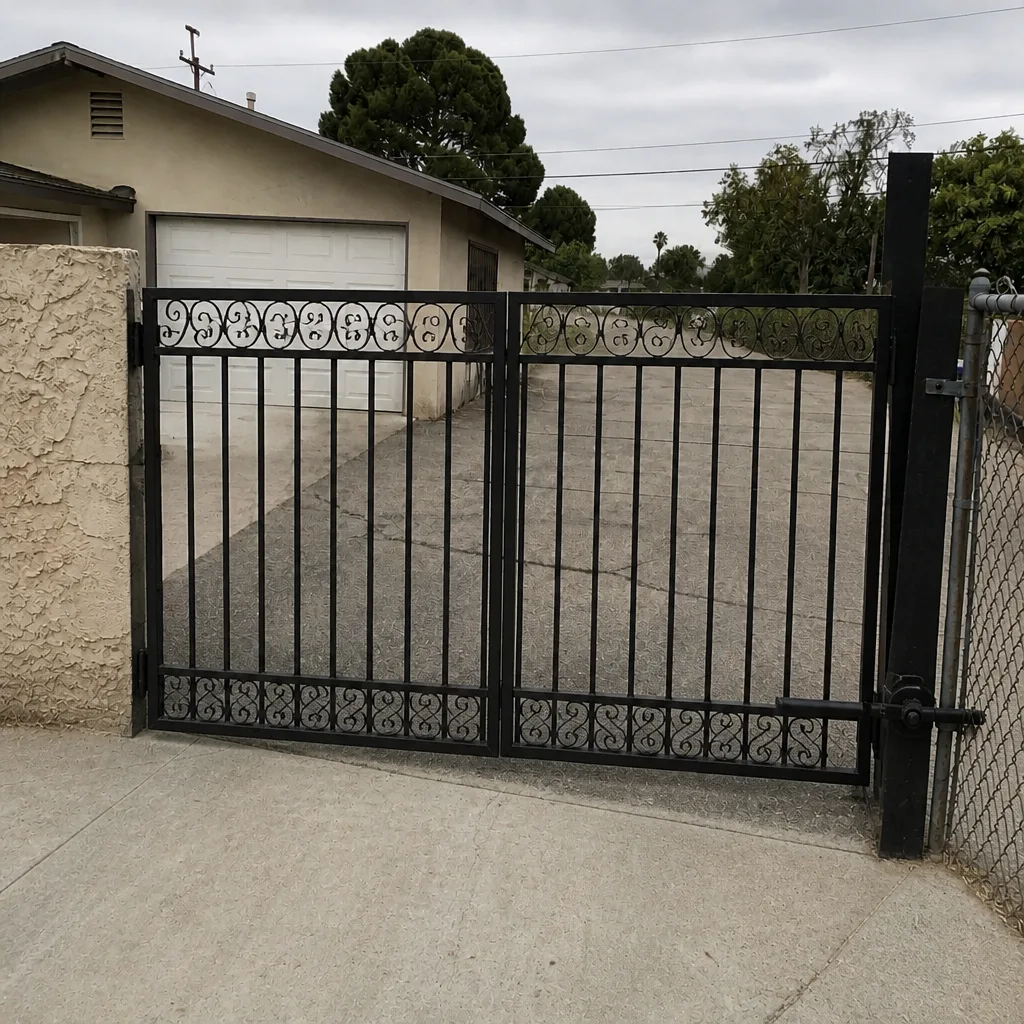 After
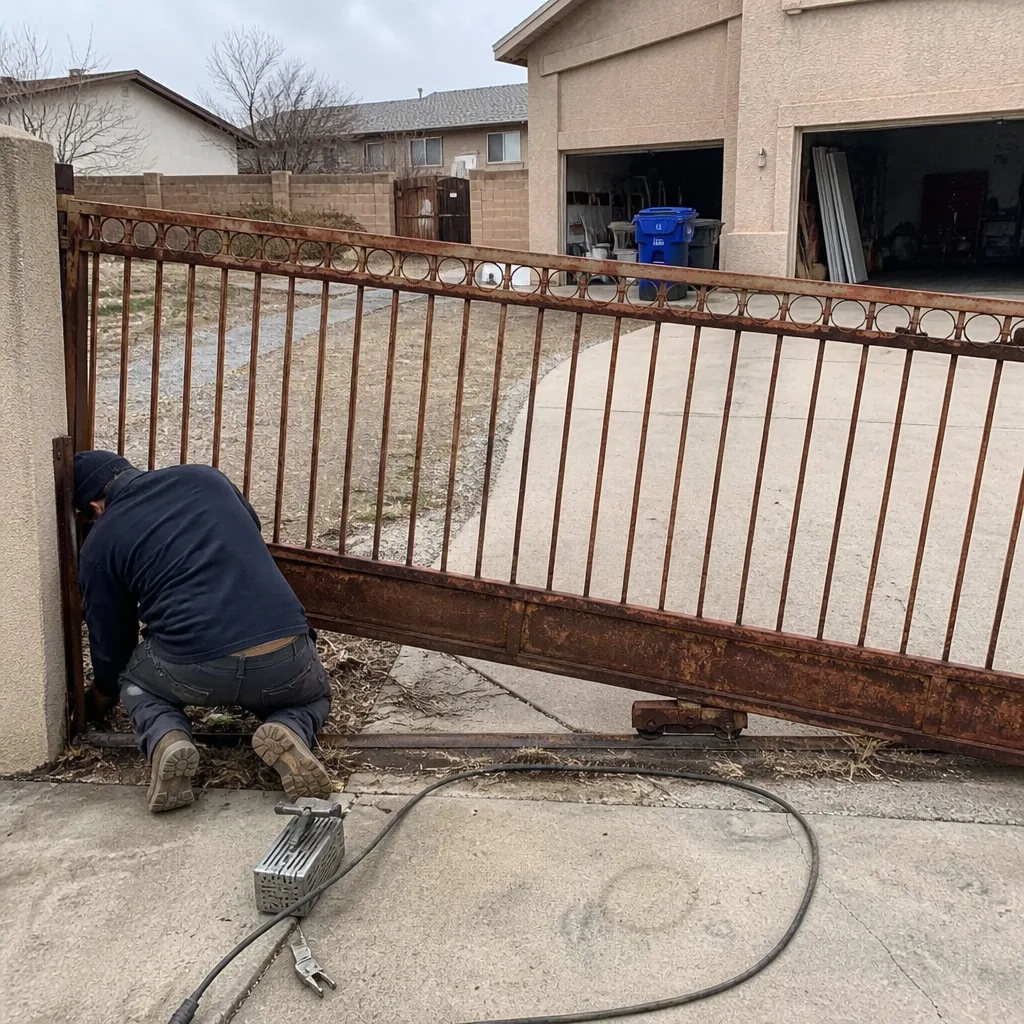 Before
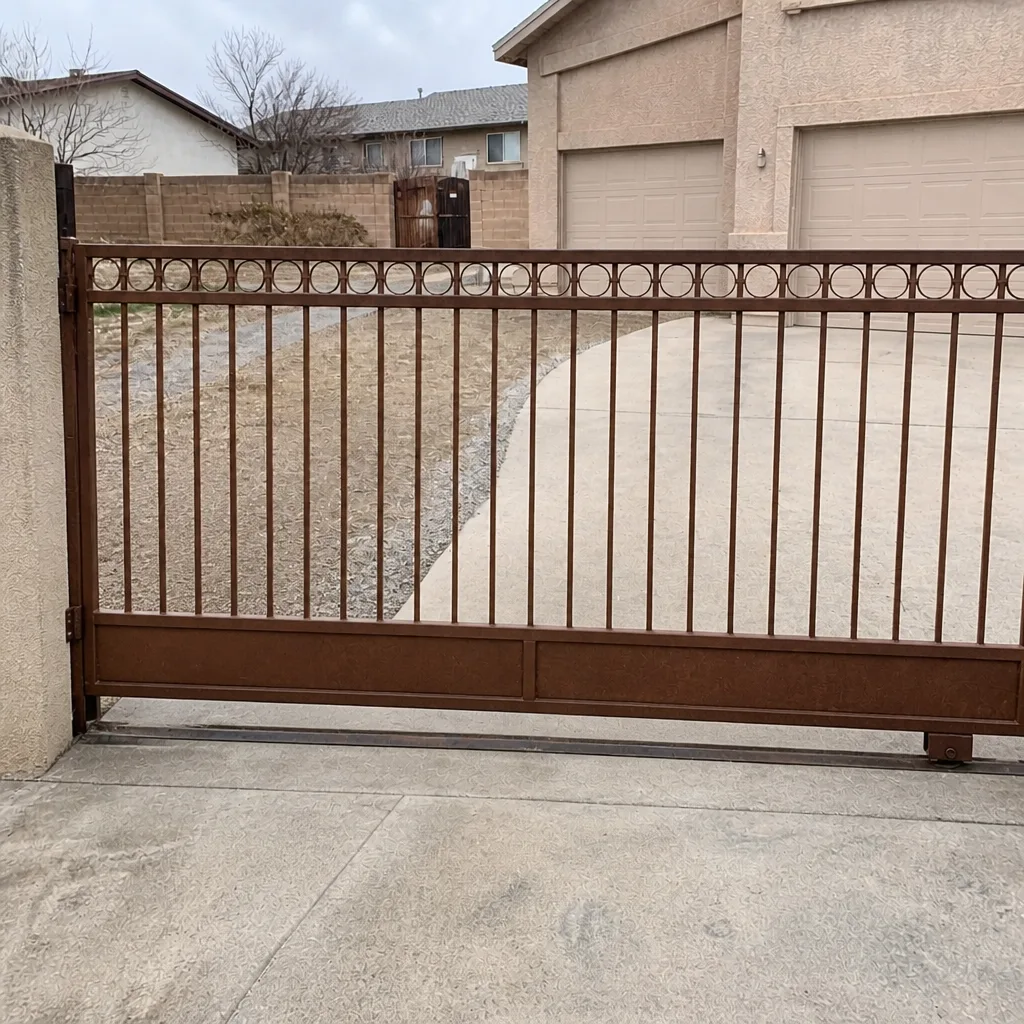 After
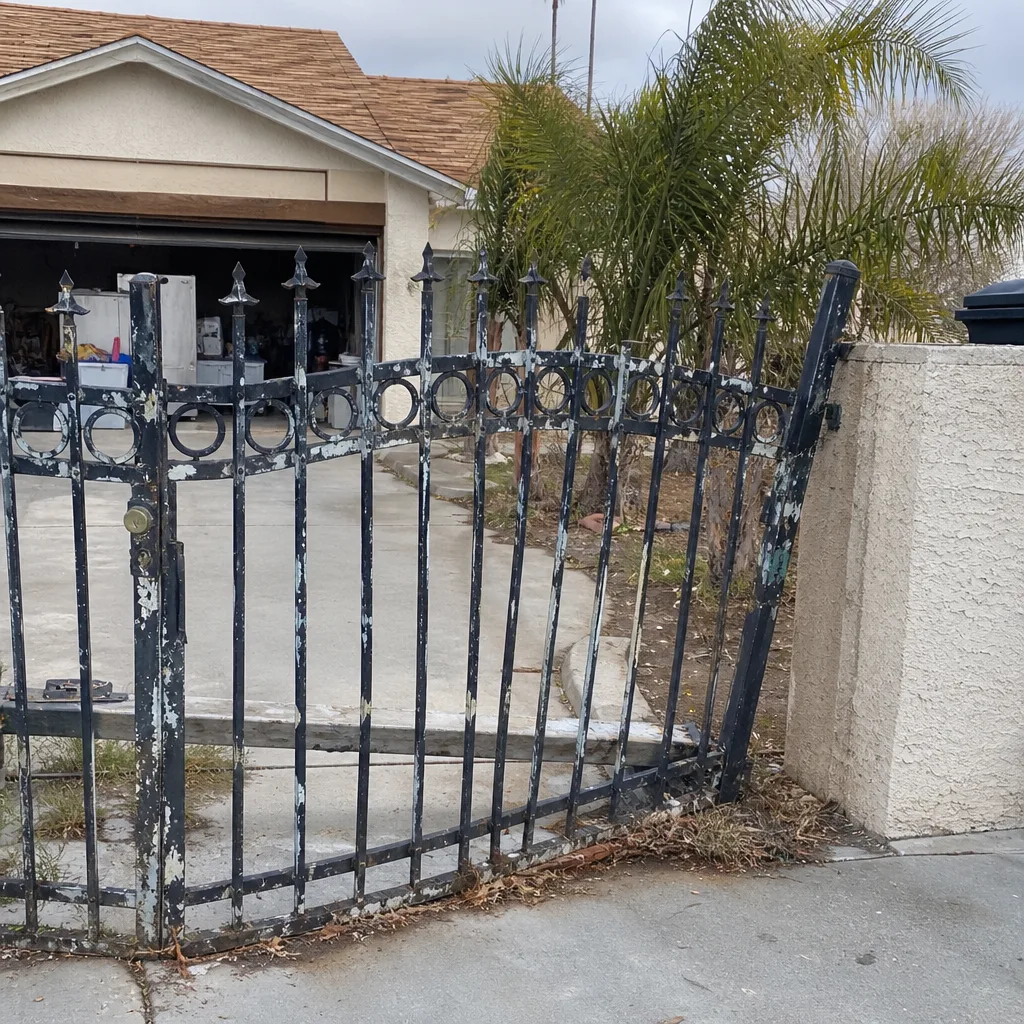 Before
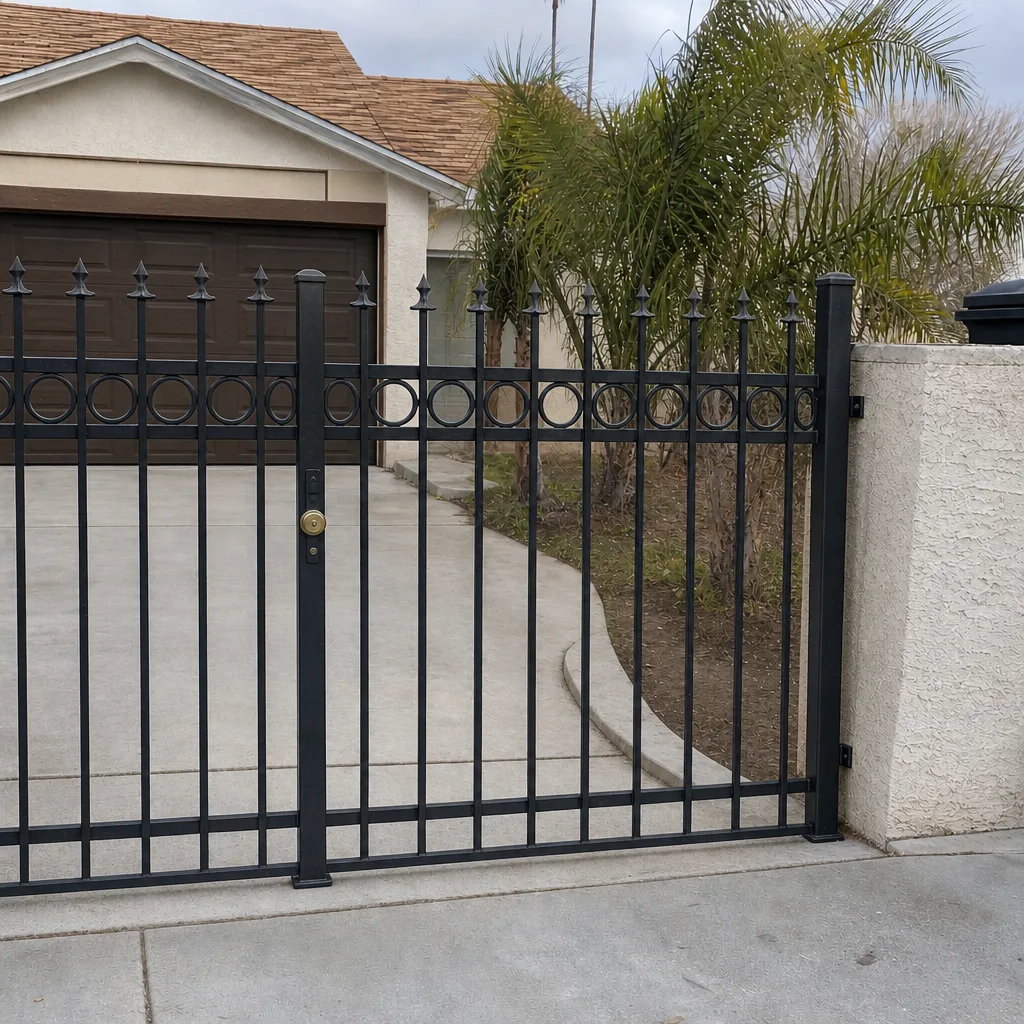 After
When to Call a Professional
Call a professional the moment a symptom lands in the functional or safety-critical tier and stays there. That means a gate that grinds on every cycle, a gate that stalls at the same point, a remote that only works close up, a gate that reverses for no reason, a gate that won’t stop on command, a post that’s leaning or moving, or any sign of damage or heat at the operator housing. Don’t wait for a gate to fail completely before you call: a functional sign that’s caught early is usually a smaller repair than the same sign caught after the operator has been driven hard for weeks. Gate Repair Paradise offers free estimates in Paradise. Call (844) 834-1647. We answer 24/7. Fast dispatch from 7am to 7pm, Sunday through Friday.
Frequently Asked Questions
The most common sign we see is a gate that’s slower than it used to be during the hot months. In Paradise’s desert climate, operator slowdown is often heat and load rather than a failing motor, which is why it’s worth noting whether the gate is fast in the morning and slow in the afternoon before you assume the motor is dying. Call (844) 834-1647 for an exact diagnosis: our estimate is free.
Heat slowdown follows the weather: sluggish on a hot afternoon, faster in the cooler morning, and the gate still completes its travel and reverses correctly. Motor failure is consistent: the gate is slow in the morning too, may stall at the same point every time, or the motor hums without moving the gate. If the pattern tracks the weather, it’s probably heat and load; if it doesn’t, it’s worth a call.
Yes. On an automatic gate, the reversing function is the safety system, and a gate that reverses unexpectedly or fails to reverse on an obstruction has a safety fault in progress. Stop using the gate, leave it in a safe position, keep people and vehicles clear, and call a specialist. Call (844) 834-1647: our estimate is free.
Yes, and usually does. Grinding during travel is most often metal-on-metal at a hinge, roller, or track, or a loose panel or drive, not a motor problem. That’s why we diagnose the whole system before recommending parts: replacing an operator to fix a binding hinge is an expensive way to solve a cheap problem.
Probably not. If the gate works from the wall control but not the remote, the fault is more likely in the remote, the receiver, the antenna, or the control wiring than in the operator motor itself. That’s a control-side diagnostic, and on multi-brand systems it’s worth having a specialist test it before you replace anything.
A once-a-month walkthrough of the sounds, travel, reverse test, posts, and hardware is a reasonable habit, plus a professional service visit when you notice a functional sign that persists. Routine service is a one-time visit priced per job after we look at the gate. Call (844) 834-1647: our estimate is free.
The Bottom Line
Gate problems announce themselves before they fail. The work is in knowing which sign means “schedule something soon” and which means “stop using this gate today.” Cosmetic signs are a planned visit. Functional signs (grinding, slowness, hesitation, a remote that only works close up) are a repair soon, and catching them early keeps the fault small. Safety-critical signs (unexpected reversal, won’t stop on command, a leaning post, exposed wiring) are a stop-now call. In Paradise’s heat, the slow gate is the classic misread sign: check whether the pattern tracks the weather before you assume the motor. When you’re not sure, an honest diagnosis beats a parts guess every time. That’s the whole job of a Gate Repair Paradise technician: gates, and only gates.
Written by the team at Gate Repair Paradise.