
Last updated November 16, 2026
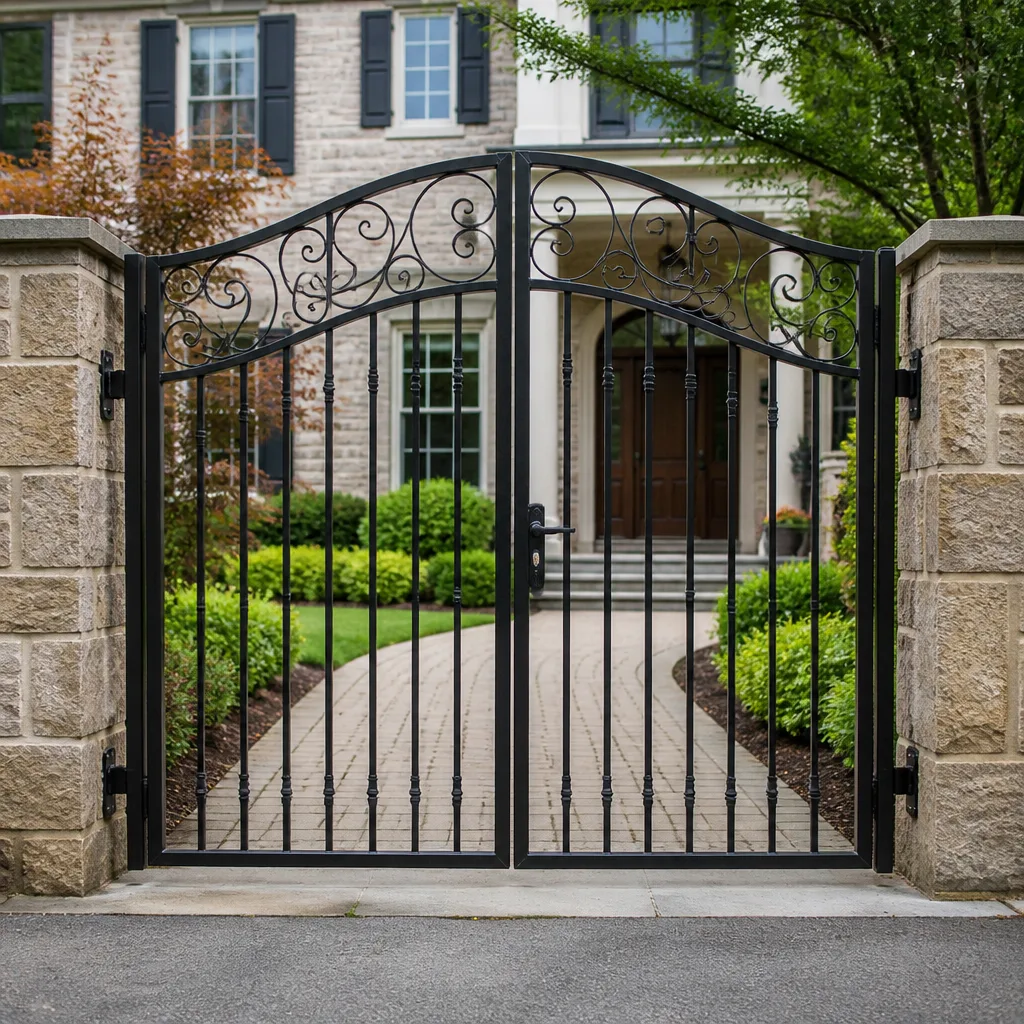 Wrought iron
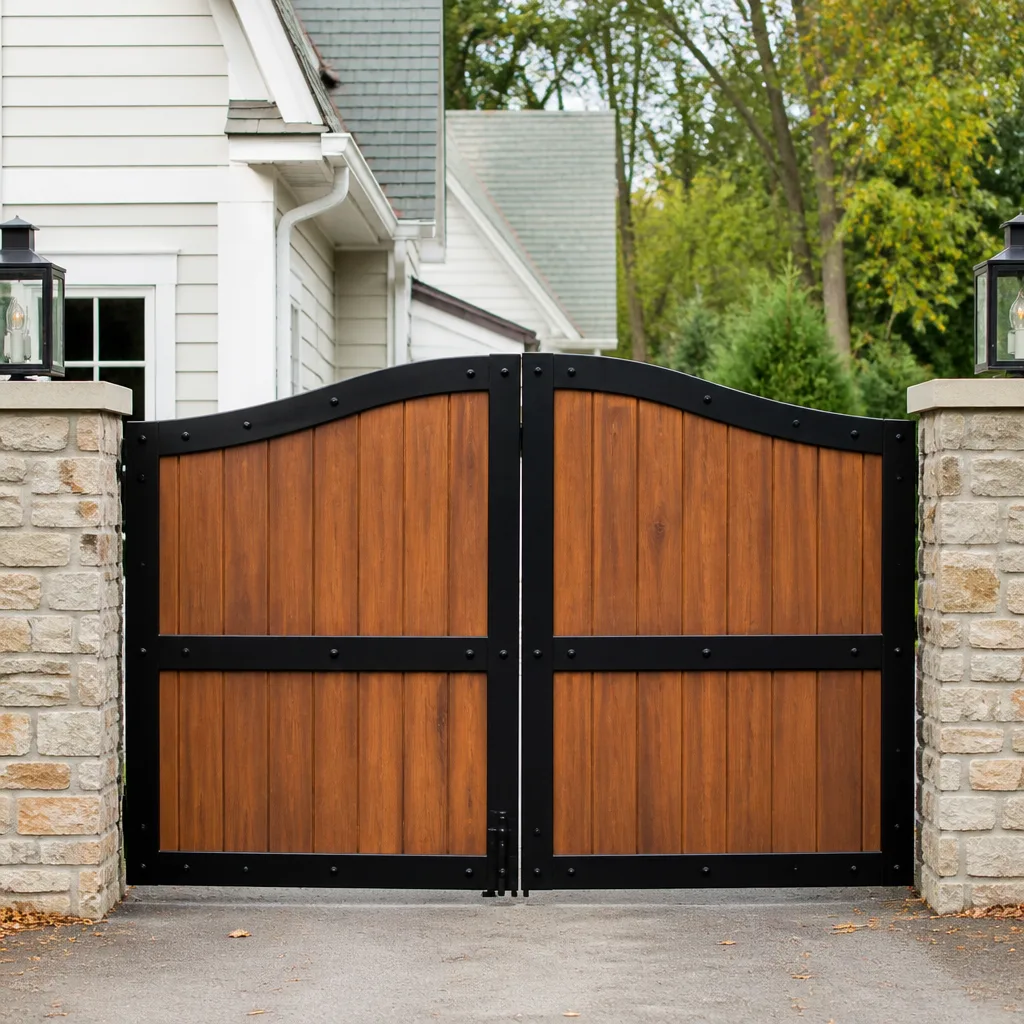 Wood & steel frame
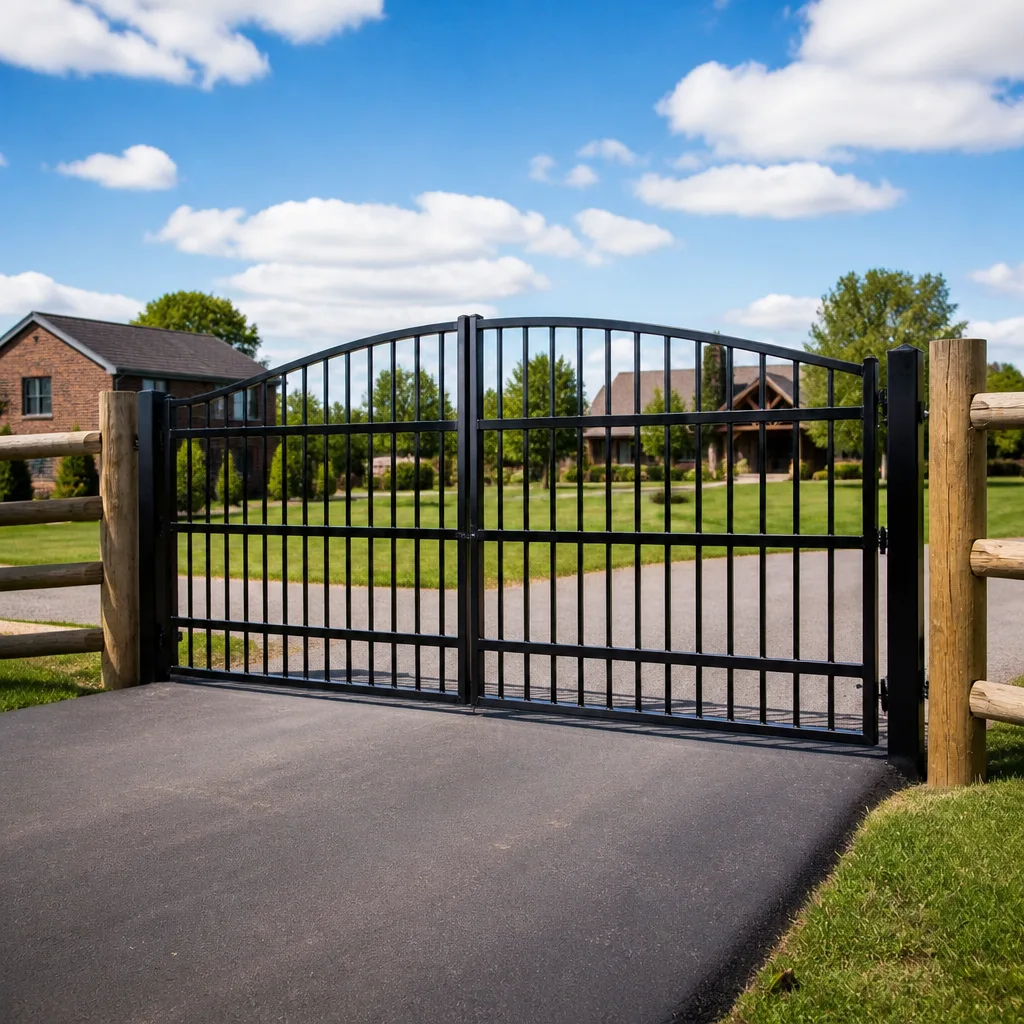 Farm & ranch
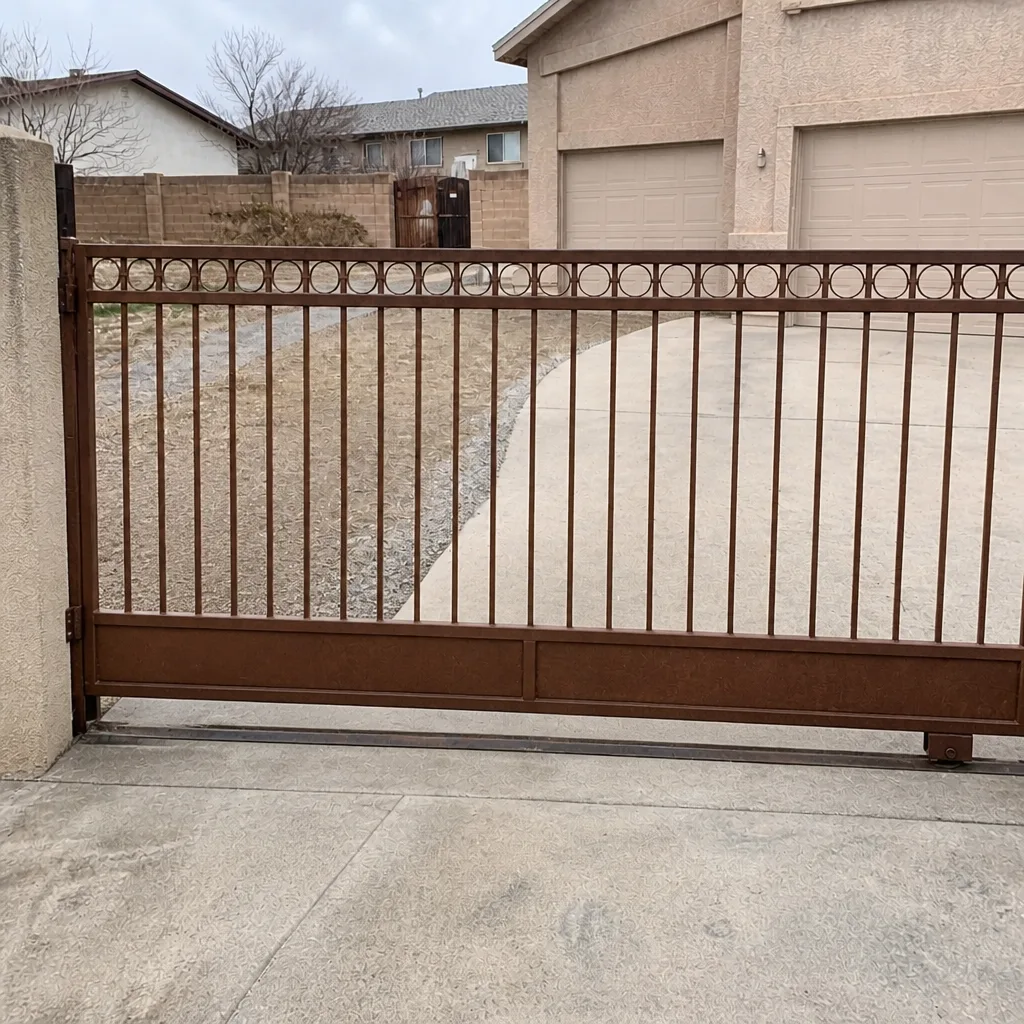
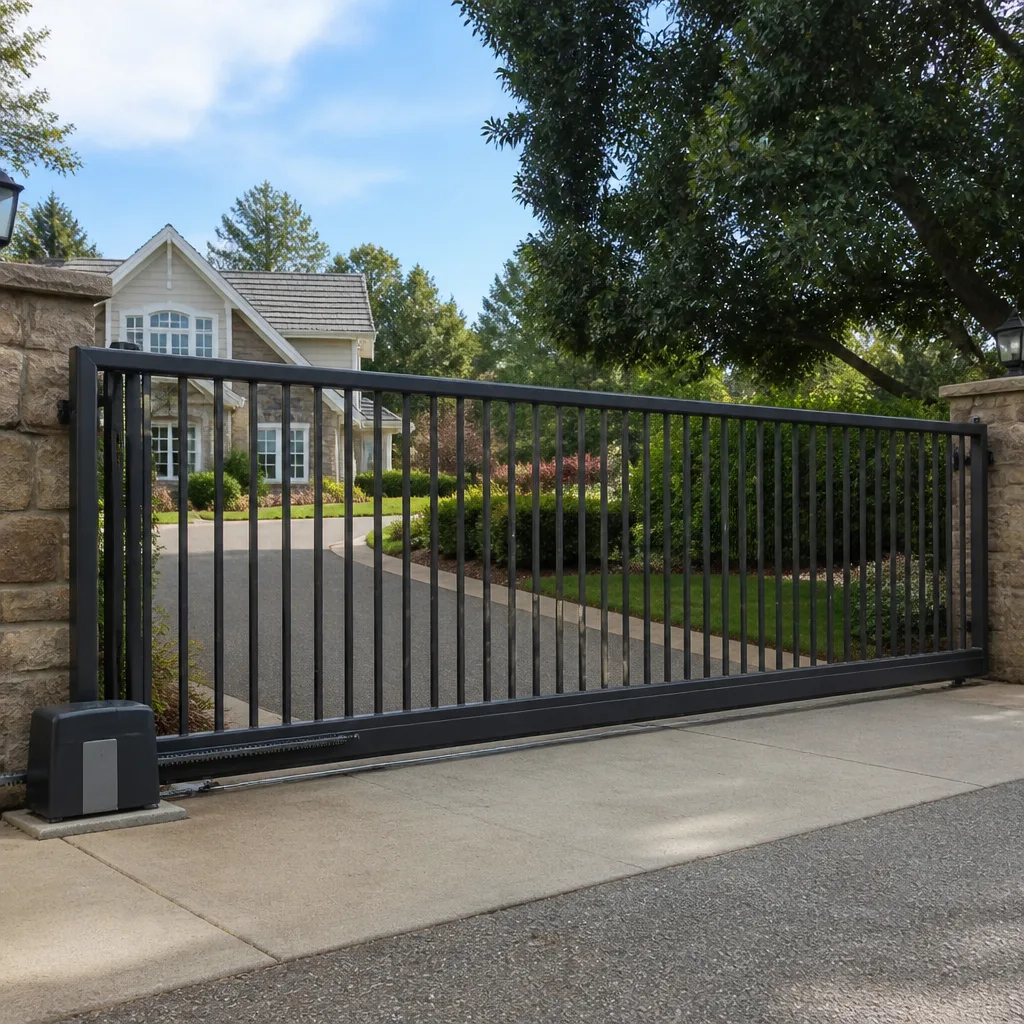 Sliding driveway gates
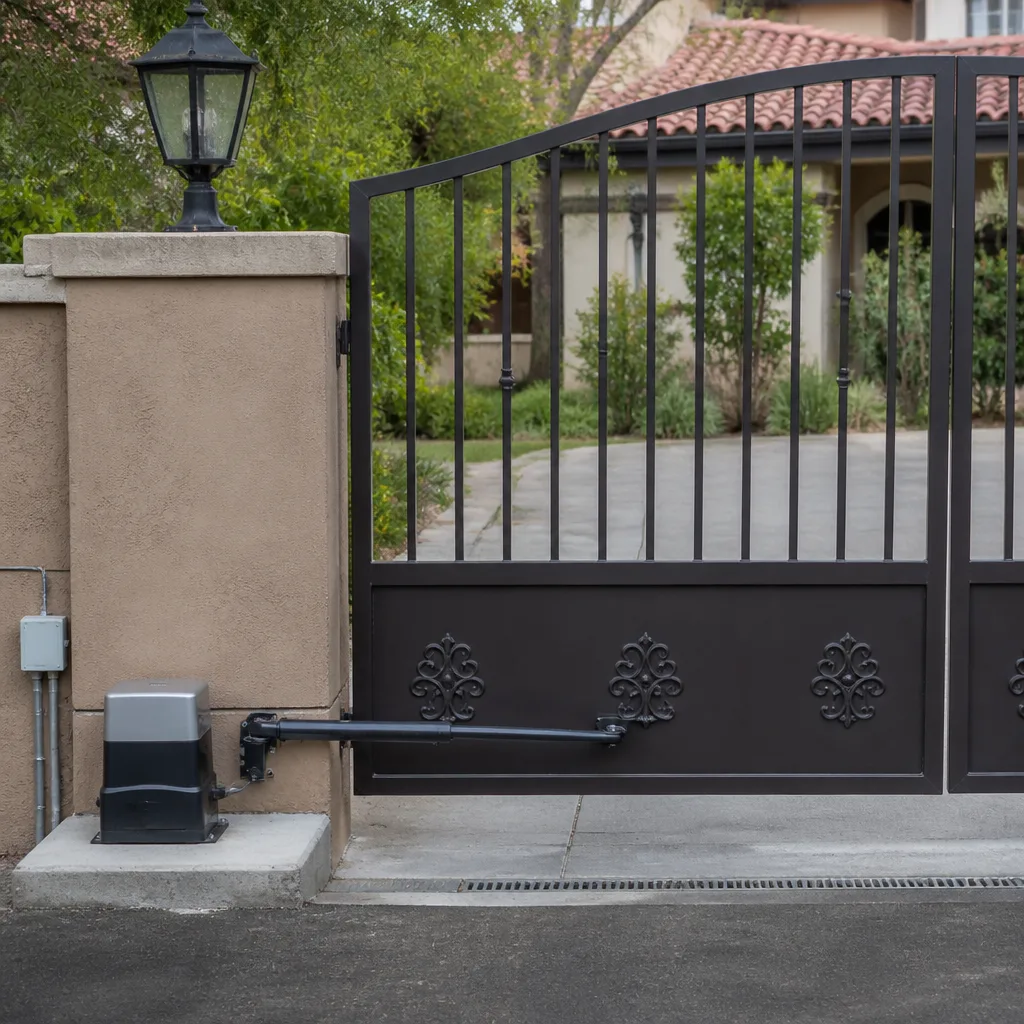 LiftMaster operators
Free on-site gate assessment - hinges, posts, and your LiftMaster or Nice gate operator checked before anything is quoted
The assessment is free and the quote is the invoice.
Get your free estimateHow to Hire a Gate Repair Contractor in Paradise: A Step-by-Step Guide
The person who built your neighbor’s fence is probably not the right call when your slide gate operator starts hunting, stalling halfway, or reversing on its own. Fence builders and handymen see gates as a side job. Automated gates are their own trade, with their own diagnostics, their own parts, and their own failure patterns. In Paradise, where block walls and wrought-iron drive gates are common and the desert sun bakes control boards and photo eyes year-round, the difference between a specialist and a generalist shows up fast. This guide gives you the exact questions and screening steps to separate the two, so your gate gets diagnosed right the first time.
Quick Answer
To hire a gate repair contractor in Paradise, ask one filtering question first: “Do you work on automated gate operators and control boards, or just the gate itself?” A true gate specialist answers with diagnostic specifics (control board, loop detector, safety sensor, operator motor); a generalist answers vaguely. Then verify licensing, ask how they test before quoting, confirm brand familiarity with your existing system, and make sure the written estimate separates repair from replacement.
Styles & brands we work with
- Wrought iron
- Wood & steel frame
- Farm & ranch
- Sliding driveway gates
- LiftMaster operators
Table of Contents
- The One Question That Filters Out Generalists
- Licensing and Liability Questions Specific to Automated Gate Work
- What a Proper Gate Diagnostic Actually Looks Like
- Repair Versus Band-Aid: Reading the Quote
- Red Flags Unique to Gate Repair Work
- Why Brand Specialization Matters
- How to Compare Gate Repair Quotes Accurately
- The 10 Questions to Ask Before You Book
The One Question That Filters Out Generalists
Here’s the question: “When my gate reverses before it closes, what do you check first?” A gate specialist will answer with operator-side diagnostics: the safety photo eye alignment, the loop detector, the limit switch position, the control board’s reverse sensitivity setting. A generalist will answer with the gate itself: “maybe the track is dirty,” “probably the hinges,” “sounds like the motor’s going out.” That answer tells you everything. Generalists troubleshoot gates like a big garage door, because that’s the only automated moving thing they’ve worked on. A gate operator is a different system with its own logic board, its own entrapment protections, and its own diagnostic codes.
In Paradise, we’ve seen this play out repeatedly. A homeowner calls a handyman about a swing gate that won’t latch. The handyman adjusts the hinges, charges for the visit, and the gate still doesn’t latch the next afternoon because the real issue was the operator’s closed-limit setting drifting under heat. Asking the filtering question upfront saves that whole cycle.
The follow-up to the filtering question is: “Can you describe the difference between a swing gate operator and a slide gate operator?” A specialist will note that slide operators use a rack and pinion or chain drive along the ground, while swing operators use an articulated arm or underground actuator at the pivot. They’ll also mention that the safety device setup differs between the two types. If the person on the phone can’t get through that comparison cleanly, you’re talking to the wrong contractor.
Licensing and Liability Questions Specific to Automated Gate Work
General contractor licensing in Nevada is set by the state Contractors Board, and you should check any contractor’s license before booking. But automated gate work has an extra layer that general vetting pages skip: electrical connection and operator wiring. A gate operator connects to line voltage at the control box, and it operates safety devices that must be wired and set correctly. The contractor you hire should be able to tell you who performs the electrical hookup, how they handle permits if any are required by the city, and what insurance covers an injury on a heavy swinging panel.
Ask these specific questions in order:
- “Are you licensed and insured for gate work specifically, and can you email a certificate of insurance?” Any contractor working around powered machinery should carry liability coverage. If they hesitate, move on.
- “Who does the electrical hookup for a new operator, and do you pull the permit or do I?” Building departments vary. Most cities require a permit for a new operator installation, so ask the Paradise building department what applies to your address before the job starts, and confirm the contractor will work through that process with you.
- “What happens if someone is hurt by the gate during or after your work?” The answer should reference their insurance and their safety-device testing process. There should be no gap in the answer.
- “Do you test the safety photo eyes and the loop detector before you leave the site?” Entrapment safety is the single most important part of any automated gate. A contractor who doesn’t test safety devices is a liability, not a repair.
For property managers in Paradise overseeing gated communities or commercial sites, add one more: “Will you provide documentation of the safety testing for our records?” A responsible gate contractor will. It protects you as much as it protects them.
What a Proper Gate Diagnostic Actually Looks Like
A proper gate diagnostic is a process, not a guess. You can watch it happen in about 20 minutes, and knowing the steps helps you recognize when a contractor is doing it right. This is what we mean when we say a specialist diagnoses gate faults the first pass.
- Manual cycle first. Disconnect the operator and move the gate by hand. If the gate binds, drags, or grinds by hand, the problem might be in the gate, hinges, or track before the operator gets involved. Skipping this step leads to replacing working control boards.
- Operator observation. Reconnect power and cycle the gate while watching the operator. Listen for strain, watch where the gate pauses, and note whether the reverse happens at the same point every time. Repeatable faults point to sensors or limits; intermittent faults point to wiring or heat.
- Control board inspection. The board should be checked for error codes, burned traces, moisture damage, and corroded terminals. In Paradise, thermal cycling from hot afternoons and cool nights is hard on control boards and their solder joints. A technician who doesn’t open the box is guessing.
- Safety device test. Photo eyes and loop detectors should be deliberately obstructed to confirm the gate reverses as designed. This is not optional and it is not just for new installs. Every repair visit should end with a safety test.
- Remote and access system check. Keypads, receivers, remotes, and access control all sit on the same operator wiring. If any of them fail together, the problem is usually upstream at the board or power supply.
After that process, the technician should be able to tell you what’s wrong, what it will cost to fix, and what the fix includes. If the answer is “I’ll just replace the operator,” ask which diagnostic step pointed there. That question alone filters out a lot of unnecessary replacement quotes in Paradise.
Repair Versus Band-Aid: Reading the Quote
A quote for a repair and a quote for a band-aid can look identical on paper. Both say “service call” and “parts.” The difference is what’s in the details. Here’s how to tell them apart before you sign:
- A repair names the failed component. “Replace photo eye receiver” or “reset closed limit and verify reverse sensitivity” tells you what was wrong. “Service operator” tells you nothing.
- A repair includes the safety test. Any quote that touches the operator should include a line for verifying photo eyes and loop detector operation. If it’s missing, ask why.
- A repair specs the part by function, not just brand. “LiftMaster-compatible motor board” or “DoorKing loop detector replacement” is specific. “Gate part” is not.
- A repair includes a test cycle description. The estimate should say the gate will be cycled multiple times to confirm the fault is gone. Replacement quotes that skip that line are worth questioning.
- A repair is priced per job, not per hour. The written estimate sets the final price before work starts, so you can see the number in advance and there are no surprises on the invoice.
In our experience across Paradise, the most common band-aid we hear about is a generalist who adjusts the reverse sensitivity setting upward to stop the “false” reversing instead of replacing the failing photo eye. That stops the symptom but disables the entrapment safety the eye was providing. If anybody recommends a sensitivity adjustment without testing or replacing the safety device, ask them to walk you through why. You are entitled to that explanation.
Red Flags Unique to Gate Repair Work
Standard contractor red flags apply to gates too, but gate work has its own category of warning signs that most “how to hire a contractor” pages never mention. Watch for these:
- Quoting without testing the operator. If someone names a price before they’ve cycled the gate and opened the control box, they’re estimating a repair they haven’t diagnosed.
- Recommending replacement before inspecting the control board. Operator replacement is sometimes the right answer, but not before the board, limits, and wiring have been checked. A board-level fault is often a fraction of the cost of a new operator.
- No mention of loop detectors. A contractor who works on automated gates talks about loop detectors without prompting. They’re part of almost every slide gate and many swing gates.
- No safety test in the scope. Any repair that touches the operator should end with the photo eyes and loop detector deliberately tested. If the quote doesn’t say so, ask for it in writing.
- “I can fix anything.” A true specialist tells you what they don’t handle, or they tell you what needs a specialist they’ll refer you to. A contractor who can fix your gate, your roof, and your water heater is unlikely to be checking control boards daily.
- Vague brand familiarity. If you have a Ghost Controls or DoorKing operator and the answer is “I’ve worked on those,” ask how recent. Specific, current familiarity is what you want.
- No written estimate. Verbal pricing on gate work is a warning sign. The written estimate is the contract on the final price, and if it doesn’t exist, neither does your price protection.
- Pushy about one brand. A specialist repairs the system you already own. If the pitch is “replace it and I’ll put in the brand we sell,” you’re talking to a salesperson.
Why Brand Specialization Matters
A technician who touches a LiftMaster operator daily recognizes known board faults in seconds. A technician who sees LiftMaster once a quarter has to read a manual on your driveway. Same part, different outcome. That’s why brand specialization is worth asking about explicitly.
Gate operators and their diagnostics vary significantly by brand. LiftMaster residential and commercial systems use different control architectures. FAAC, BFT, and Viking have their own programming sequences and limit-setting methods. Linear and DoorKing systems show up in commercial and gated-community work with their own loop detector wiring. Ghost Controls is common on newer residential swing gates and has its own board layout. Mighty Mule and Elite come with their own quirks. A specialist carries components for these specific brands because they’ve diagnosed them enough to know which failures travel together.
When you’re hiring in Paradise, ask: “Which gate brands do you work on regularly?” The answer you’re listening for is a short list, spoken with confidence, of the brands you actually own. If your operator is a Viking and the contractor has no specific memory of Viking board behavior, you’re paying tuition. A specialist will also tell you which brands they don’t handle rather than selling you into a replacement.
This is what we mean when we say we work on the brand you already have, not the brand we prefer to sell. The right fix is for the existing system, and that principle should apply to whoever you hire. When a contractor can talk about a Ghost Controls safety edge and a DoorKing loop detector in the same conversation without hesitation, you’re in the right hands.
How to Compare Gate Repair Quotes Accurately
Three contractors can quote your gate and come back with three wildly different numbers, and all three can be honest. That’s because they’re scoping different work. To compare apples to apples, normalize the quotes before you choose.
Here’s the process:
- Line up the diagnosis. Each quote should name a specific failed component or fault. If one says “replace board” and another says “realign safety edge,” they’re not quoting the same repair. Ask each contractor to state the diagnosis in one sentence.
- Line up the scope. Does each quote include the safety test? The post-repair cycle verification? The wiring check? If one includes these and another doesn’t, add them mentally to the lower quote before comparing.
- Line up the parts. Ask each contractor to spec the part they’ll install. OEM versus aftermarket, same-function replacement, and upgrade boards all price differently, and the differences matter.
- Line up the labor definition. Is the price quoted per job, or per hour plus parts? The written estimate should lock the price for the identified repair.
- Line up the follow-up. Ask each contractor what happens if the fault returns after the repair. The answer should be consistent with a free estimate and a written price, not a guarantee of unlimited revisits.
A great test for all of this is the question “if you’re wrong about the diagnosis, what happens?” A specialist will tell you that further diagnosis is part of the process and they’ll re-estimate before doing more work. A generalist will tell you “we’ll figure it out.”
The 10 Questions to Ask Before You Book
These are the questions to put in front of every Paradise gate contractor you’re considering. Ask them on the phone before booking. The way they answer tells you more than any review page.
- “Do you specialize in gates, or is this a side service?” Listen for single-trade focus.
- “Which gate brands do you work on regularly?” Listen for a specific short list, not “all of them.”
- “What diagnostic steps do you take before quoting?” Listen for manual cycle, operator inspection, control board check, and safety test.
- “How do you test my photo eyes and loop detector?” Listen for deliberate obstruction and a reverse confirmation.
- “Will the estimate be written and agreed before work starts?” Listen for yes, unambiguously.
- “Do you carry parts for my operator brand, or do you order them?” Listen for an honest answer about what’s available. Ordering is fine, but knowing which it is helps you plan.
- “Who handles the permit for operator work, and how?” Listen for willingness to walk you through the city process.
- “Are you insured, and can you provide a certificate?” Listen for yes.
- “What happens if the fault comes back?” Listen for a plan that involves re-diagnosis, not just a return visit.
- “Can you describe a recent Gate Repair Paradise-style repair?” Reworded for the contractor: “Can you walk me through a recent repair on a system like mine?” Listen for specificity in the story, not just enthusiasm.
Print these or save them to your phone before you call. It’s the single fastest way to filter a list of three contractors down to the right one in Paradise. If you want to compare against a specialist, our gate repair page walks through how we handle the diagnostic before any price is spoken.
Common Mistakes to Avoid
- Hiring the person who built the fence. Fence work and gate operator work overlap on the gate itself, but not on the electronics. A fence builder can hang a beautiful gate and still not know why the operator won’t latch it at closing.
- Assuming “same day” is the whole answer. Fast response matters, but speed without diagnosis is just an expensive guess. In Paradise, the right call is a specialist who can show up fast and knows what to check when they do.
- Accepting a replacement recommendation without a board check. Control board faults look like operator failures from a distance. Make sure the board was inspected before you spend on a full replacement.
- Skipping the question about permits. A new operator usually needs a permit through the city. If nobody raised it, ask the Paradise building department directly about your address before work starts.
- Not asking who does the electrical hookup. Line voltage and low-voltage safety wiring are different worlds. You want to know who’s responsible for each before the technician is on site.
- Comparing hourly quotes to per-job quotes. A per-job written estimate protects you from scope creep. An hourly quote on a diagnostic you don’t understand is a number with no ceiling.
- Overlooking the safety devices. The most common thing we hear about missing from low-bid repairs in Paradise is the loop detector and photo eye test. Confirm those are in scope in writing.
- Letting a brand pitch replace a diagnosis. If the recommendation is “install this brand we carry,” ask what was wrong with the current operator and how they diagnosed it. The right fix is for the system you own.
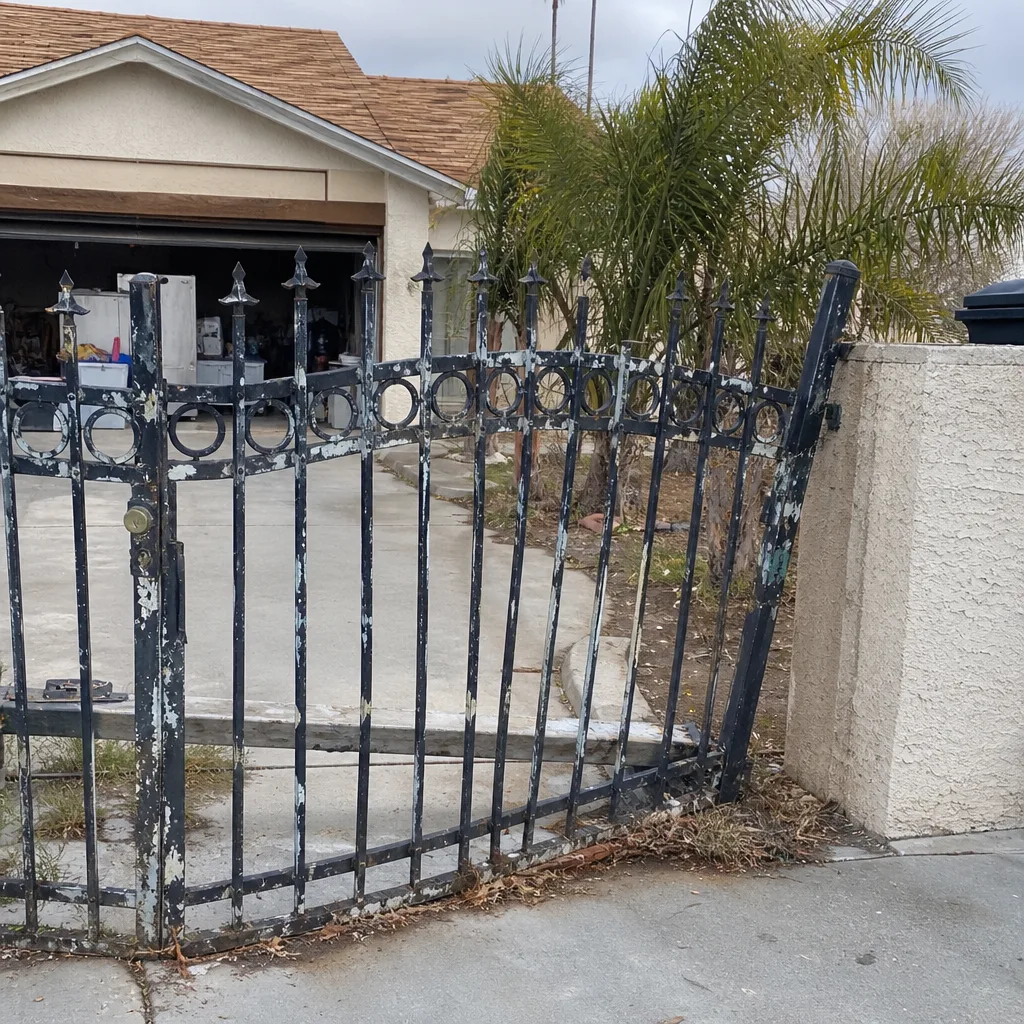
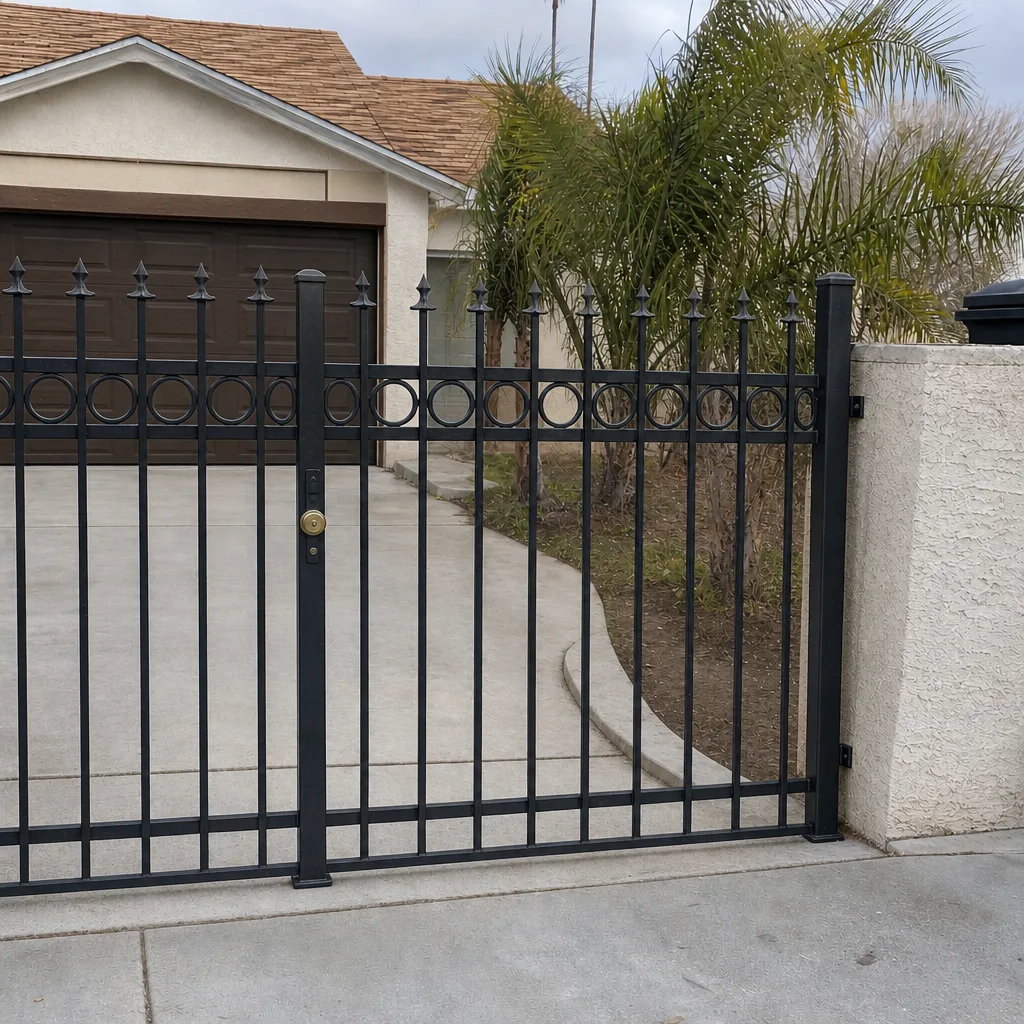
See the difference
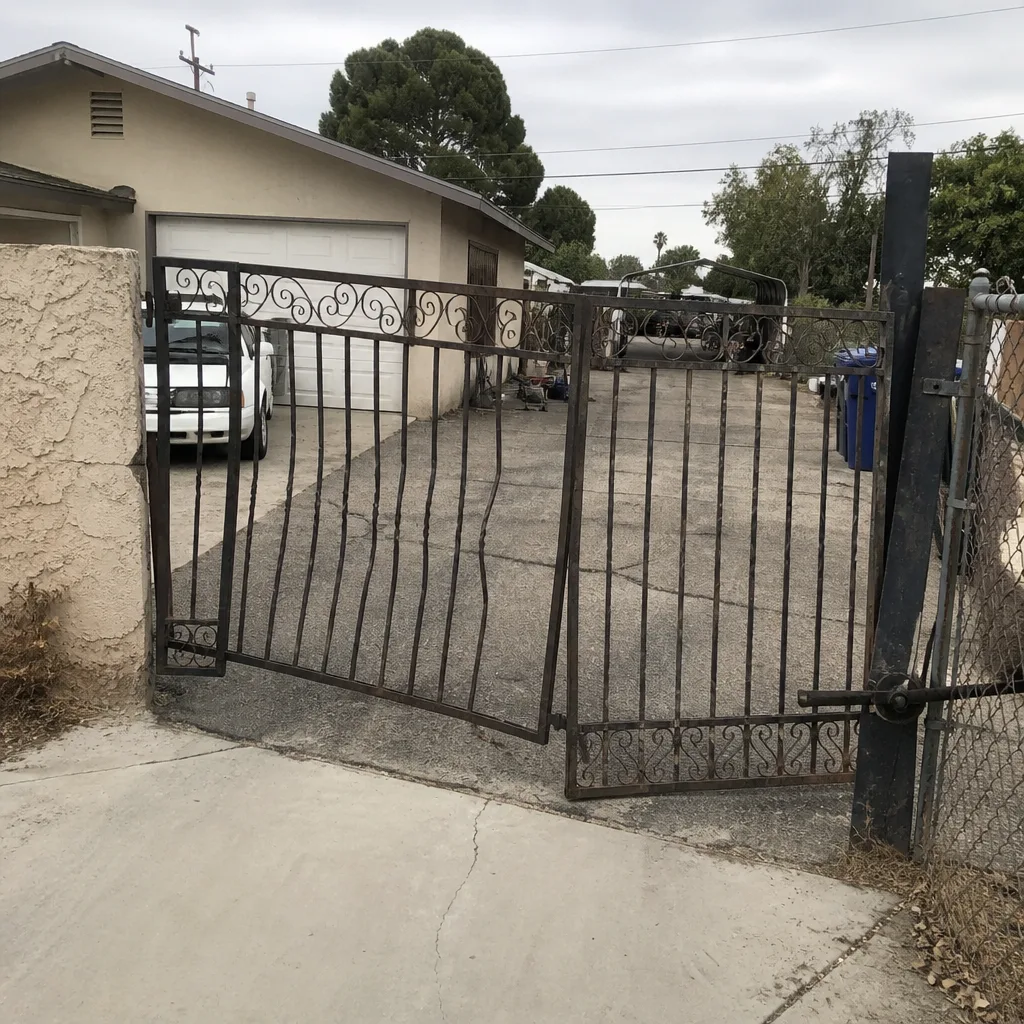 Before
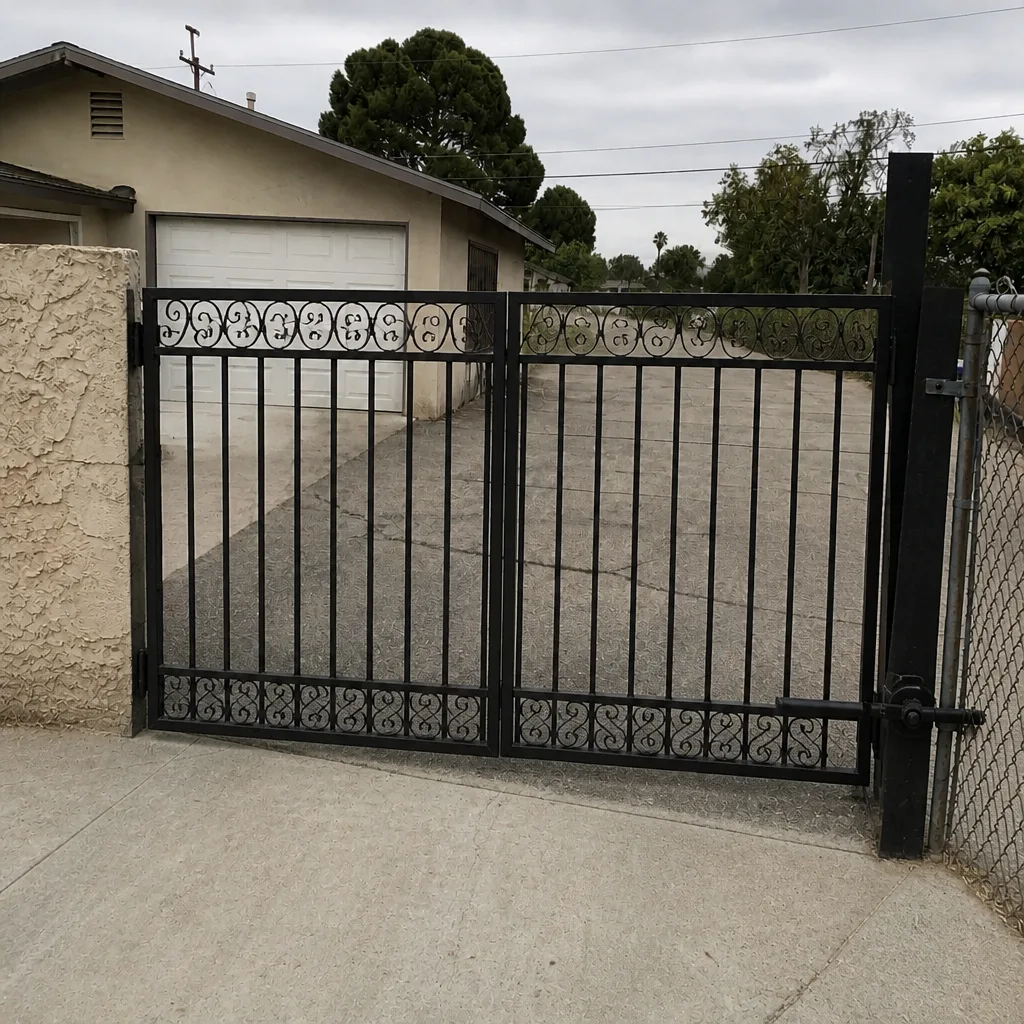 After
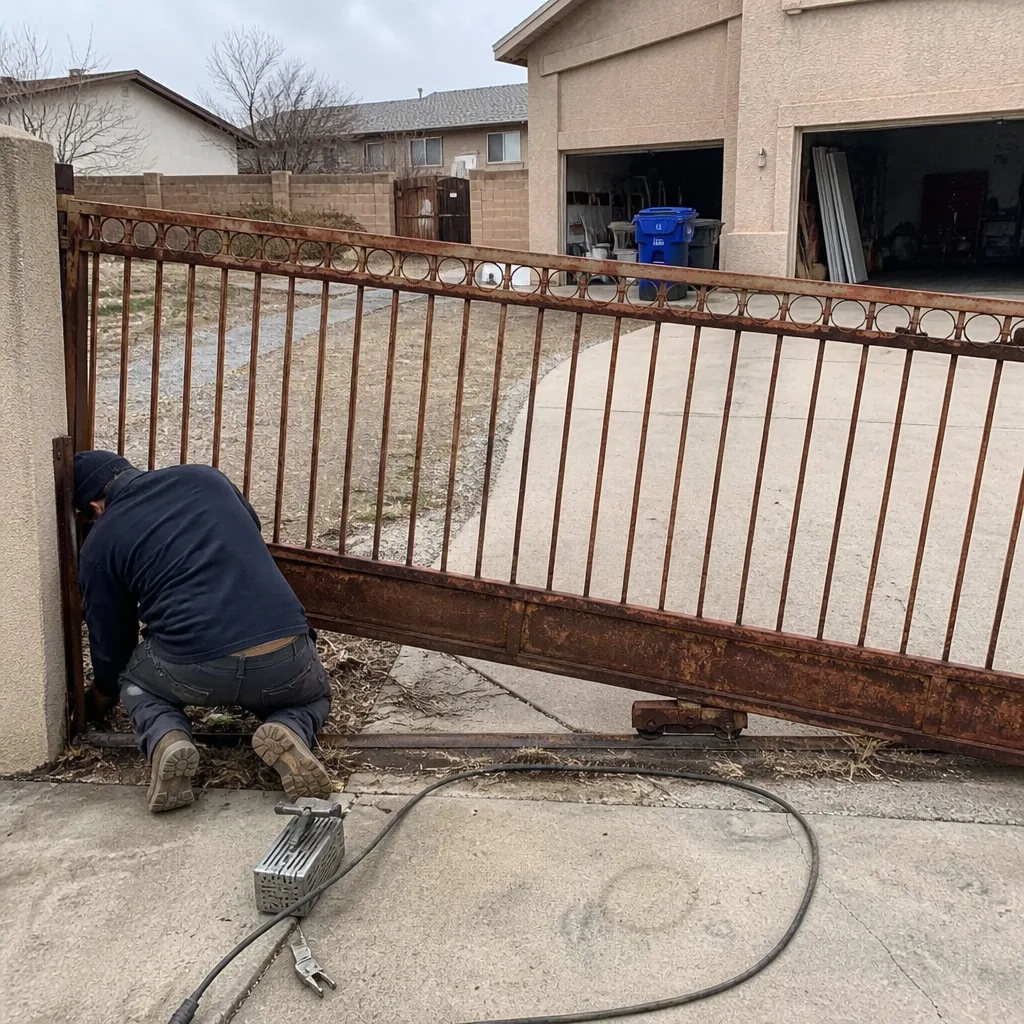 Before
 After
 Before
 After
When to Call a Professional
Call a professional for any gate operator that reverses without an obstruction, any slide gate that jumps or comes off its track, any swing gate that won’t latch, and any control box that smells hot, clicks repeatedly, or shows a fault code you don’t recognize. Call immediately if a safety device is dead or bypassed, because an automated gate without a working photo eye or loop detector is an entrapment hazard. Call before replacing anything at the operator level. Line voltage, board-level diagnostics, and safety-device testing belong with a trained technician, not with a homeowner working under a hot control box. Gate Repair Paradise offers free estimates in Paradise. Call (844) 834-1647. We answer 24/7. Fast dispatch from 7am to 7pm, Sunday through Friday.
For a full walk through what we do on the diagnostic side, visit our electric gate repair page. If you’re comparing contractors in the surrounding valley, our Paradise page covers how we scope work locally. And if you want to see how the company frames its whole approach to gate-only work, start at Gate Repair Paradise.
Frequently Asked Questions
Ask the filtering question: “When my gate reverses before it closes, what do you check first?” A specialist names the photo eye, loop detector, limit switch, and control board. A generalist names the hinges, track, or motor. The answer tells you more than any website or review page.
A written estimate that names the failed component, specs the part, and includes the safety test for photo eyes and loop detector. The estimate you agree to before work starts is the price that applies when the invoice arrives. Free estimates from a specialist will have all of this in writing.
Repairs usually don’t require a permit, but new operator installations often do. Rules vary by address and operator type, so ask the Paradise building department what applies to your property before work begins. A specialist contractor will walk through that process with you rather than guessing.
A technician who sees LiftMaster, FAAC, Linear, DoorKing, or Ghost Controls daily recognizes known board faults, limit-setting patterns, and safety-device quirks by sight. A generalist sees your brand once a quarter and has to read the manual on site. Same repair, very different outcome.
Often, yes. Control boards, limit switches, safety photo eyes, loop detectors, receivers, and remotes are all replaceable components. A proper diagnostic tells you whether the operator’s motor and chassis are sound before any replacement is recommended. Ask for the diagnosis in one sentence before you approve anything larger.
A repair names the failed component, replaces it, and verifies the fix with a safety test and cycle check. A band-aid adjusts a setting to hide the symptom, such as raising reverse sensitivity instead of replacing a failing photo eye. The safety feature is what’s sacrificed in a band-aid, so ask how the safety devices will be tested regardless of which contractor you choose.
The Bottom Line
Hiring a gate repair contractor in Paradise comes down to one filter and a handful of specific questions. Ask what they check first when a gate reverses. Ask which brands they work on regularly. Ask how they test photo eyes and loop detectors. Ask for a written estimate that names the failed part and prices the safety test in. Ask who handles the permit for operator work. A specialist answers all of it cleanly. A generalist hedges. If the person on the phone can’t walk through operator diagnostics without looking them up, keep looking. Gate Repair Paradise is a gate-only specialist serving Paradise and the surrounding valley. Call (844) 834-1647 for a free estimate. We answer 24/7. Fast dispatch from 7am to 7pm, Sunday through Friday. Our technicians have up to experience across LiftMaster, FAAC, BFT, Linear, Viking, Ghost Controls, DoorKing, Elite, and Mighty Mule systems. Nine brands. One specialty. Your gate fixed.
Written by the team at Gate Repair Paradise.