
Last updated November 16, 2026
 Wrought iron
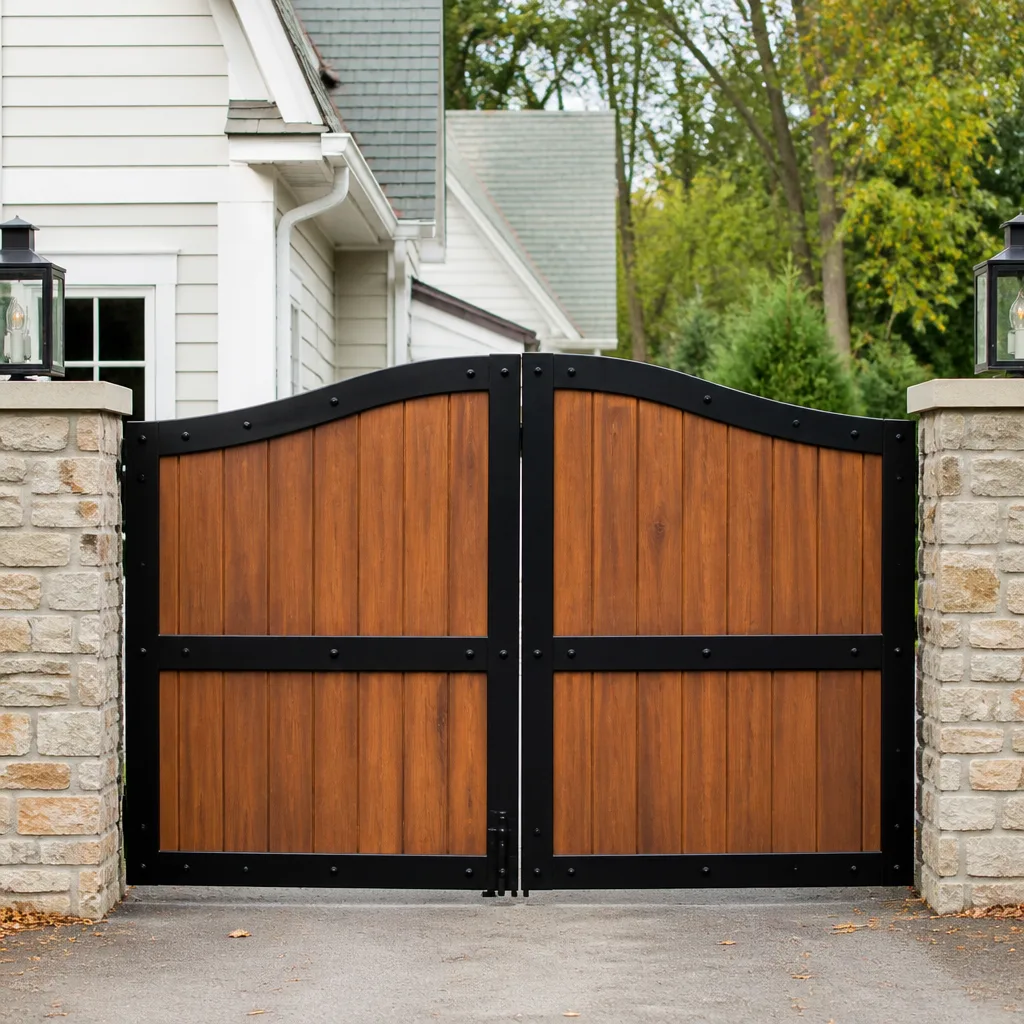 Wood & steel frame
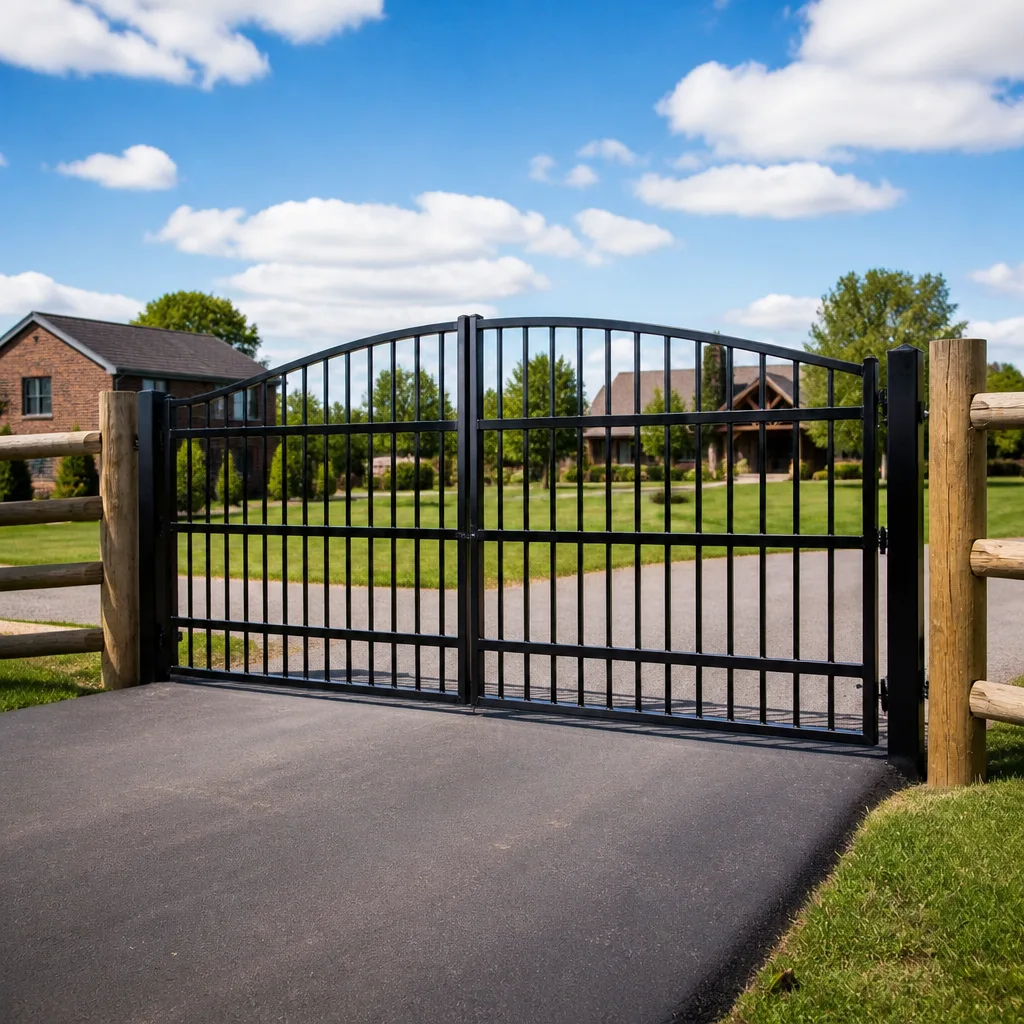 Farm & ranch
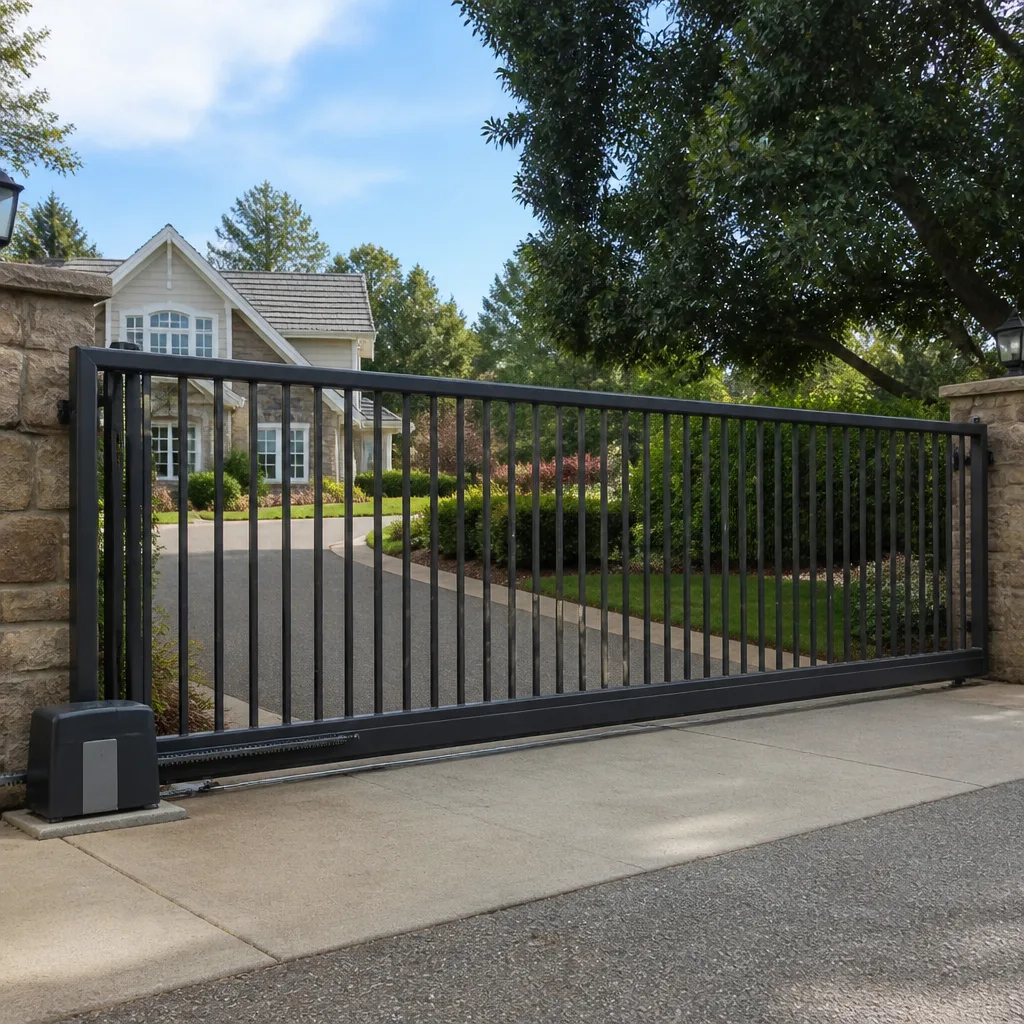 Sliding driveway gates
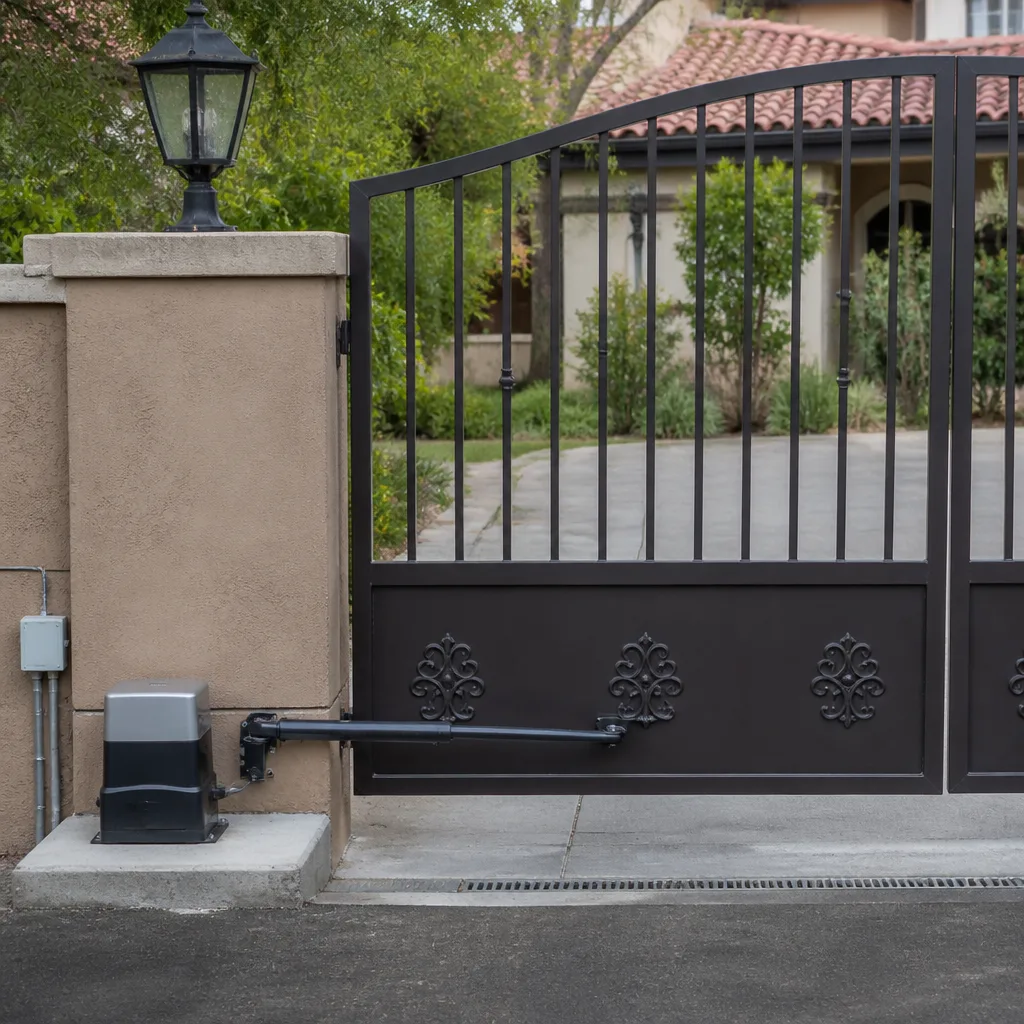 LiftMaster operators
Free on-site gate assessment - hinges, posts, and your LiftMaster or Nice gate operator checked before anything is quoted
The assessment is free and the quote is the invoice.
Get your free estimateGate Repair Maintenance Checklist for Paradise Homeowners
Generic gate maintenance advice tells you to check for rust after winter. In Paradise, NV, your gate’s enemy in January is still the sun, not ice. That single difference reshapes almost everything about how you should care for a driveway gate in the desert Southwest. UV exposure breaks down wire insulation, lubricants dry out faster than the labels promise, dust works its way into hinge channels and sensor lenses, and summer power fluctuations stress backup batteries that most checklists never mention. Freeze-thaw damage, the centerpiece of most national guides, is essentially irrelevant here. This guide walks through a month-by-month checklist built for Paradise conditions, plus a maintenance log that actually helps a technician diagnose the next problem faster.
Quick Answer
A gate maintenance checklist for Paradise should focus on dust clearing, heat-adjusted lubrication, UV-related wiring inspection, backup battery checks before summer, and careful safety testing of the operator and safety sensors. Standard national checklists built around winter ice and rust don’t match the desert climate, so the schedule below is timed to heat cycles rather than freeze cycles. Most of the work is visual and takes fifteen to twenty minutes a month, while spring and operator adjustments belong with a trained technician.
Styles & brands we work with
- Wrought iron
- Wood & steel frame
- Farm & ranch
- Sliding driveway gates
- LiftMaster operators
Table of Contents
- Why Paradise Gates Age Differently
- The Monthly Dust and Debris Checklist
- Lubrication in High Heat: Adjusting the Schedule
- Battery and Backup Power Checks Before Summer
- UV and Wiring: The Inspection Most Checklists Miss
- Safety Testing Your Operator and Sensors
- Building a Maintenance Log That Helps a Technician
- Seasonal Calendar for Paradise Gates
Why Paradise Gates Age Differently
A gate in Paradise faces a very different stress pattern than one in a wet or freezing climate. From May through September, daytime temperatures push well past 100°F, surface temperatures on metal gates run hotter still, and the sun beats down on operator housings and exposed wiring for most of the day. That heat stresses lubricants, plastics, rubber seals, and battery chemistry in ways cold-weather guides never have to address. The swing from a hot afternoon to a cool desert night is significant, but it isn’t a freeze-thaw cycle: it’s a thermal cycle that expands and contracts hinge hardware and gate frames daily.
Then there’s dust. Paradise sits in a valley where wind picks up fine desert dust, and it works its way into every moving part of your gate. The hinge channels, the operator’s vent openings, the safety sensor lenses, and the track on a slide gate all collect that material slowly. Most of it doesn’t cause obvious trouble on day one. It builds quietly for weeks or months, adds friction to the swing, blurs a sensor, and shows up as “my gate stopped working” when the operator was fine all along.
The absence of freeze-thaw damage also changes what you’re looking for. In cold climates, the checklist priority is checking for rust and cracked concrete from ice. In Paradise, the priority is heat, dust, and sun. Rust is still possible but far less common. Concrete lifting at the gate posts is more likely to come from soil movement than frost. Building a maintenance routine around the right enemies matters more than running through a generic checklist and hoping it fits.
The Monthly Dust and Debris Checklist
Once a month, take fifteen minutes to walk your gate and operator. This is the single most valuable habit for a Paradise homeowner. It’s also the part most new gate owners skip, because the gate still opens and closes and nothing seems wrong. The problems a monthly check catches are almost always cheaper to fix than the ones a semi-annual check misses.
- Wipe the hinge channels. Use a dry cloth or a soft brush and clear the dust out of every hinge channel. Do this before you lubricate, not after, or you’ll trap the dust under a fresh coat of grease.
- Clear the operator vents. Most operators have small vent openings on the housing. Dust collects on these and inside the housing itself, reducing airflow to the control board. A quick burst of compressed air or a soft brush keeps the electronics cooler through the summer.
- Wipe the safety sensor lenses. Both photo-eye lenses collect a film of fine dust. A microfiber cloth handles it. Check the alignment while you’re there by standing in the beam and confirming the operator won’t close.
- Inspect the gate track on slide gates. Any debris on the track, from leaves to blown grit, adds friction and forces the operator to work harder.
- Look at the gate frame and panel fasteners. Check that bolts and brackets are still tight. Thermal cycling loosens them slowly.
- Listen to the gate. A gate that has developed a groan, a grinding sound, or a slow hesitation is telling you something. Note it in your log.
Skip this routine and dust collects in ways that hide problems. Hinges dry out and start to bind, which forces the operator to push harder, which wears the motor more quickly. A smudged safety sensor lens can affect the beam and the operator’s safety logic. Both failures look like a bigger repair than they are. If your monthly check is uncomfortable or you’re not sure what you’re looking at, a professional look is cheap compared to a motor replacement.
Lubrication in High Heat: Adjusting the Schedule
The lubrication intervals printed on most gate hardware products are written for mild climates. In Paradise, they’re too long. Heat dries lubricants faster, and the dust that settles into any exposed grease pulls it away from the metal that needs it. Where a national guide might say “lubricate every six months,” a Paradise gate benefits from lubrication at shorter intervals, generally every two to three months, and more often in the peak summer stretch.
What you use matters too. Heavy grease holds dust. In the desert, a lighter lubricant that penetrates and coats the hinge surface without trapping grit is usually the better choice for gate hinges and pivot points. Ask before you apply anything: some operators and some gate manufacturer warranties specify what should be used on pivots and rollers, and getting that wrong can cause wear instead of preventing it.
- Hinges and pivot points: thin lubricant every two to three months, more often in summer.
- Slide gate rollers: check with the gate manufacturer’s guidance, and keep the track clear of debris first.
- Operator chain or gearbox: some operators are sealed and shouldn’t be lubricated by the owner. Confirm before touching them.
- Lock mechanisms on manual gates: a small amount of lubricant keeps the latch moving smoothly, especially after a windy, dusty stretch.
- Lubricant storage: keep it out of direct sun. Heat degrades some lubricants in the container itself.
Over-lubricating is a real problem in the desert. Too much grease attracts and holds the dust you’re trying to keep out of the mechanism. A light, even coat beats a heavy application every time. If you’re unsure whether your hinges need attention, open the gate by hand: it should swing smoothly without binding or groaning. Hinges that resist the swing are telling you the lubrication schedule has slipped.
Battery and Backup Power Checks Before Summer
Many electric gate operators run on low-voltage DC or use a backup battery to keep the gate working through a power failure. In Paradise, that battery is under real stress. Summer heat shortens battery life, and the utility grid has fluctuations that put the backup through more cycles than a mild-climate installation would see. If you wait until the battery fails, you’ll find out the hard way on a 110°F day when the power flickers and the gate stays shut.
Do the check in late spring, right before the summer heat peaks. The idea is to identify a tired battery before it strands you. Most gate operators with a backup battery have an indicator light or a test mode. Check your operator’s manual for the specific procedure. If you don’t have the manual, a quick call to a technician can walk you through it or identify the battery for you.
- Locate the battery and inspect the terminals. Look for corrosion or a loose connection; both are manageable if caught early.
- Check the operator’s status indicator. Many units have a light or code that flags a weak battery.
- Test the backup. With the operator manual in hand, follow the manufacturer’s testing procedure to confirm the gate will run during a simulated power loss.
- Check the age of the battery. Even a healthy-looking battery has a lifespan. If it’s approaching the end of its rated life, plan the replacement before summer.
- Note the test in your log. Record the date and the result, and any observation about how the gate behaved during the test.
If your battery is getting weak, it will fail at an inconvenient moment. Address it in spring. It’s a small item compared to a failed operator, and it’s one of the few things a homeowner can genuinely prevent by timing the check to the season.
UV and Wiring: The Inspection Most Checklists Miss
This is the point where a Paradise guide has to break from national advice. Sun exposure here degrades the insulation on exposed low-voltage wiring, the wire feeding the operator, safety loop wiring, and the sensor leads. That degradation is slow and invisible until it isn’t: a wire that has become brittle can crack, short, or fail intermittently in ways that look like an operator fault. The gate won’t open, you replace the operator, the new one doesn’t fix anything, and the technician traces it to a cracked wire that was the real problem all along.
Once or twice a year, walk the run of wire between your house and your gate. It doesn’t take long. Look for spots where the outer jacket has faded, cracked, or become powdery, especially where the wire sits in direct sun or runs along metal. Pay attention to any section where the wire is exposed rather than inside conduit. Conduit protects the wire from sun and gnawing animals, so a run that’s tucked into conduit is far less likely to fail.
Also check the connections at the operator. Where the wire meets the terminals, look for corrosion, a loose screw, or signs that a small animal has been at the wire. Rodent and insect intrusion into operator housings is common in the desert, and the damage it causes looks like an electronics failure. If you see exposed copper or cracked insulation anywhere in the wiring, that’s a job for a technician, not a homeowner fix. Wiring at 120-volt or higher is genuinely dangerous to work on, and even low-voltage gate wiring requires knowing what the operator expects.
This wiring check is exactly the kind of thing standard national guides omit, because in a mild climate the sun rarely does that much damage. In Paradise, it’s one of the most common invisible causes of “the gate just stopped working.”
Safety Testing Your Operator and Sensors
Automatic gates are heavy machinery, and an operator that fails at the wrong moment can crush, pinch, or injure. Safety testing is a scheduling item, not a “do it if you remember” task. The core tests are straightforward, and doing them monthly is the best defense against an unsafe gate.
- Test the photo-eye beam. Stand in the gate’s path and press the button to close it. The gate should stop or reverse. If it closes on you, the sensors are misaligned or the beam is blocked, and the gate should not be used until it’s fixed.
- Test the safety edges (if equipped). Press the edge as the gate closes. The operator should reverse. Contact edges are the last line of defense when the beam fails.
- Test the obstruction detection. With the operator engaged, place an object in the gate’s path and confirm it reverses. This function depends on the operator sensing resistance, so a binding gate can defeat it.
- Test the manual release. With the operator disengaged, confirm the gate swings freely by hand. This is your backup when the power fails or the operator needs servicing.
- Inspect the gate for wobble or loose hinges. Heavy panels, unstable hinges, and a slide gate off its track are the highest-risk conditions. If the gate is physically unstable, stop using it until a technician has seen it.
Never disable the safety features to make the gate close when it’s misbehaving. A gate that reverses on its own is telling you something needs attention; a gate that doesn’t reverse is a hazard. If your monthly safety test fails, that’s the moment to call a gate specialist rather than a general handyman, because the fault could be in the sensors, the wiring, the safety loop, or the operator’s control board, and sorting those out requires knowing what each is supposed to do.
Building a Maintenance Log That Helps a Technician
A maintenance log is only useful if it tells a technician what to look at. A list of dates with “checked gate” next to each one is not a log. Your log should record what you observed, what you changed, and what the gate was doing right before the current problem. A good log turns a diagnostic headache into a fifteen-minute repair.
- Date and what you did. “Cleared hinges, lubricated pivot points, wiped sensor lenses, tested photo-eye” is useful. “Checked gate” is not.
- What sounded or felt different. If the gate has a new groan on opening, note it. If the closing cycle feels slower, note it.
- What you changed. New battery date, lubricant type used, any adjustment you made. If a technician sees a replacement, they’ll know it’s not the cause of the current problem.
- What the gate is doing now. “Gate reverses unexpectedly on close” is much more useful than “gate broken.” Note dates and times if the problem is intermittent.
- The brand and model if you can find them. Your operator or gate hardware probably has a label or a stamped plate. A technician who knows they’re working on a LiftMaster, DoorKing, or Elite system can bring the right parts.
- Any repair visits and what was done. Even a short note of “technician replaced safety loop” saves time later.
A paper notebook kept on the inside of the gate panel works, but a note on your phone is easier. Either way, bring the log out when you call for service. It will save you a phone call and often saves a full diagnostic visit. If a technician has to start from scratch on a gate that hasn’t been logged, they’ll check things you already know, and the visit takes longer than it needs to.
Seasonal Calendar for Paradise Gates
The seasonal calendar for a Paradise gate is shaped by heat, not cold. Instead of “get ready for winter,” the priority is “get ready for summer.” Here’s how the year breaks down in a way that matches the actual climate. Our technicians have up to experience and have worked through every season in this valley; the schedule below reflects what we see happen on Paradise gates over the course of a year.
Late winter (January through March). This is the best time to tackle the deeper checks before the heat sets in. Wiring inspection, hinge tightening, sensor alignment, and a full lubrication pass. The weather is comfortable, and a problem found now is cheaper to fix than one found in July.
Spring (April through May). Battery and backup testing season. Check the operator’s backup battery, test the manual release, and confirm safety sensors and edges are functioning. Also do a full dust clearing and a lubrication pass before the heavy heat starts.
Summer (June through September). Monthly dust clearing matters most now. Watch for slow gate movement, groaning hinges, and any intermittent behavior. The heat is hardest on lubricants, batteries, and wiring. If your gate is sluggish or the operator is struggling, don’t wait until fall.
Fall (October through November). A good time for a thorough inspection after summer stress. Wiring check, safety test, and a lubrication pass to prepare for the cooler months. Also a good moment to schedule a technician if you’ve been deferring a repair.
Winter (December). Lighter month; keep up the monthly dust clearing and safety tests. If your gate has a manual lock, check it for smooth operation now, before the cooler nights make sticky hardware more noticeable.
If your gate starts acting up on a Saturday, call us. We’re closed on Saturdays, and your call is booked into the next opening, Sunday through Friday, 7am to 7pm. Same-day service is often available during the week for the repairs that can’t wait.
Common Mistakes to Avoid
- Using the printed lubrication interval as gospel. The label on the product assumes a mild climate. In Paradise, that interval is too long for gate hinges and pivot points, and the result is dried-out hinges that bind and wear.
- Applying heavy grease to hinges. It attracts dust and holds it against the very surfaces you’re trying to protect. Light and frequent beats heavy and rare in the desert.
- Skipping the safety sensor test. Monthly lens wiping is meaningless if the beam itself is misaligned or the sensors are failing. Test the actual closing cycle, not just the sensor light.
- Assuming a bad battery will fail with a warning. Backup batteries tend to fail without any obvious sign until the power actually goes out. Test in spring, not in July.
- Calling a handyman for an operator fault. A general handyman may be able to clear a hinge, but misdiagnosing a control board, safety loop, or sensor fault on a LiftMaster, DoorKing, or Elite operator costs real money. See a gate specialist.
- Ignoring UV-damaged wiring. A gate that stops working without any obvious mechanical cause is often a wiring problem that’s been developing for months. Walk the wire run and look for cracked insulation.
- Keeping no log. A gate problem that’s intermittent when you call usually stabilizes by the time a technician arrives, unless you can describe what you saw and when. A log turns “the gate is broken” into a repair.
See the difference
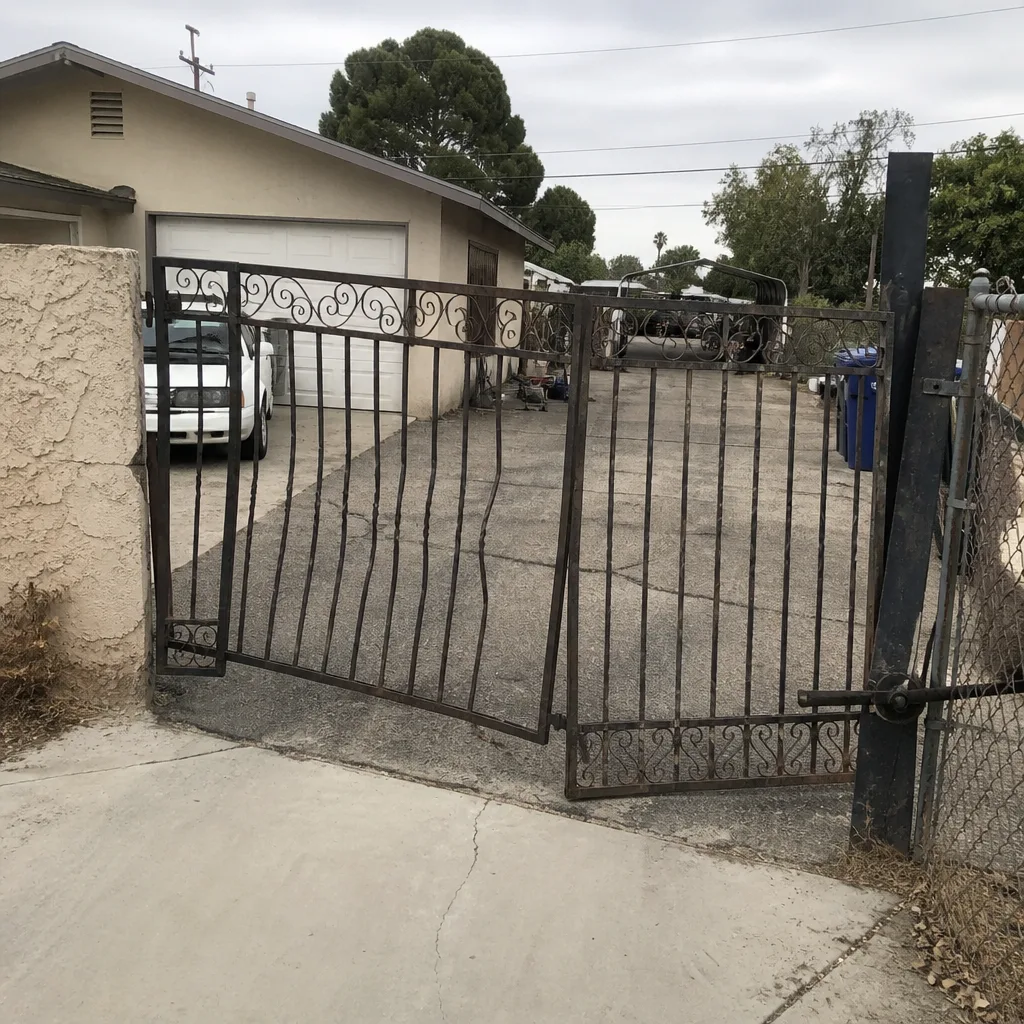 Before
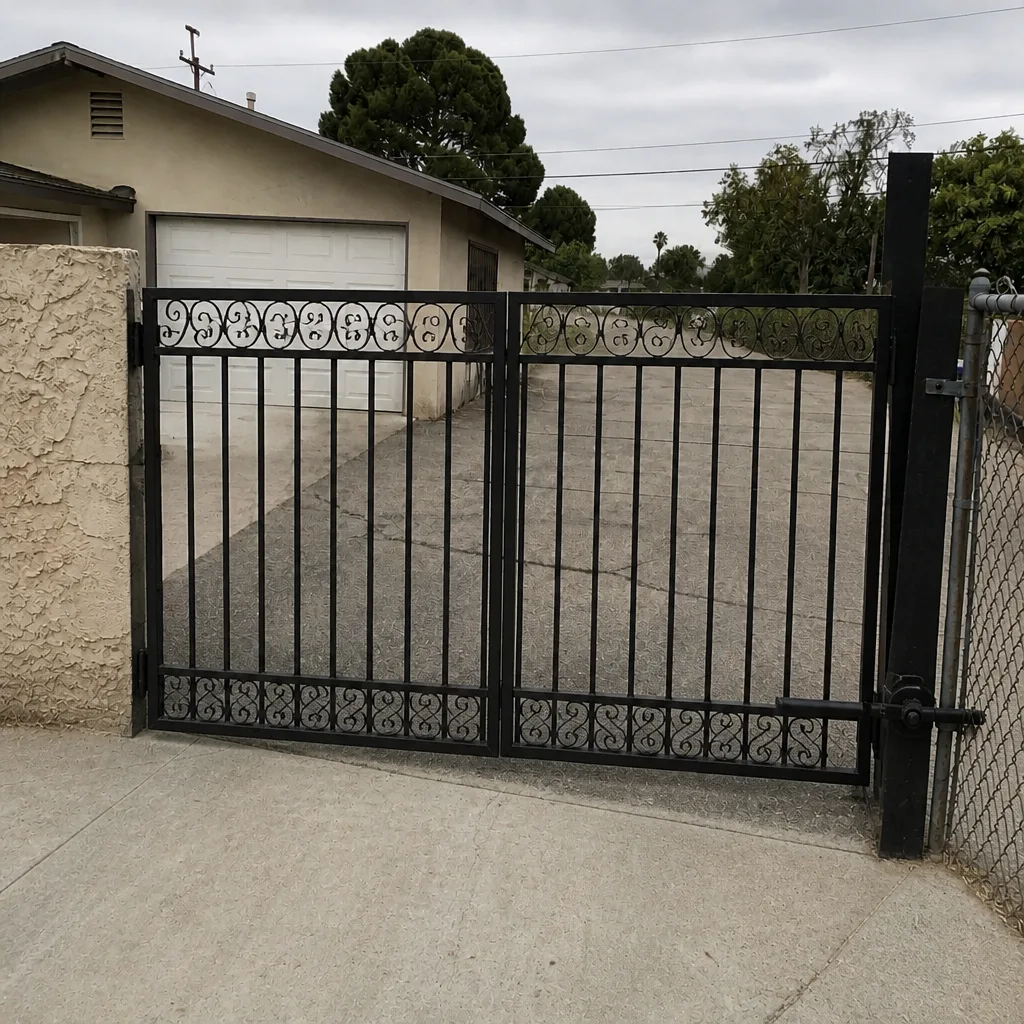 After
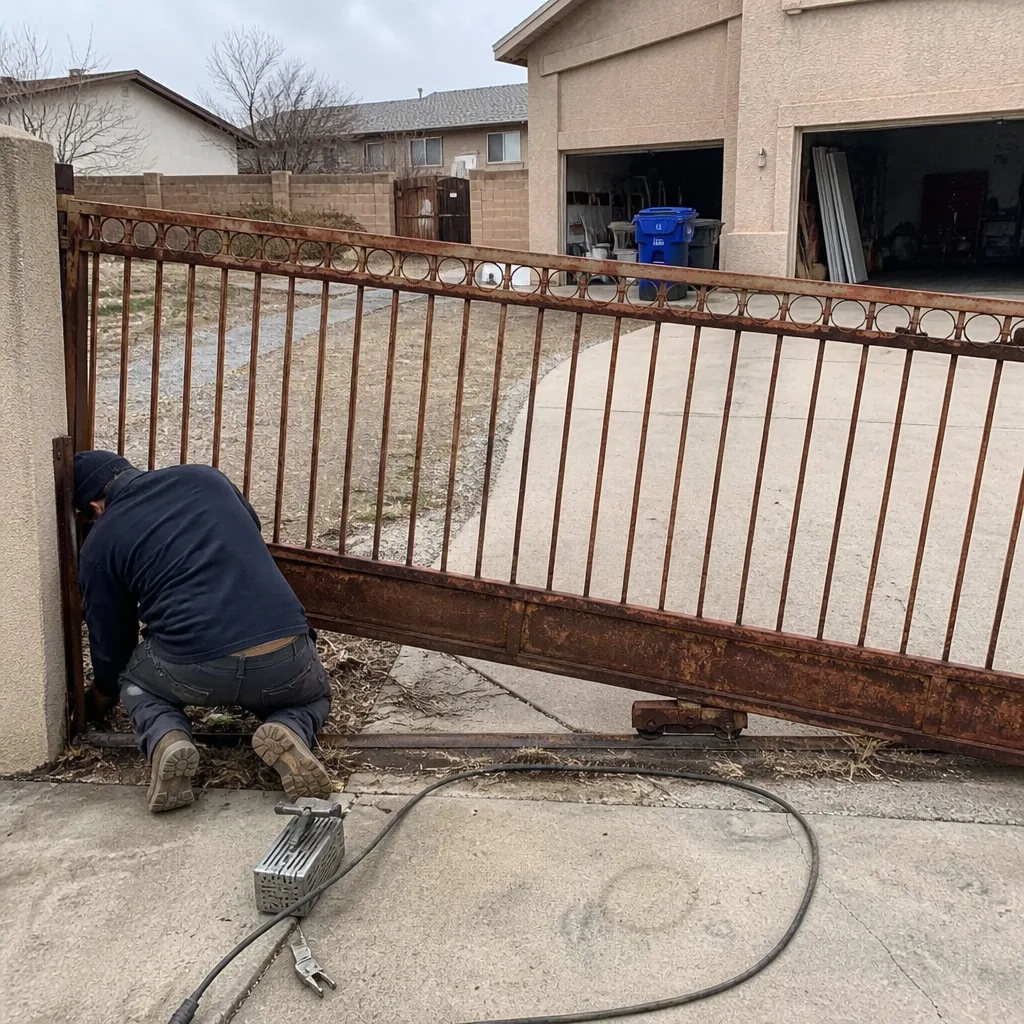 Before
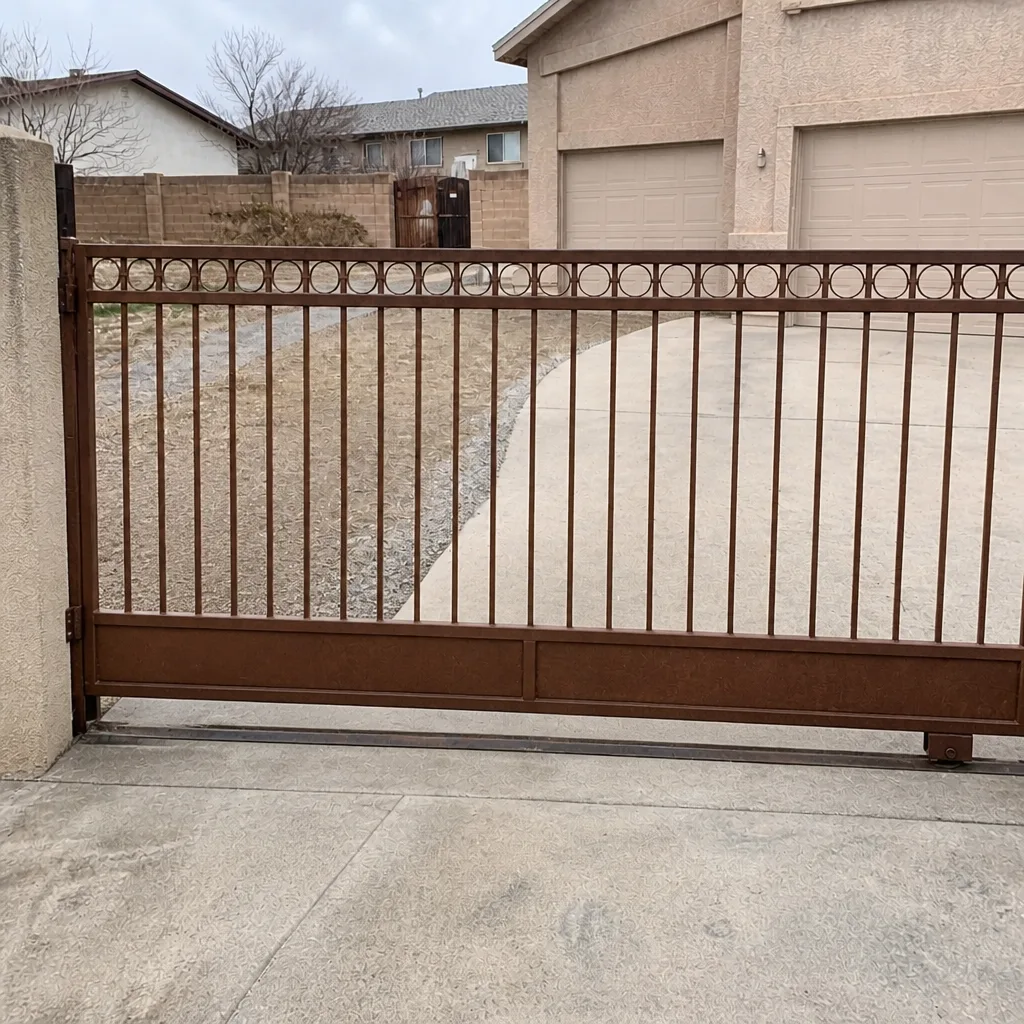 After
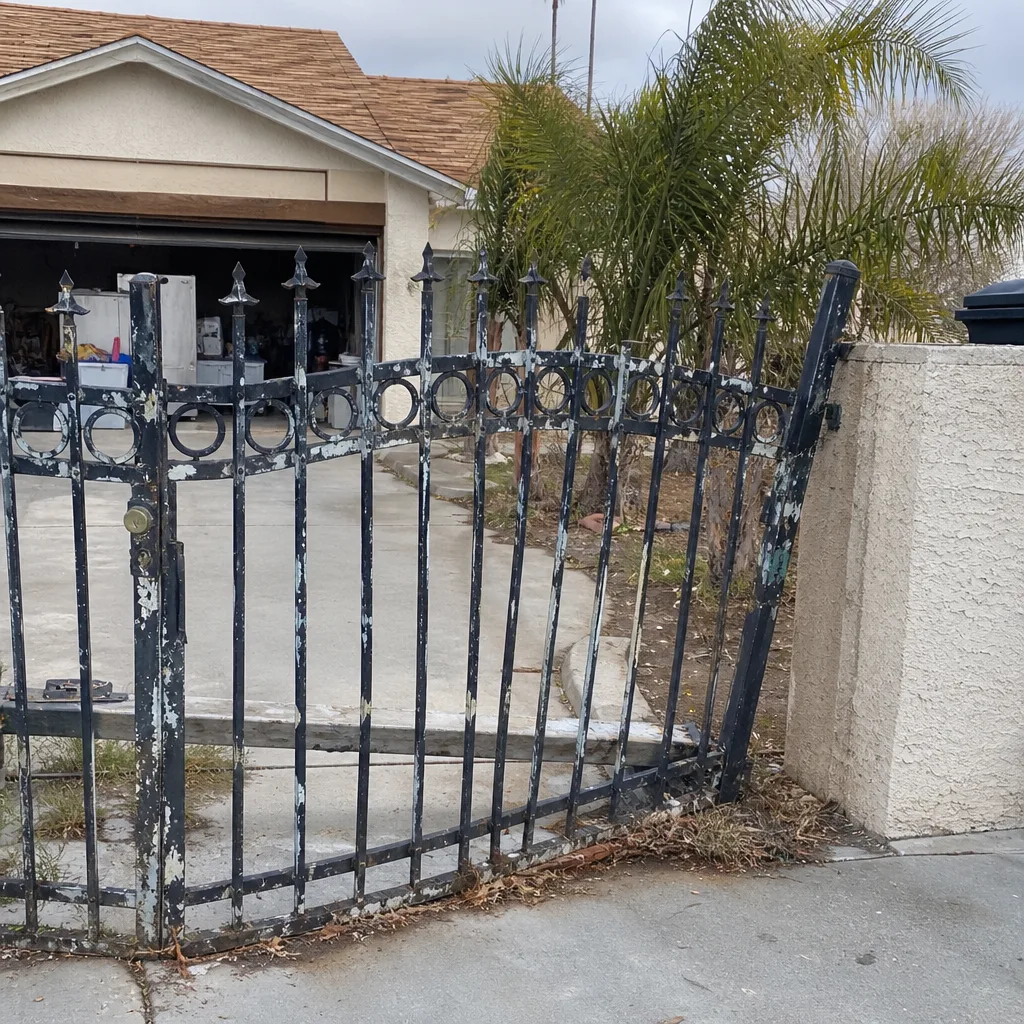 Before
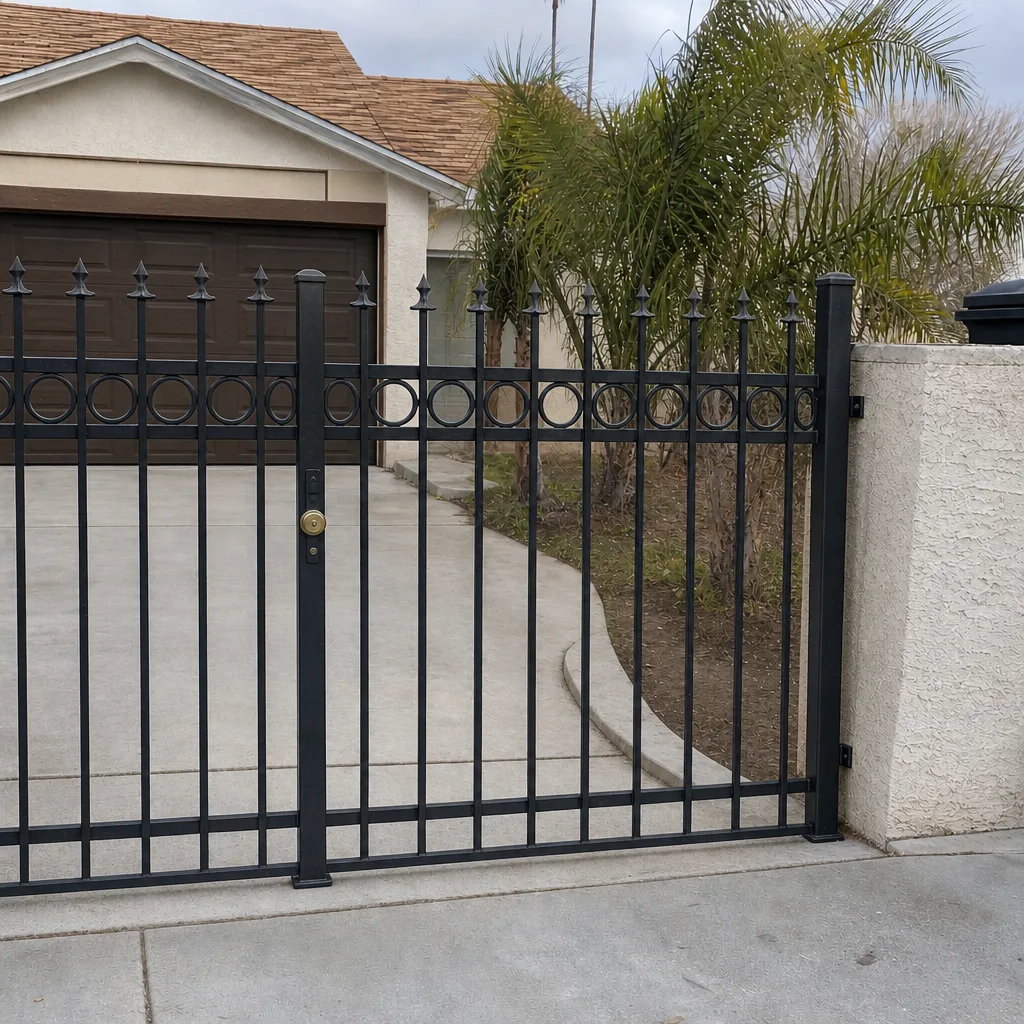 After
When to Call a Professional
Some gate issues are homeowner-checkable and some aren’t. Call a professional when the gate reverses unexpectedly on close, when the operator fails to respond to the remote, when the gate is physically unstable (wobbling, dragging, off track), when the safety beam or safety edge doesn’t work, when you see cracked or exposed wiring anywhere in the gate system, or when the gate behaves intermittently in a way you can’t trace. Never disable safety features to force the gate to work. If your operator has shown heat-related trouble during the summer, or you’ve had to reset it repeatedly, that’s also a technician call: those symptoms usually mean a control or power issue that gets worse, not better. Our team at Gate Repair Paradise specializes in electric gate repair, which means the control boards, safety loops, and sensor faults that generalists struggle with are routine work for us. Call (844) 834-1647 for a free estimate; we answer 24/7.
Frequently Asked Questions
Once a month for the basic dust clearing and safety tests, plus two deeper inspections per year timed to the seasonal calendar above. In Paradise, the heat makes monthly checks genuinely useful, because the dust and heat stress build faster here than in a mild climate. Our technicians have up to experience and see fewer surprises on gates that get a monthly routine than on gates that get only an annual visit. Call (844) 834-1647 for a free estimate if you’d like a professional to walk through your gate with you.
Sometimes, but not always. A slow gate in summer can be dried-out hinges, a binding roller, a weak battery, a struggling operator, or a safety sensor reporting an obstruction. Increase lubrication frequency in summer and clear the dust before you apply anything. If the gate is still slow after a lubricant pass, that’s a call. Call (844) 834-1647 for a free estimate.
Visually, yes. Walking the wire run and looking for cracked, faded, or exposed insulation is a safe, useful check. Touching or repairing that wiring is not a homeowner job. Wiring carries real electrical risk, and even low-voltage gate circuits need to be handled by someone who knows the operator. If you see damage, stop using the gate and call a technician. It’s exactly the kind of thing we look for on an electric gate repair visit.
Monthly. Test both the photo-eye beam and, if your gate has them, the safety edges. The test takes under a minute: stand in the closing path and confirm the gate reverses. A gate that doesn’t reverse is unsafe, full stop. If your monthly test fails, call (844) 834-1647 for a free estimate and we’ll track down the fault.
Call us. Our line is answered at all hours, so you can reach a person even when we’re not dispatching. We’re closed on Saturdays, and a call outside dispatch hours is booked into the next opening, Sunday through Friday, 7am to 7pm. Meanwhile, use the manual release if it’s safe to do so and the gate doesn’t affect security, and don’t try to force a stuck gate.
Often, yes. Dust clearing, heat-adjusted lubrication, spring battery checks, and UV wiring inspection prevent some of the most common problems we see in Paradise, including binding hinges, dead batteries, sensor failures, and wiring faults that look like operator failures. It doesn’t prevent everything, and safety testing is part of the routine so an unsafe gate doesn’t stay in use. If your routine flags something, call (844) 834-1647 for a free estimate; it’s the cheapest way to catch a problem early.
The Bottom Line
A gate maintenance checklist for Paradise has to be written for the desert. That means dust clearing on a monthly schedule, lubrication timed to heat and not to winter, battery and backup checks before summer rather than before winter, and a regular look at UV-exposed wiring that most checklists leave out. The safety tests are non-negotiable: photo-eye, safety edges, and obstruction detection, every month. The maintenance log that records what you did and what the gate was doing is the item that turns a future repair into a fifteen-minute diagnostic. And when something stops making sense, whether it’s a dragging swing gate, an electric operator fault, or a sensor that won’t stay aligned, a gate specialist is worth the call: our team at gate repair works on the equipment you already have, and we don’t push you toward a brand we happen to sell. Our technicians have up to experience and carry components for LiftMaster, FAAC, BFT, Linear, Viking, Ghost Controls, DoorKing, Elite, and Mighty Mule.
If you’d like a second set of eyes on your gate before the summer hits, or you’re in one of the neighborhoods around Paradise and want an on-site estimate, call (844) 834-1647. We answer 24/7. Fast dispatch from 7am to 7pm, Sunday through Friday. Estimates are free, and the price is set per job by the written estimate before any work starts.
Written by the team at Gate Repair Paradise.